Table of Contents
Vegan meal prep recipes offer a practical solution for maintaining consistent, plant-based nutrition throughout a busy week without daily cooking demands. This collection of vegan meal prep recipes for a healthy week focuses on nutritious, satisfying dishes that emphasize plant-based protein, fiber, and healthy fats to support balanced eating across busy schedules. Readers will discover ten dependable recipes along with practical guidance on batch cooking, storage, and building complete meals entirely from plant-based ingredients.
Rather than suggesting that any single ingredient or meal transforms overall health, this article focuses on realistic, sustainable strategies: combining diverse plant protein sources, incorporating substantial vegetables and fiber, and understanding how thoughtful preparation supports consistent healthy eating throughout the week. What follows are ten dependable vegan meal prep recipes along with guidance on preparing and storing them efficiently.
Best Vegan Meal Prep Recipes for a Healthy Week
Protein-Rich Vegan Meal Prep Bowls
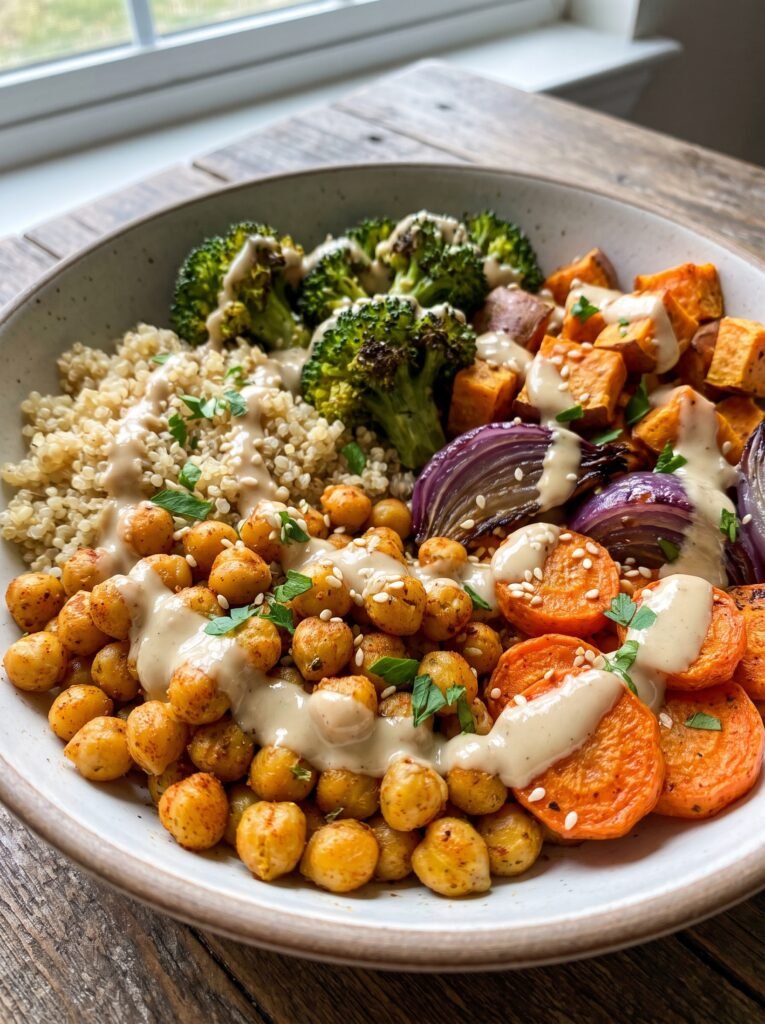
Chickpea and Quinoa Buddha Bowls combine roasted chickpeas, cooked quinoa, roasted sweet potato, and massaged kale with a tahini dressing, offering substantial plant protein and fiber across all components. This dish is filling due to its combination of protein, fiber, and healthy fats, and preparation difficulty is moderate, requiring about 40 minutes, with the components storing well separately for up to five days.
Lentil and Vegetable Curry Bowls simmer red lentils with diced vegetables and curry spices, served over brown rice, offering a hearty, protein-rich meal that reheats particularly well throughout the week. Tofu and Vegetable Stir-Fry Bowls combine baked or pan-seared tofu with broccoli, bell peppers, and snap peas in a light soy-ginger sauce, served over rice for a complete, protein-inclusive meal prep option.
Fiber-Rich Vegan Salads and Wraps
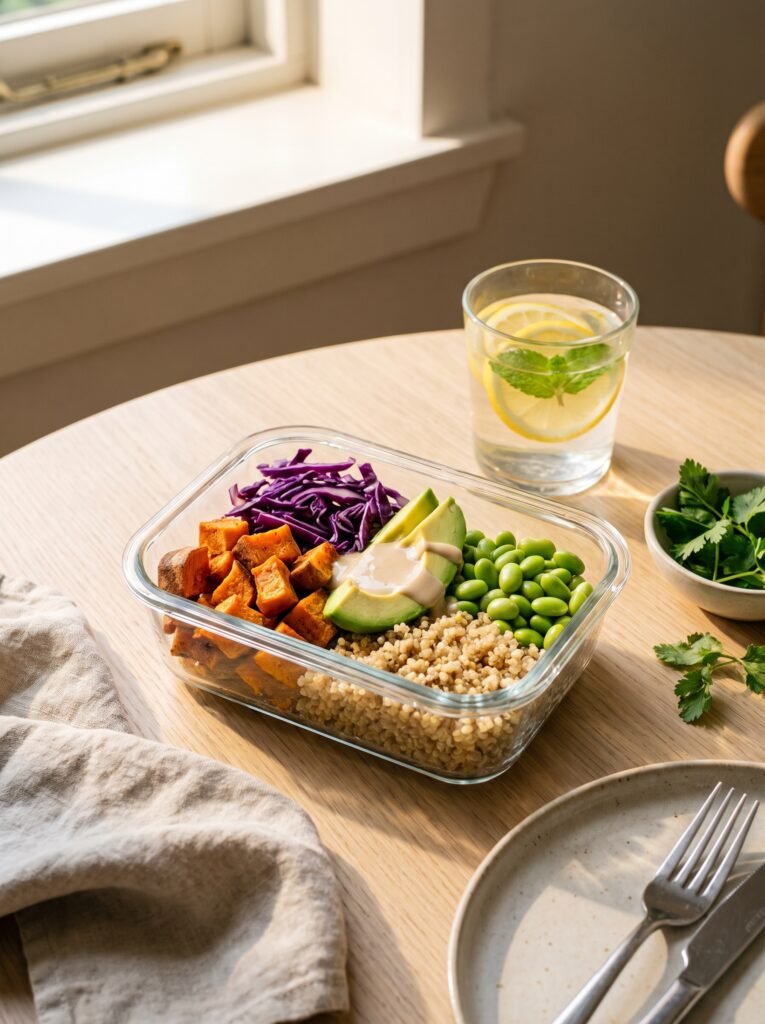
Mediterranean Chickpea Salad combines chickpeas, cucumber, tomatoes, red onion, and feta alternative in a lemon-olive oil dressing, offering a no-cook option that holds up well for several days without becoming soggy. Black Bean and Sweet Potato Burrito Bowls layer black beans, roasted sweet potato, and corn over rice with a lime-cilantro dressing, providing fiber and plant protein in a familiar, satisfying format that appeals to those seeking [Easy Healthy Recipes] beyond typical vegan fare. Hummus and Vegetable Wraps fill whole wheat tortillas with hummus, shredded carrots, cucumber, and spinach, offering a quick-assembly option that requires minimal advance cooking.
Hearty Vegan Soups and Stews for the Week
Lentil and Vegetable Soup simmers lentils with carrots, celery, and diced tomatoes for a filling, nutrient-dense meal that freezes exceptionally well for longer-term storage. White Bean and Kale Stew combines white beans, kale, and diced tomatoes in a light vegetable broth, offering substantial fiber and plant protein in a warming, comforting format. Vegetable and Chickpea Chili simmers chickpeas, black beans, and diced vegetables with chili seasoning, providing a hearty, protein-rich option that reheats well and often tastes even better after a day or two.
Batch-cooking grains and legumes at the start of the week, along with pre-roasting vegetables, makes these [Quick Dinner Recipes] considerably more manageable throughout busy days.
How to Build a Balanced Vegan Meal Prep Plan
Choosing Diverse Plant-Based Protein Sources
Chickpeas, lentils, black beans, tofu, and quinoa all provide substantial plant-based protein, and combining different sources across the week helps ensure a broader range of amino acids and micronutrients. Since protein needs vary based on individual activity level and body size, readers should consider their own requirements when determining appropriate portions of these plant-based proteins throughout their meal prep.
Incorporating Vegetables and Fiber for Satiety
Building meals around a substantial base of non-starchy vegetables alongside fiber-rich legumes and whole grains supports satiety and digestive health throughout the week. Roasting vegetables like sweet potato, broccoli, and bell peppers before incorporating them into bowls or wraps adds flavor through caramelization while contributing meaningful fiber, similar to approaches found in [Healthy Dinner Recipes] focused on plant-forward eating.
Healthy Fats and Flavor-Building Without Animal Products
Avocado, olive oil, tahini, and nuts or seeds provide healthy fats that enhance both flavor and nutrient absorption within vegan meal prep dishes. Building flavor through spice blends, fresh herbs, citrus, and vinegar-based dressings allows for genuine variety across the week without relying on animal-based ingredients, supporting an approach aligned with [Low Carb Recipes] preferences for those combining vegan and lower-carbohydrate goals, such as favoring cauliflower rice over grains in select bowls.
Meal Prep, Serving Suggestions & Nutrition
Meal-Prep Tips for a Successful Vegan Week
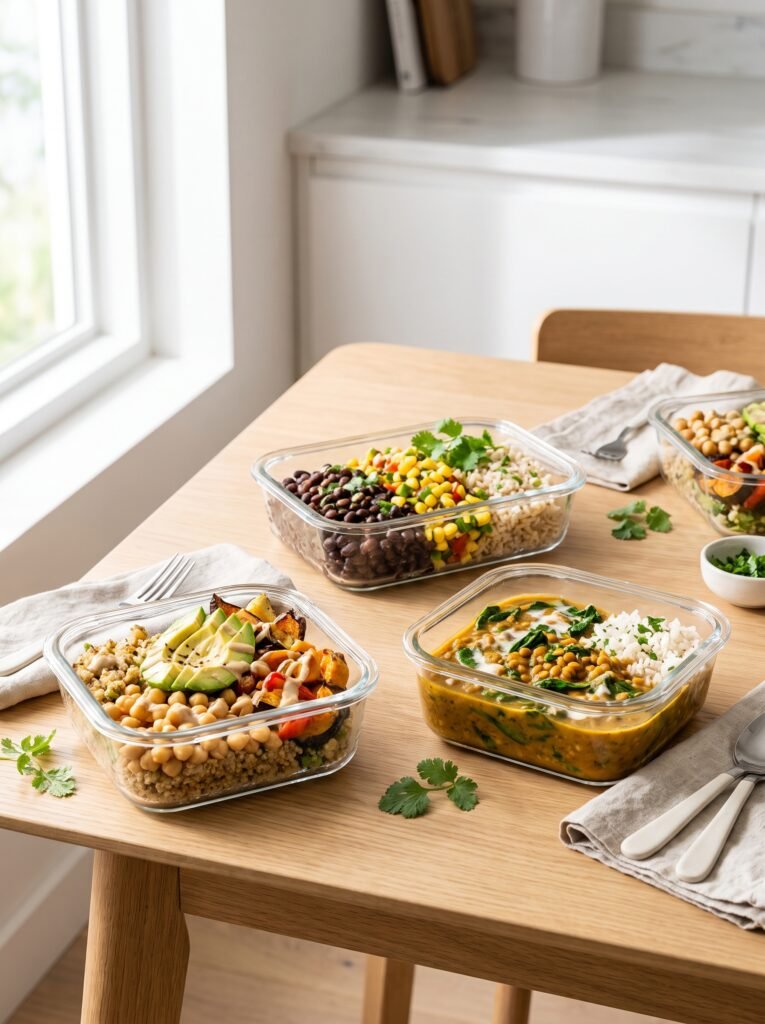
Cooking grains, legumes, and roasted vegetables in large batches at the start of the week allows for quick assembly of multiple meals throughout busy days. Storing dressings and sauces separately from other components helps prevent sogginess and preserves texture until the moment of eating. Preparing three to five meal components at once, combined with proper labeling and airtight storage, supports consistent [Meal Prep Recipes] habits that make plant-based eating genuinely sustainable.
Serving Suggestions and Flavor Combinations
Consider pairing chickpea and quinoa bowls with a drizzle of tahini and fresh lemon, lentil curry with a dollop of coconut yogurt, or black bean burrito bowls with fresh cilantro and lime. Herbs and spices such as cumin, smoked paprika, turmeric, and fresh ginger add substantial flavor variety across these dishes without relying on animal-based ingredients, supporting flavorful [High Protein Recipes] built entirely from plants.
Nutritional Information and Considerations
Nutritional values vary depending on specific ingredients, portion sizes, and preparation methods, so the following figures are approximate. A serving of chickpea and quinoa Buddha bowls contains roughly 420 calories, 16 grams protein, 58 grams carbohydrates, 14 grams fiber, and 15 grams fat. A serving of lentil and vegetable curry contains approximately 340 calories, 18 grams protein, 48 grams carbohydrates, 12 grams fiber, and 8 grams fat. Overall dietary balance across the week, including attention to varied protein sources, plays the larger role in supporting nutritional and weight-management goals within a vegan eating pattern.
More Recipe Inspiration
Looking for more delicious ideas to try? Visit Jowel Recipes to discover more recipe inspiration and creative dishes for your next meal.
Frequently Asked Questions
Can vegan meal prep provide enough protein for the week recipe?
Yes, combining diverse plant protein sources such as legumes, tofu, and quinoa across different meals can provide substantial protein, though individual needs vary and some people may benefit from tracking intake to ensure adequacy.
How long do vegan meal prep dishes typically last in the refrigerator?
Most grain, legume, and vegetable-based dishes store well for four to five days when kept in airtight containers, while soups and stews often maintain quality for the same duration or can be frozen for longer storage.
What are good plant-based protein sources for vegan meal prep?
Chickpeas, lentils, black beans, tofu, tempeh, and quinoa all provide substantial protein and work well across a variety of meal prep formats, from bowls to soups to salads.
Can vegan meals still be low in carbohydrates if needed?
Yes, substituting cauliflower rice for grains, emphasizing non-starchy vegetables, and moderating portions of starchy legumes can help create lower-carbohydrate vegan meals for those with that preference.
Does vegan meal prep support weight management goals?
Vegan meal prep can fit into a balanced eating pattern focused on fiber, plant protein, and portion awareness, though overall weight management depends on total calorie intake, dietary quality, and consistency across the full week rather than any single meal.
Conclusion
Building a rotation of nutritious vegan meal prep recipes demonstrates that plant-based eating can be both genuinely satisfying and practical for busy weekly schedules. Prioritizing diverse protein sources, substantial vegetables and fiber, and thoughtful batch cooking all contribute to meals that support consistent, balanced nutrition throughout the week. Try one of these ten recipes this week and share which vegan meal prep combination becomes your new favorite.