
Table of Contents
Baked ziti with Italian sausage is the kind of dinner that makes a busy evening feel a little more relaxed. Ridged pasta holds onto a savory tomato sauce, browned sausage adds deep flavor, and a creamy ricotta layer keeps every serving tender beneath a blanket of melted mozzarella. The casserole is generous enough for a family meal, simple enough for a first-time cook, and easy to prepare ahead when you would rather have dinner waiting in the refrigerator.
This version keeps the steps practical: cook the pasta just short of tender, build a quick sausage marinara in one skillet, mix a simple ricotta filling, and layer everything in a baking dish. A short covered bake warms the center without drying it out; uncovering it at the end gives the cheese those golden spots everyone reaches for. You can follow the recipe as written or use the variations below to make it milder, meat-free, or extra vegetable-forward.
If you enjoy cozy pasta dinners, you may also like our garlic butter sausage pasta or baked chicken Alfredo. This baked ziti has a different texture and flavor: it is tomato-rich, layered, and designed to be served straight from the casserole dish.
Why This Baked Ziti Recipe Works
The pasta is cooked a minute or two shy of the package’s al dente time because it continues cooking in the oven. That small detail helps the ziti keep its shape instead of becoming soft or swollen after baking. Saving a little pasta water is useful too: its starch helps loosen the sauce so it clings to the noodles rather than pooling at the bottom of the dish.
Italian sausage brings seasoning and richness, so the sauce does not need a long simmer or a long list of spices. A little onion and garlic round out the flavor, while marinara gives the casserole a dependable tomato base. Choose a sauce you already enjoy tasting by the spoonful, since it will flavor nearly every bite. If your marinara is very thick, a splash of pasta water makes it easier to combine.
Finally, the ricotta mixture is seasoned instead of being used plain. Parmesan, parsley, black pepper, and one egg give it savory flavor and help it hold together in soft pockets between the pasta. The egg is optional if you prefer a looser, creamier layer; the casserole will still taste good, though the ricotta may blend more into the sauce.
Ingredients You’ll Need
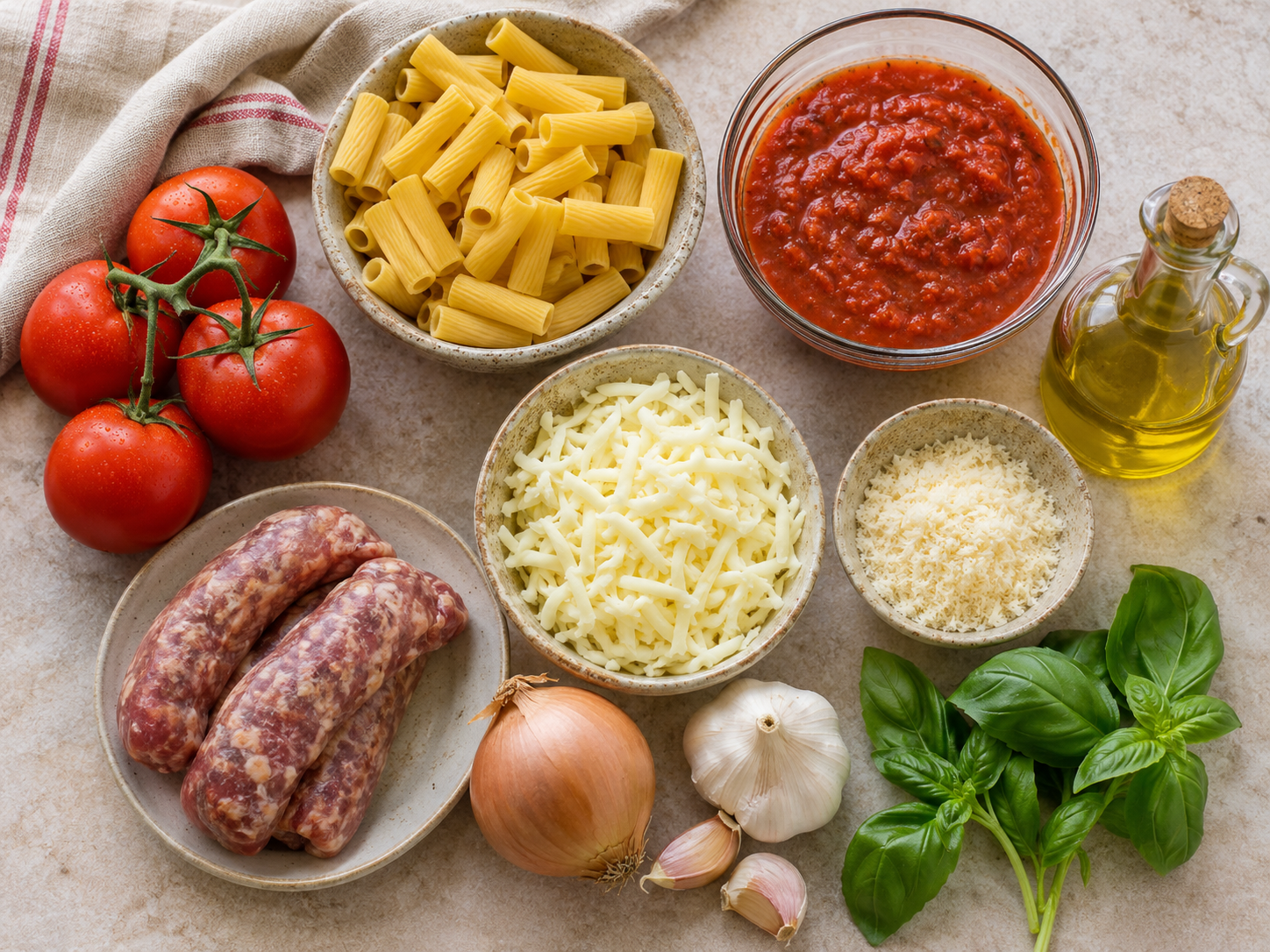
- Ziti or another short pasta: One pound of ziti is traditional, but penne, rigatoni, or mostaccioli work well. Ridged pasta gives the sauce extra places to cling.
- Italian sausage: Use one pound of mild or hot bulk sausage, or remove the casings from links. Mild sausage suits a family-friendly dish; hot sausage adds a gentle kick.
- Marinara sauce: About 24 ounces is enough to coat the pasta and create a saucy casserole. If using a larger jar, measure what you need and save the rest for another meal.
- Onion and garlic: Half a yellow onion and two minced cloves build a fragrant base. Cook them until softened so they do not stay sharp in the finished sauce.
- Ricotta cheese: Fifteen ounces creates a creamy layer. Whole-milk ricotta tastes richer, while part-skim ricotta is a lighter option. If it looks watery, drain it briefly in a fine strainer.
- Egg and Parmesan: One large egg helps the ricotta set; a third of a cup of finely grated Parmesan adds salty, nutty flavor. Use a little less salt if your cheese is especially salty.
- Mozzarella: Two cups of shredded low-moisture mozzarella melt into a stretchy top. Fresh mozzarella is delicious, but pat it dry and use a moderate amount to avoid excess liquid.
- Seasonings and oil: Olive oil, dried oregano, black pepper, salt, and a handful of chopped parsley complete the recipe. Taste the sauce before adding much salt because sausage and Parmesan are already seasoned.
How to Make Baked Ziti with Italian Sausage
1. Heat the oven and prepare the baking dish
Heat the oven to 375°F (190°C). Lightly oil a 9-by-13-inch baking dish or coat it with a thin layer of cooking spray. Set it near the stove. If you are preparing the casserole ahead, keep the dish refrigerated and wait to preheat the oven until you are ready to bake.
2. Boil the pasta until just shy of al dente
Bring a large pot of salted water to a boil. Cook the ziti according to the package directions, stopping about two minutes before the suggested time. The pasta should be flexible but still have a noticeable bite in the center. Before draining, scoop out about half a cup of the starchy cooking water. Drain the pasta without rinsing it; the starch on the surface helps the sauce adhere.
3. Brown the sausage and make the tomato sauce
While the pasta cooks, warm a tablespoon of olive oil in a large skillet over medium heat. Add the sausage and break it into small pieces with a wooden spoon. Cook, stirring occasionally, until browned and no pink remains. For ground pork or beef sausage, a food thermometer should read 160°F; poultry sausage should reach 165°F. Transfer sausage to a plate if the pan is crowded, leaving a little fat behind for flavor.
Add the chopped onion to the skillet and cook for three to four minutes, stirring until it softens. Stir in the garlic and oregano for about 30 seconds, just until fragrant. Pour in the marinara and a few tablespoons of reserved pasta water. Scrape up any browned bits from the pan, return the sausage, and let the sauce bubble gently for five minutes. Taste it and adjust pepper or salt if needed.
4. Mix the ricotta filling
In a medium bowl, stir together the ricotta, egg, Parmesan, chopped parsley, a few grinds of black pepper, and a small pinch of salt. Mix only until combined. It should be thick and spoonable. If the ricotta is watery, drain it first; if it is unusually stiff, stir in one tablespoon of milk or pasta water to make it easier to spread.
5. Combine and layer
Add the drained ziti to the skillet of sauce, or use a large bowl if the skillet is too small. Toss gently until the pasta is coated. Spread about half of the pasta mixture in the baking dish. Spoon the ricotta mixture in small dollops over the top, then sprinkle with about one cup of mozzarella. Add the remaining pasta and sauce, spreading it into an even layer. Finish with the rest of the mozzarella and a light dusting of Parmesan.
6. Bake until hot and bubbling
Cover the dish loosely with foil, tenting it so the foil does not press into the cheese. Bake for 20 minutes. Carefully remove the foil and bake for another 10 to 15 minutes, until the sauce bubbles around the edges and the cheese is melted with golden spots. If you want a more deeply browned top, broil for one or two minutes while watching closely. Let the casserole rest for 10 minutes before serving; this makes portions easier to lift and gives the sauce time to settle.
Helpful Tips for the Best Results
Undercook the pasta slightly. The oven is a second cooking stage. Pasta that is already fully soft before it goes into the casserole can turn mushy as it absorbs hot sauce. Check it early, and drain it as soon as it is just shy of al dente.
Keep enough sauce in the dish. Baked pasta absorbs liquid, especially around the edges. The mixture should look generously coated before baking, not dry. If the sauce seems thick after the pasta is added, stir in reserved pasta water a tablespoon at a time until it looks glossy and moist.
Use a thermometer for sausage. Color is a useful visual cue, but temperature is more reliable. USDA guidance recommends cooking ground pork or beef to 160°F and ground poultry to 165°F. Keep raw sausage utensils and plates separate from the cooked pasta and cheese mixture.
Let it rest before cutting. Serving immediately can make the layers slide apart and the sauce run across the plate. Ten minutes of resting helps the cheese and ricotta settle while the pasta stays warm.
Easy Variations
Add vegetables: Stir in two cups of baby spinach after the sauce comes off the heat, or add sautéed mushrooms, diced zucchini, or chopped roasted red pepper. Cook watery vegetables before mixing them into the pasta so they do not release liquid during baking. Broccoli florets can be blanched with the pasta during its final two minutes.
Adjust the heat: Use mild sausage and skip red pepper flakes for a gentle flavor. For more heat, choose hot Italian sausage or add a pinch of red pepper flakes to the onion and garlic. If people at the table prefer different spice levels, keep the base mild and serve chili flakes on the side.
Make-Ahead, Storage, and Reheating
To assemble the casserole ahead, prepare the sauce, pasta, and ricotta filling as directed, then layer everything in the baking dish. Cover tightly and refrigerate for up to one day before baking. Because a cold dish takes longer to heat through, add about 10 to 15 minutes to the covered baking time and check that the middle is hot before serving. For the best texture, do not assemble it several days in advance; cook and chill the components separately if you need a longer lead time.
For leftovers, let the casserole cool until it is no longer steaming, then transfer portions to shallow airtight containers and refrigerate promptly. USDA recommends using cooked leftovers within three to four days when kept at 40°F or below. Reheat a single serving in the microwave with a spoonful of water or sauce and cover it loosely to hold in moisture. For a larger portion, cover it in an oven-safe dish and warm at 350°F until hot throughout. Add a little cheese near the end if you want to refresh the top.
You can freeze baked ziti in individual portions or as an unbaked casserole. Wrap it well and label it with the date. Thaw overnight in the refrigerator when possible, then bake until hot in the center. If baking from frozen, keep it covered and allow substantially more time; glass dishes should not go directly from the freezer into a hot oven because sudden temperature changes can cause breakage. Freeze leftovers promptly rather than leaving the casserole at room temperature.
What to Serve with Baked Ziti
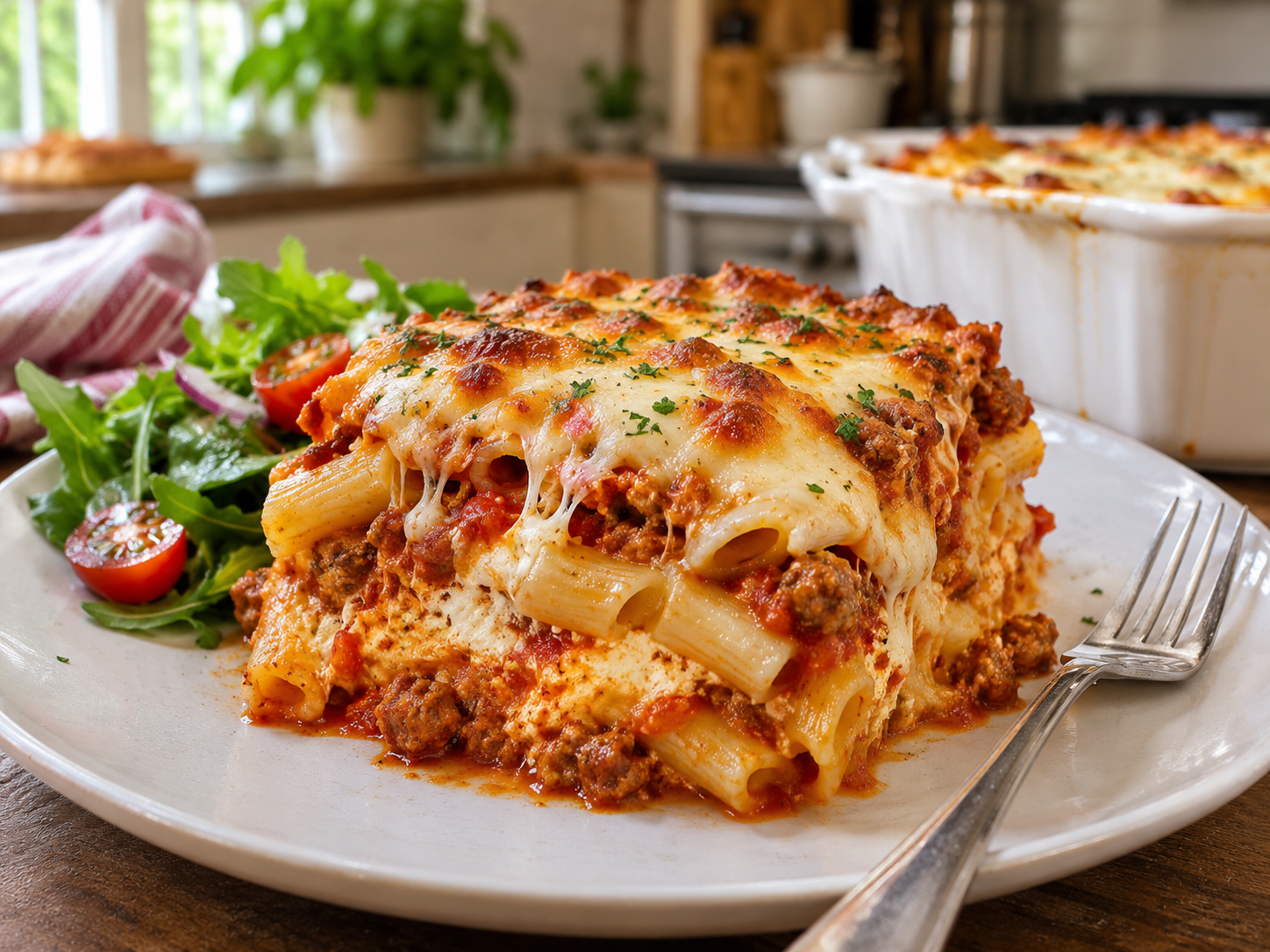
Since the casserole is filling, a crisp salad or simply dressed vegetables bring freshness to the plate. Try green salad with a lemon vinaigrette, roasted broccoli, or green beans with garlic. Warm bread is useful for soaking up extra marinara, though you can keep the meal lighter by serving smaller portions of both pasta and bread. For another make-ahead side, browse our Italian pasta salad; for more family-friendly mains, explore the site’s dinner recipes.
Approximate Nutrition
Nutrition varies with the sausage, marinara, ricotta, and cheese brands you use, as well as how evenly the casserole is divided. A rough estimate for one of six servings made with pork sausage, whole-milk ricotta, and regular pasta is about 560–650 calories, 28–34 grams of protein, 52–62 grams of carbohydrates, and 24–32 grams of fat. These are estimates for planning, not medical or dietary advice; use package labels and a nutrition calculator for a more precise figure. Smaller portions with a vegetable side change the meal’s overall balance.
Frequently Asked Questions
Can I use cottage cheese instead of ricotta?
Yes. Small-curd cottage cheese works as a substitute, though its texture is looser and slightly tangier. Drain it if it looks watery, and blend it briefly for a smoother filling. You may also use a mixture of cottage cheese and Parmesan. The casserole will remain creamy, but the cheese layer will not have exactly the same soft texture as ricotta.
Should I cover baked ziti while it bakes?
Covering it for the first part of baking helps the center heat without over-browning the cheese. Remove the foil for the final 10 to 15 minutes so excess moisture can escape and the top can become golden. If the dish has been refrigerated, it may need extra covered time before you uncover it.
How do I stop baked ziti from drying out?
Use enough sauce to coat every piece of pasta, undercook the pasta slightly, and keep the casserole covered for the first part of baking. Check the edges before the center looks dry, and avoid baking longer than necessary. Letting the dish rest after baking also helps the sauce redistribute instead of running out when you serve it.
Can I assemble baked ziti the night before?
Yes. Assemble it, cover tightly, and refrigerate for up to 24 hours. Bake it directly from the refrigerator, adding extra covered time because the dish starts cold. If you prepare the pasta and sauce more than a day ahead, store them separately and combine them closer to baking so the pasta does not absorb too much sauce overnight.
What pasta works best if I cannot find ziti?
Penne, rigatoni, and mostaccioli are good substitutes because their sturdy shapes hold sauce and stay intact in the oven. Use a similar amount by weight and follow the same early-draining method. Very small pasta shapes can become soft more quickly, so begin checking them well before the package time.
A Cozy Dinner Worth Making Again
This baked ziti with Italian sausage is comforting without asking for complicated techniques or specialty ingredients. The key is to keep the pasta slightly firm, season the ricotta, and make sure the noodles are coated with enough sauce before they go into the oven. Once you know the basic method, it is easy to change the sausage, vegetables, or cheese to suit what is in your kitchen. Make it for a weeknight, share it at a potluck, or assemble it in advance for a busy day. Let it rest, bring the baking dish to the table, and enjoy a generous, cheesy dinner with people you love.
Food-safety note: Cook uncooked ground pork or beef sausage to 160°F, or ground poultry sausage to 165°F. See the USDA safe-temperature guidance for details.