Table of Contents
Introduction
Mediterranean chickpea salad brings together crisp vegetables, tangy feta, briny olives, and hearty chickpeas in a dish that’s as easy to prepare as it is satisfying. Because chickpeas provide both protein and fiber, this salad tends to be considerably more filling than a typical vegetable salad, making it a practical option for readers who want a genuinely satisfying lunch that supports a balanced, weight-conscious approach to eating.
It’s worth being clear from the outset: no single salad, including this one, causes weight loss on its own. Weight management depends on a combination of factors — total daily calorie intake, overall dietary quality, physical activity, consistency over time, sleep, and individual needs. What this salad can offer is a genuinely filling combination of plant-based protein, fiber, and healthy fats from olive oil and feta, which together tend to support a longer-lasting feeling of fullness than a salad built mostly around lettuce and a light dressing.
This is why choosing protein, vegetables, healthy fats, and fiber matters even in a salad like this one. Chickpeas alone provide a meaningful amount of both protein and fiber, but the salad becomes even more balanced and satisfying when paired with additional vegetables, a portion-appropriate amount of healthy fat from olive oil and feta, and, for readers who want extra protein, an additional source like grilled chicken or a hard-boiled egg.
In this article, you’ll find a classic Mediterranean chickpea salad recipe alongside protein-boosted and lower-carb variations, quick preparation tips for busy days, guidance on building a balanced version of this salad, and meal-prep strategies for the week — along with estimated nutritional information for representative versions.
Best Mediterranean Chickpea Salad Recipes for Weight Loss
Classic High-Protein Mediterranean Chickpea Salad
These recipes highlight the traditional combination of ingredients, offering a solid foundation of plant-based protein within high protein lunch ideas.
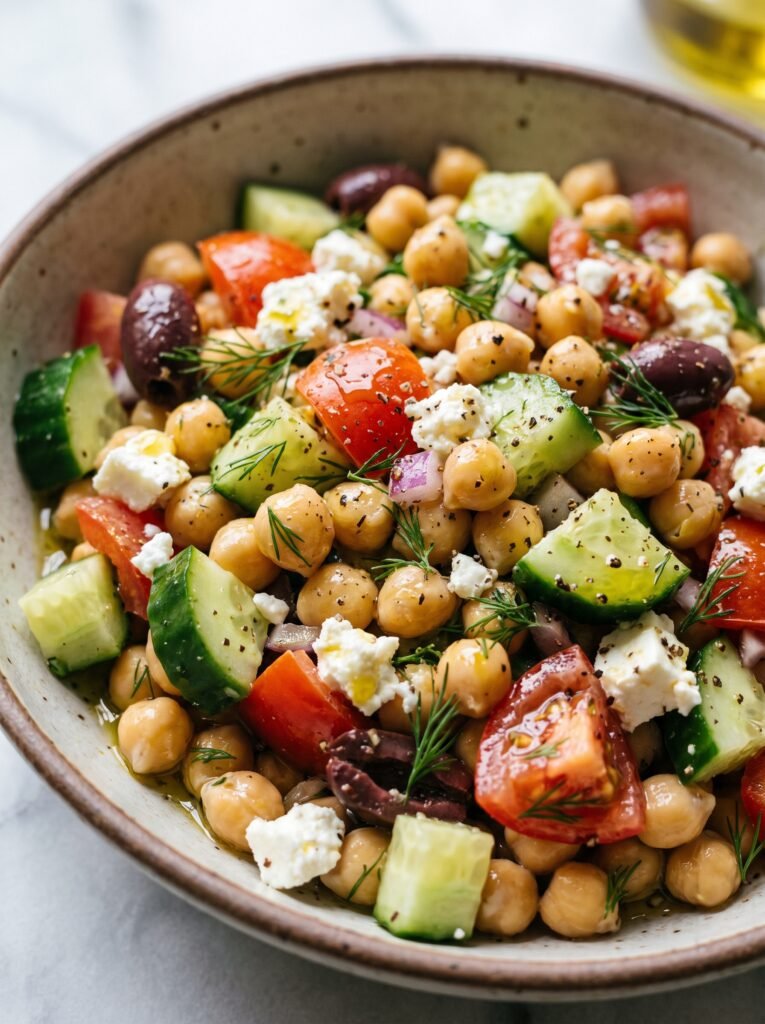
Classic Mediterranean Chickpea Salad Chickpeas combined with cucumber, tomato, red onion, olives, and feta, tossed in a lemon-olive oil dressing, create the traditional version of this salad, balancing protein, fiber, and healthy fats in a single bowl.
Mediterranean Chickpea and Quinoa Salad Adding a modest portion of cooked quinoa to the classic salad increases both the protein and fiber content further, creating an even heartier, more substantial lunch.
Chickpea and White Bean Salad Combining chickpeas with white beans doubles down on plant-based protein and fiber, creating an especially filling variation of the classic recipe.
Mediterranean Chickpea Salad with Grilled Chicken Adding sliced grilled chicken to the classic salad significantly boosts the overall protein content, making this a substantial option for readers who want additional protein beyond what chickpeas provide alone.
Mediterranean Chickpea and Egg Salad Adding sliced or quartered hard-boiled eggs to the classic salad offers another way to increase protein content without introducing meat.
Lower-Carb Mediterranean Chickpea Salad Variations
For readers who want to moderate the carbohydrate content of this legume-based salad, these variations fit within low carb lunch recipes principles.
Reduced-Chickpea Mediterranean Salad Using a smaller portion of chickpeas relative to the vegetables, while adding extra cucumber, tomato, and leafy greens, naturally lowers the overall carbohydrate content of the salad while preserving its signature flavors.
Mediterranean Chickpea and Avocado Salad Adding avocado to a smaller portion of chickpeas increases the healthy fat and fiber content, helping the salad feel satisfying with less reliance on the chickpeas alone for bulk.
Mediterranean Chicken and Vegetable Salad (Chickpea-Free) For readers who want to eliminate legumes entirely, replacing chickpeas with grilled chicken and extra feta and olives recreates the same Mediterranean flavor profile with essentially no carbohydrates from the protein source.
Mediterranean Cauliflower and Chickpea Salad Adding roasted cauliflower alongside a smaller portion of chickpeas increases the vegetable-to-legume ratio, moderating the carbohydrate content per serving.
Mediterranean Chickpea Salad with Extra Herbs and Lemon Increasing the proportion of fresh herbs, lemon juice, and vegetables, while keeping the chickpea portion modest, creates a bright, flavorful salad that doesn’t rely heavily on the chickpeas for flavor.
Quick and Easy Mediterranean Chickpea Salad for Busy Days
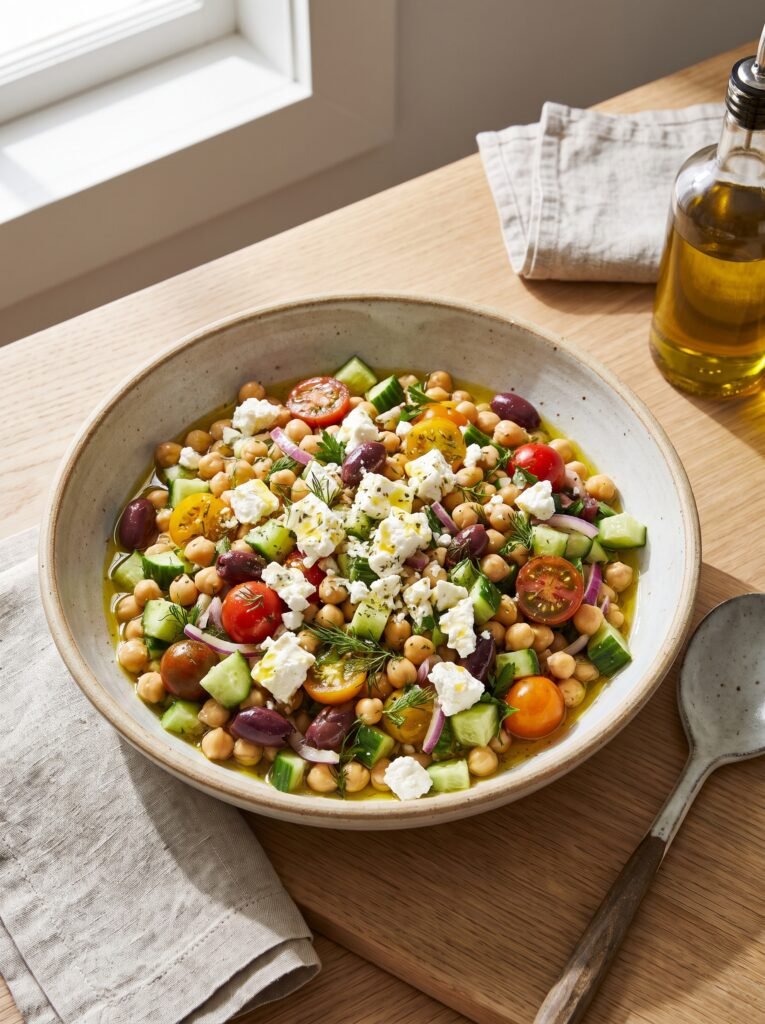
These options focus on easy-to-make recipes for readers with limited time.
Canned Chickpea Shortcut — Using canned, drained, and rinsed chickpeas eliminates the need for any cooking, making this salad assemblable in about ten minutes.
Pre-Chopped Vegetable Mix — A store-bought pre-chopped vegetable mix, combined with canned chickpeas and feta, speeds up preparation considerably.
Make-Ahead Dressing — Preparing a batch of lemon-olive oil dressing in advance and storing it separately allows for quick assembly throughout the week.
Mason Jar Salad — Layering the dressing at the bottom of a jar, followed by chickpeas, vegetables, and feta, keeps the salad fresh and ready to shake and eat when needed.
Rotisserie Chicken Addition — Adding pre-cooked rotisserie chicken to a quickly assembled chickpea salad boosts protein with virtually no additional prep time.
For efficiency, prepare a large batch of the salad’s base ingredients — chickpeas, chopped vegetables, and dressing — at the start of the week, then portion and add feta or other toppings fresh each day to maintain the best texture.
How to Build a Balanced Mediterranean Chickpea Salad
Choosing the Right Protein
Chickpeas themselves provide a meaningful amount of plant-based protein, making this salad a reasonable option even without additional protein sources. For readers who want more substantial protein, grilled chicken, hard-boiled eggs, or an extra portion of feta or white beans can all be added. Protein needs vary from person to person depending on factors such as body composition, activity level, and overall health goals, so readers should consider their individual dietary needs, ideally with guidance from a registered dietitian or healthcare provider.
Adding Vegetables, Fiber, and Healthy Fats
This salad already incorporates a solid base of vegetables — cucumber, tomato, and red onion — but additional vegetables like bell peppers, leafy greens, or roasted cauliflower can further increase the fiber content and volume of the dish. Chickpeas themselves also contribute meaningful fiber alongside their protein content.
Healthy fats in this salad come primarily from olive oil and feta, both of which add flavor and support satiety. Portion awareness still applies — a reasonable drizzle of olive oil and a modest amount of feta is generally sufficient, rather than an especially heavy hand with either ingredient, since both are calorie-dense.
Fiber from the chickpeas and vegetables together makes this salad notably more filling than a salad built around leafy greens alone, which is part of why it tends to be a satisfying lunch option.
Healthy Alternatives to High-Carb Ingredients
Since chickpeas themselves are the primary carbohydrate source in this salad, a few practical adjustments can help moderate the overall carbohydrate content for readers who want a lighter version:
- A reduced portion of chickpeas with extra vegetables instead of a full serving
- Roasted cauliflower instead of quinoa as an added bulk ingredient
- Grilled chicken or extra feta instead of white beans for additional protein without additional carbohydrates
- Extra leafy greens instead of a larger chickpea portion
- Avocado instead of extra chickpeas for additional fiber and healthy fat
These swaps allow readers to enjoy the classic flavors of Mediterranean chickpea salad while adjusting the carbohydrate content to fit personal preferences. Most readers do not need to eliminate chickpeas entirely, since their protein and fiber content is part of what makes this salad genuinely filling.
For more inspiration, see our [Low Carb Recipes] and [Easy Salad Recipes] collections.
Meal Prep, Serving Suggestions & Nutrition
Meal-Prep Tips for Busy Weekdays
Mediterranean chickpea salad is especially well-suited to meal prep, supporting meal prep lunch ideas principles:
- Prepare the base in bulk — Chickpeas, chopped cucumber, tomato, and onion can all be prepped in a large batch at the start of the week.
- Make dressing separately — Preparing a batch of lemon-olive oil dressing and storing it separately allows for fresh-tasting salad throughout the week.
- Add feta fresh — Feta can become slightly less appealing in texture if stored mixed into the salad for many days, so adding it just before eating helps preserve quality.
- Use airtight containers — Proper storage keeps the chickpea and vegetable base fresh for 4–5 days in the refrigerator.
- Keep dressing separate until serving — This prevents the vegetables from becoming soggy over the course of the week.
- Prepare 3–5 servings at once — Batch-preparing the base ingredients on a single day covers most of the week’s lunches.
- Add protein fresh, if desired — Grilled chicken or hard-boiled eggs are best added close to serving time for the best texture and flavor.
Serving Suggestions and Flavor Combinations
Rotating add-ins and toppings keeps Mediterranean chickpea salad interesting throughout the week:
- Classic chickpea salad + extra fresh dill + a squeeze of lemon
- Chickpea and quinoa salad + a sprinkle of pine nuts
- Chickpea salad + grilled chicken + extra olives
- Chickpea and avocado salad + fresh mint
- Chickpea and egg salad + a dash of smoked paprika
Fresh herbs such as dill, parsley, and mint, along with lemon juice and a good-quality olive oil, are central to the bright, fresh flavor of this salad and require no added sugar or refined carbohydrates. A sprinkle of nuts or seeds can add extra crunch and healthy fat.
Explore our [Easy Salad Recipes] and [High Protein Recipes] for additional pairing ideas.
Nutritional Information and Weight-Loss Considerations
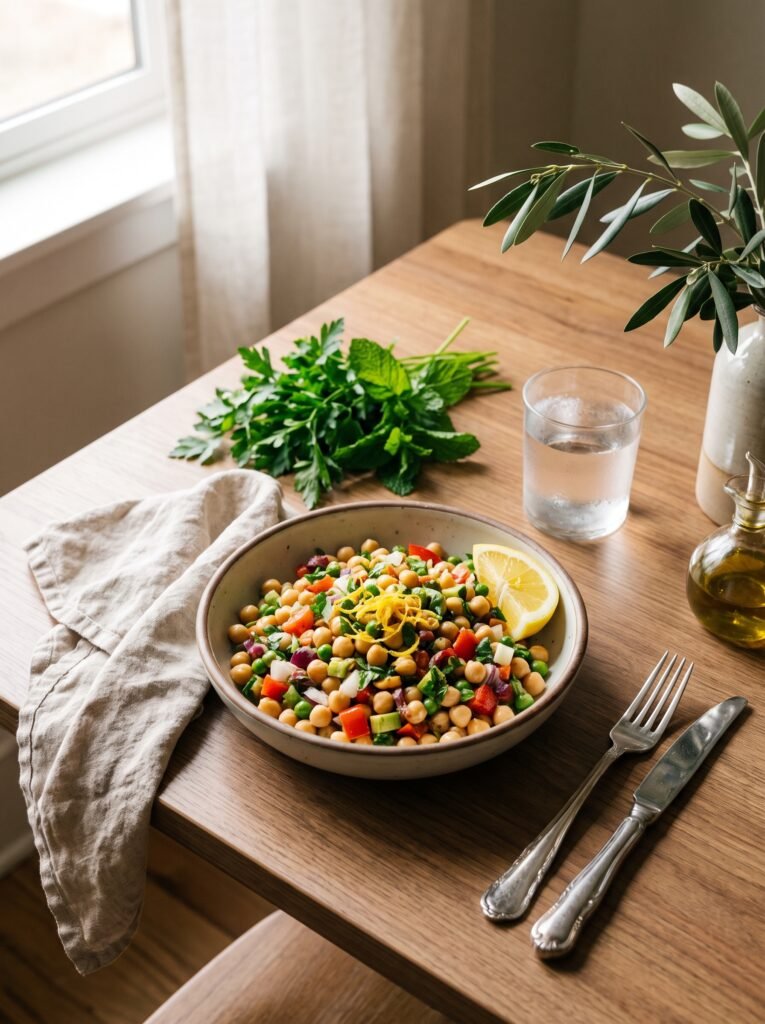
Nutritional values depend heavily on specific ingredients, portion sizes, and any protein additions, so the figures below should be treated as general estimates, per serving.
| Mediterranean Chickpea Salad Variation | Estimated Calories | Protein | Carbohydrates | Fiber | Fat |
|---|---|---|---|---|---|
| Classic Mediterranean Chickpea Salad | 320–380 kcal | 12–16g | 32–38g | 9–11g | 16–20g |
| Chickpea Salad with Grilled Chicken | 400–460 kcal | 28–32g | 30–36g | 8–10g | 18–22g |
| Reduced-Chickpea Salad with Avocado | 300–360 kcal | 8–12g | 22–28g | 9–11g | 20–24g |
| Chickpea and Quinoa Salad | 380–440 kcal | 14–18g | 42–48g | 10–12g | 16–20g |
| Chickpea and Egg Salad | 360–420 kcal | 18–22g | 30–36g | 8–10g | 20–24g |
These estimates suggest that Mediterranean chickpea salad offers meaningful fiber across all variations, with protein content increasing notably when chicken or egg is added. Carbohydrate content is largely driven by the amount of chickpeas or quinoa used, so readers seeking a lower-carbohydrate version can moderate the chickpea portion while still enjoying the salad’s core flavors. As with any meal, no single dish determines weight-loss outcomes. Sustainable results generally come from consistent dietary patterns over time, adequate physical activity, sufficient sleep, and overall calorie balance — not from any one recipe.
Conclusion
Mediterranean chickpea salad offers a genuinely filling, flavorful lunch that fits comfortably into a balanced, weight-conscious approach to eating, thanks to the fiber and plant-based protein chickpeas provide alongside fresh vegetables, olive oil, and feta. By adjusting the chickpea portion, adding extra protein like grilled chicken or egg when desired, and keeping vegetables generous, you can create Mediterranean chickpea salad that stays satisfying and adaptable to your own preferences. Simple swaps — like a reduced chickpea portion with added avocado, or extra vegetables in place of a larger legume serving — make it easy to adjust the carbohydrate content to fit your goals.
Meal preparation is especially practical for this salad, since the base ingredients hold up well over several days when the dressing and delicate toppings like feta are kept separate. Portion awareness and overall dietary balance remain central to any long-term goal, and it’s worth remembering that no single salad determines your results — consistency, activity, and a well-rounded approach to eating matter far more than any individual meal.
Try one of the Mediterranean chickpea salad variations above this week — whether it’s the classic version or a protein-boosted take with grilled chicken — and share your favorite combination in the comments below.
For more inspiration, browse our [Healthy Dinner Recipes], [Meal Prep Recipes], and [Easy Healthy Recipes] collections.
More Recipe Inspiration
Looking for more delicious ideas to try? Visit Jowel Recipes to discover more recipe inspiration and creative dishes for your next meal.
Frequently Asked Questions
1. Is Mediterranean chickpea salad a good option for weight loss recipe? Mediterranean chickpea salad can be a genuinely filling lunch option, since chickpeas provide both protein and fiber, which together support a longer-lasting feeling of fullness. Adding grilled chicken or egg further increases the protein content for readers who want a more substantial meal. Individual needs vary, so portions should be adjusted based on your own goals and appetite.
2. Can I make a lower-carb version of this salad? Yes. Using a smaller portion of chickpeas while adding extra vegetables, avocado, or a protein source like grilled chicken helps lower the overall carbohydrate content while preserving the salad’s classic Mediterranean flavors.
3. What ingredients should I include in a healthy Mediterranean chickpea salad? A balanced version generally includes chickpeas for protein and fiber, a variety of vegetables (cucumber, tomato, red onion), a modest amount of feta for healthy fat and flavor, and a lemon-olive oil dressing. Fresh herbs like dill and parsley add brightness without any added sugar.
4. Is Mediterranean chickpea salad suitable for meal prep? Yes, this salad is well-suited to meal prep. The chickpea and vegetable base can be prepared in bulk and stored for 4–5 days, though it’s best to keep the dressing separate and add delicate toppings like feta closer to serving time for the best texture.
5. Can eating Mediterranean chickpea salad help with weight management? The combination of protein and fiber from chickpeas may help you feel fuller for longer, which can support efforts to manage overall calorie intake. That said, weight management depends on multiple factors, including total daily calories, dietary quality, physical activity, sleep, and consistency over time — not on any single meal or ingredient.