Table of Contents
Finding a lunch that is quick to prepare, genuinely satisfying, and supportive of your weight-loss goals can feel like a daily challenge — especially when the clock is working against you. That’s where low carb lunch ideas for weight loss come in. A low-carb lunch typically centers on lean protein, non-starchy vegetables, healthy fats, and fiber-rich ingredients, while limiting refined carbohydrates like white bread, pasta, and sugary condiments.
These meals can be a useful part of a weight-management strategy for many people, primarily because they tend to be higher in protein and fiber — two nutrients strongly associated with feeling fuller for longer. That said, it’s important to set realistic expectations from the outset: low-carb eating does not automatically cause weight loss. Weight management is influenced by a combination of factors, including overall calorie intake, the quality of your diet, physical activity levels, consistency over time, sleep, and individual metabolic differences. A well-constructed low-carb lunch is simply one practical tool that can help support a broader, sustainable approach to healthy eating.
In this guide, you’ll find a variety of high-protein, vegetarian, and quick-prep lunch ideas, along with practical guidance on how to build a balanced plate, smart substitutions for high-carb staples, meal-prep strategies for busy weekdays, and estimated nutritional information to help you make informed choices. Whether you’re packing lunch for the office, working from home, or prepping meals for the week ahead, these ideas are designed to be realistic, flexible, and genuinely enjoyable to eat.
Best Low Carb Lunch Ideas for Weight Loss
High-Protein Lunch Ideas
Protein plays a central role in any satisfying low-carb lunch. It supports muscle maintenance, promotes satiety, and requires more energy to digest compared to fats or carbohydrates. Here are five high-protein lunch ideas worth adding to your rotation.
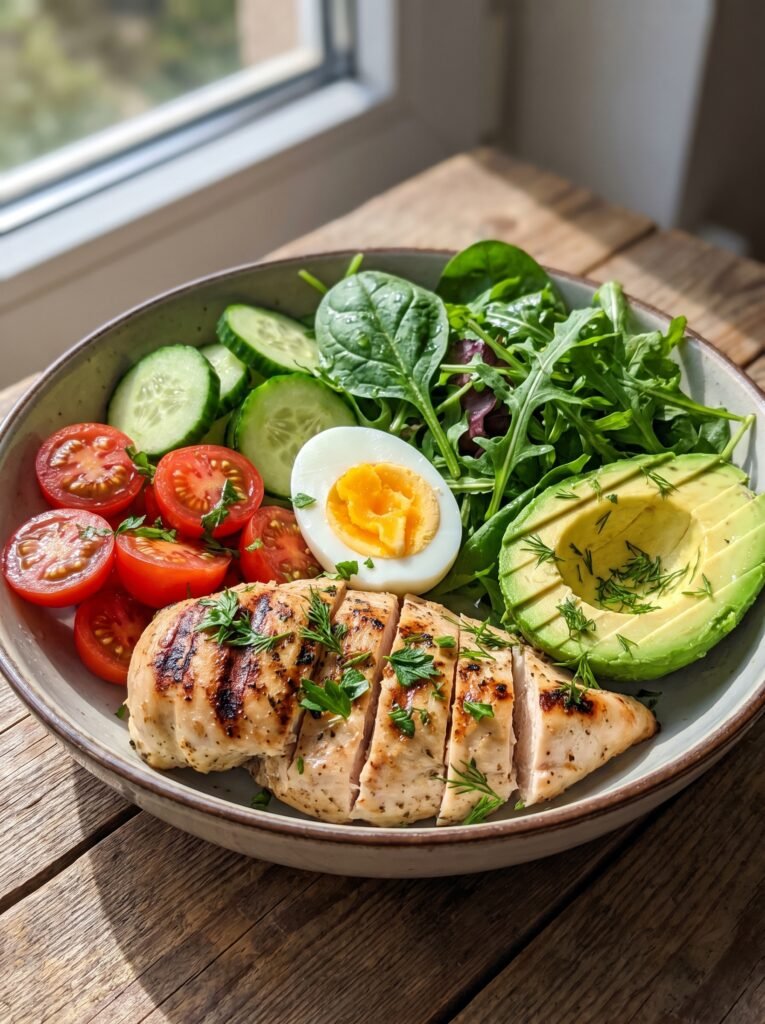
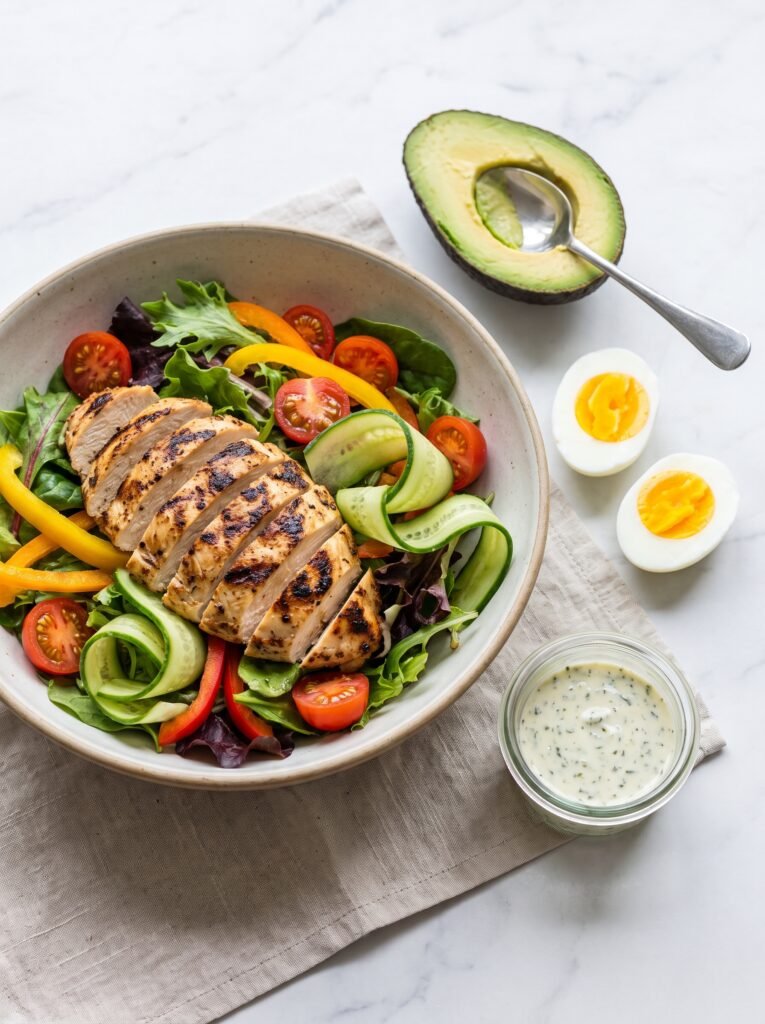
Grilled chicken salad. Sliced grilled chicken breast served over a bed of mixed greens, cucumber, cherry tomatoes, and a light olive oil vinaigrette is a classic for good reason. It’s filling thanks to the combination of lean protein and fiber from the vegetables, and it takes only about 15–20 minutes to prepare if the chicken is pre-cooked. For a dairy-free version, swap feta cheese for avocado slices.
Turkey lettuce wraps. Sliced turkey breast, avocado, tomato, and mustard wrapped in large lettuce leaves (romaine or butter lettuce work well) make for a portable, low-effort lunch. This option is easy to assemble in under 10 minutes and works particularly well for meal prep, since the fillings can be prepared ahead and wrapped just before eating. Rotisserie chicken can be substituted for turkey if preferred.
Tuna and avocado salad. Canned tuna mixed with mashed avocado, a squeeze of lemon, diced celery, and red onion delivers a creamy, satisfying combination of protein and healthy fat. It requires no cooking at all, making it one of the fastest options on this list. Greek yogurt can replace some of the avocado for a tangier, slightly lighter version.
Egg and vegetable bowls. Hard-boiled or scrambled eggs paired with sautéed spinach, bell peppers, and mushrooms create a warm, nutrient-dense bowl that’s rich in protein and fiber. Eggs are inexpensive and versatile, and this dish can be prepared in batches for the week. For a vegan-friendly alternative, firm tofu scrambled with turmeric offers a similar texture and protein profile.
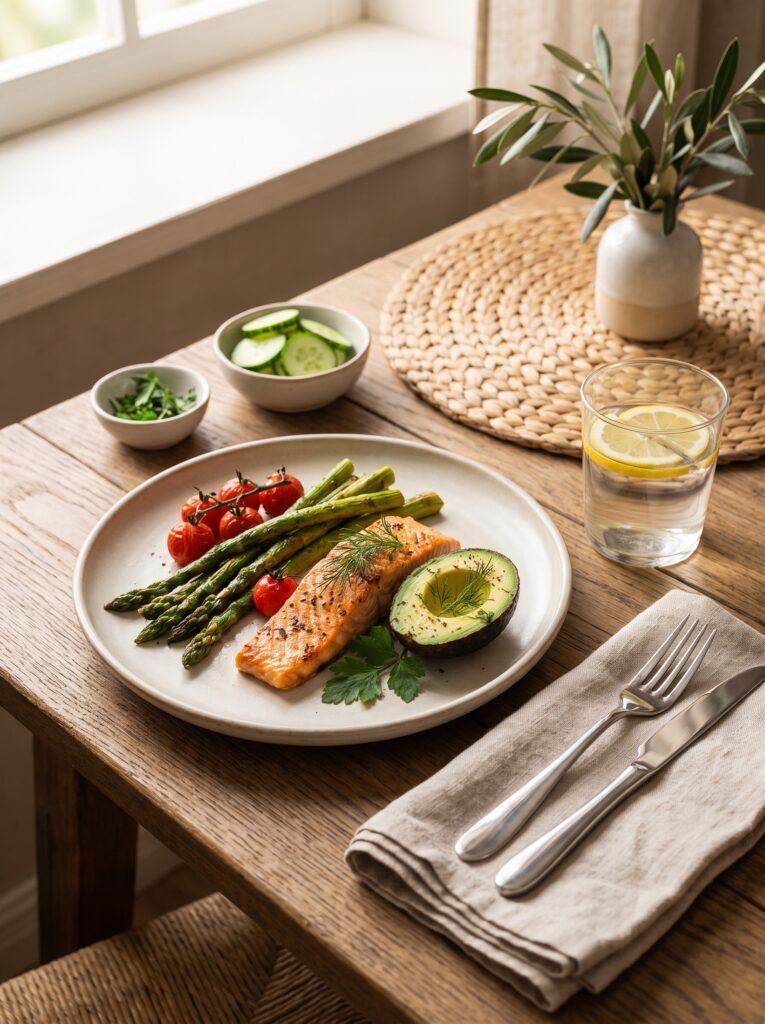
Grilled salmon with vegetables. Salmon fillets grilled or baked and served alongside roasted broccoli or asparagus provide a strong dose of protein along with omega-3 fatty acids. This dish takes slightly more preparation time — around 25–30 minutes — but reheats well, making it a solid option for [Meal Prep Recipes]. Shrimp or white fish can be used as a lighter substitution.
Low-Carb Vegetarian Lunch Ideas
Vegetarian lunches can absolutely deliver on protein, fiber, and healthy fats when thoughtfully composed. These options rely on eggs, dairy, legumes, and vegetables to create satisfying, low-carb meals.
Greek salad with eggs. Cucumber, tomato, red onion, kalamata olives, and feta cheese combined with sliced hard-boiled eggs and a simple olive oil and lemon dressing offer a Mediterranean-inspired lunch that’s rich in healthy fats and moderate in protein. This is one of the easier [Easy Salad Recipes] to prepare, taking about 10 minutes if eggs are boiled in advance.
Cauliflower rice vegetable bowl. Riced cauliflower sautéed with garlic, topped with black beans, diced avocado, and a mild salsa, creates a filling, fiber-rich bowl. This dish provides plant-based protein and a satisfying texture that mimics traditional rice bowls without the carbohydrate load.
Zucchini noodle salad. Spiralized zucchini tossed with cherry tomatoes, basil, pine nuts, and a light pesto sauce makes for a refreshing, low-carb take on pasta salad. It’s particularly well-suited to warmer months and can be prepared in advance, as zucchini noodles hold up reasonably well when stored properly.
Avocado and cottage cheese bowl. Sliced avocado paired with cottage cheese, cherry tomatoes, and a sprinkle of black pepper is one of the simplest lunches on this list — requiring virtually no preparation. Cottage cheese is notably high in protein relative to its carbohydrate content, making it a useful staple for vegetarian low-carb eating.
Egg and spinach skillet. Eggs scrambled with fresh spinach, a small amount of feta, and a dash of nutmeg create a warm, comforting lunch that’s ready in under 10 minutes. This dish works well for readers seeking [Healthy Breakfast Ideas] that double as lunch options.
Together, these vegetarian dishes demonstrate that plant-forward eating and low-carb principles can coexist, offering vitamins, minerals, fiber, and healthy fats without relying on meat.
Quick and Easy Low Carb Lunches
For readers with limited time, these recipes prioritize speed and minimal cleanup without sacrificing nutritional quality.
Chicken lettuce wraps. Shredded rotisserie chicken tossed with a light sesame-ginger dressing and wrapped in lettuce leaves can be assembled in about 5 minutes if the chicken is pre-cooked.
Tuna cucumber boats. Cucumber halves hollowed out and filled with a tuna salad mixture offer a low-effort, no-cook lunch that’s easy to transport.
Turkey and cheese roll-ups. Turkey slices rolled around a strip of cheese and optionally a thin slice of cucumber make for a portable, protein-rich snack-lunch hybrid — ideal for particularly busy days.
Avocado egg salad. Mashed hard-boiled eggs combined with avocado, a touch of mustard, and lemon juice creates a creamy, mayo-free egg salad that pairs well with lettuce cups or sliced bell peppers.
Greek yogurt and vegetable bowl. Plain Greek yogurt mixed with cucumber, dill, and a drizzle of olive oil (similar to a tzatziki-style bowl) served alongside raw vegetables offers a cooling, protein-rich option for hot days.
A practical strategy for busy weekdays is to prepare core components — boiled eggs, grilled chicken, chopped vegetables — in bulk over the weekend, so that assembling any of these [Quick and Easy Low Carb Lunches] takes only a few minutes each day.
How to Build a Healthy Low Carb Lunch
Choosing the Right Protein
Protein is often considered the foundation of a satisfying low-carb lunch, as it supports muscle maintenance and tends to promote a feeling of fullness more effectively than carbohydrates alone. Useful protein sources for low-carb lunches include chicken breast, turkey, eggs, tuna, salmon, shrimp, lean beef, Greek yogurt, cottage cheese, and tofu.
It’s worth noting that individual protein needs vary considerably based on factors such as body size, activity level, age, and personal health goals. Rather than following a one-size-fits-all rule, readers are encouraged to consider their own dietary needs — and, where appropriate, consult a registered dietitian or healthcare provider for personalized guidance, particularly if they have specific medical conditions or are engaging in intense physical training.
Adding Vegetables, Fiber, and Healthy Fats
A well-rounded low-carb lunch extends beyond protein alone. Non-starchy vegetables such as leafy greens, broccoli, cauliflower, cucumber, zucchini, bell peppers, and tomatoes contribute fiber, vitamins, and minerals while adding very few carbohydrates. Fiber, in particular, plays a meaningful role in digestive health and can contribute to a feeling of fullness after eating.
Healthy fats — from sources like avocado, olive oil, nuts, and seeds — also deserve a place on the plate. Fat contributes to satiety and helps the body absorb certain fat-soluble vitamins. However, because fats are calorie-dense, portion awareness matters here as much as it does with any other food group. A tablespoon of olive oil or a quarter of an avocado is generally a reasonable serving size to keep an eye on, particularly for those tracking calorie intake as part of a weight-management plan.
Healthy Alternatives to High-Carb Ingredients
One of the more approachable aspects of low-carb eating is the range of simple substitutions available for traditionally high-carb staples:
- Lettuce wraps instead of bread
- Cauliflower rice instead of white rice
- Zucchini noodles instead of regular pasta
- Mashed cauliflower instead of mashed potatoes
- Cucumber boats instead of bread-based sandwiches
It’s worth emphasizing that readers do not necessarily need to eliminate carbohydrates altogether to benefit from these swaps. The goal is to create balanced, enjoyable meals that fit a person’s individual preferences, cultural food traditions, and lifestyle — not to pursue an all-or-nothing approach that may be difficult to sustain. For those exploring a broader range of options, browsing [Low Carb Recipes] or [Healthy Dinner Recipes] can offer additional inspiration for extending these principles beyond lunch.
Meal Prep, Serving Suggestions & Nutrition
Meal-Prep Tips for Busy Weekdays
Meal prep is one of the most effective ways to make low-carb lunch ideas for weight loss realistic on a weekly basis. Consider the following approach:
- Cook proteins in batches. Grill or bake several chicken breasts, hard-boil a dozen eggs, or bake a tray of salmon at the start of the week.
- Wash and cut vegetables in advance. Pre-chopped cucumber, bell peppers, and leafy greens save valuable time during the week.
- Prepare homemade dressings. A simple olive oil vinaigrette or yogurt-based dressing can be made in bulk and stored for several days.
- Store ingredients separately. Keeping proteins, vegetables, and dressings in separate containers helps preserve texture and freshness.
- Use airtight containers. Proper storage extends the shelf life of prepped ingredients and prevents unwanted odors from mixing.
- Prepare 3–5 lunches at once. Batching a few days’ worth of meals reduces daily decision fatigue.
- Keep sauces separate until serving. This prevents salads and bowls from becoming soggy before mealtime.
These strategies are particularly useful for readers interested in [Meal Prep Recipes] more broadly, as the same principles apply across breakfast, lunch, and dinner.
Serving Suggestions and Flavor Combinations
Variety helps prevent low-carb eating from feeling repetitive. Consider rotating through combinations such as:
- Grilled chicken, avocado, and mixed greens
- Salmon, broccoli, and lemon
- Turkey, lettuce, cucumber, and a Greek yogurt sauce
- Tuna, avocado, and cucumber
- Eggs, spinach, and feta
- Cauliflower rice, chicken, and roasted vegetables
Herbs and spices — such as garlic, paprika, cumin, fresh basil, dill, and black pepper — can add substantial flavor without contributing meaningful carbohydrates. Similarly, dressings made from olive oil, vinegar, lemon juice, or plain yogurt tend to offer more flavor per calorie than many bottled, sugar-laden alternatives. These combinations pair naturally with ideas found among [Healthy Chicken Recipes] and [High Protein Recipes] for readers looking to expand their repertoire further.
Nutritional Information and Weight-Loss Considerations
Nutritional values for any of these lunches will vary depending on specific ingredients, portion sizes, and preparation methods. As a general point of reference, a typical grilled chicken salad with olive oil dressing might provide approximately:
- Calories: 350–450 kcal
- Protein: 30–35 g
- Carbohydrates: 8–12 g
- Fiber: 3–5 g
- Fat: 18–24 g
These figures are estimates only and should not be treated as precise or universally applicable. Actual values depend heavily on serving size and specific ingredients used.
It’s also worth reiterating a key point: no single meal determines the success of a weight-management effort. Sustainable weight management tends to depend on consistent dietary patterns over weeks and months, overall calorie balance, food quality, physical activity, sleep, and stress management — rather than any one “perfect” lunch. Low-carb lunches can be a helpful, practical component of a broader healthy eating pattern, but they work best when viewed as part of that bigger picture rather than a standalone solution.
More Recipe Inspiration
Looking for more delicious ideas to try? Visit Jowel Recipes to discover more recipe inspiration and creative dishes for your next meal.
Frequently Asked Questions
1. What is a good low-carb lunch for weight loss recipe? A good low-carb lunch typically combines a lean protein source (such as chicken, turkey, eggs, or fish) with non-starchy vegetables and a modest portion of healthy fat, such as olive oil or avocado. Options like grilled chicken salad or an egg and vegetable bowl tend to be filling while remaining relatively low in carbohydrates and overall calories, though individual needs vary.
2. Can I eat lunch while following a low-carb diet? Yes. Low-carb eating does not mean skipping meals — it means choosing lunch options that emphasize protein, vegetables, and healthy fats over bread, pasta, rice, and sugary items. Many of the recipes in this article, such as turkey lettuce wraps or tuna and avocado salad, are specifically designed to fit within a low-carb framework.
3. What foods should I include in a low-carb lunch? A balanced low-carb lunch generally includes a protein source, a generous portion of non-starchy vegetables (such as leafy greens, broccoli, or cucumber), and a moderate amount of healthy fat. Fiber-rich vegetables and legumes can also help support satiety and digestive health.
4. Are low-carb lunches suitable for meal prep? Many low-carb lunch ideas are well-suited to meal prep, particularly those built around cooked proteins like grilled chicken, hard-boiled eggs, or baked salmon. Storing components separately and combining them just before eating helps maintain freshness and texture throughout the week.
5. Can low-carb lunches help with weight management? Low-carb lunches may support weight management by promoting satiety through higher protein and fiber content, which can help some people manage overall calorie intake more easily. However, weight management depends on multiple factors, including total calorie balance, diet quality, physical activity, and consistency over time — not on any single meal or food choice. Readers with specific health concerns should consult a healthcare provider or registered dietitian for personalized advice.
Conclusion
Building satisfying, balanced low-carb lunches doesn’t have to be complicated or time-consuming. By focusing on lean protein, non-starchy vegetables, healthy fats, and fiber-rich ingredients, it’s possible to create meals that are both practical for busy weekdays and genuinely enjoyable to eat. Meal prep strategies — from batch-cooking proteins to prepping vegetables in advance — can make these habits far easier to sustain over time, while mindful portion awareness helps keep overall calorie intake in check.
Ultimately, no single lunch or diet approach guarantees weight loss on its own. Low-carb lunches work best as one practical piece of a broader, consistent approach to healthy eating, physical activity, and overall lifestyle balance. We encourage you to try one of the lunch ideas outlined above this week — whether it’s a quick tuna cucumber boat or a heartier grilled salmon bowl — and see which combinations work best for your schedule and taste preferences. Feel free to share your favorite low-carb lunch combination or any variations you’ve discovered.