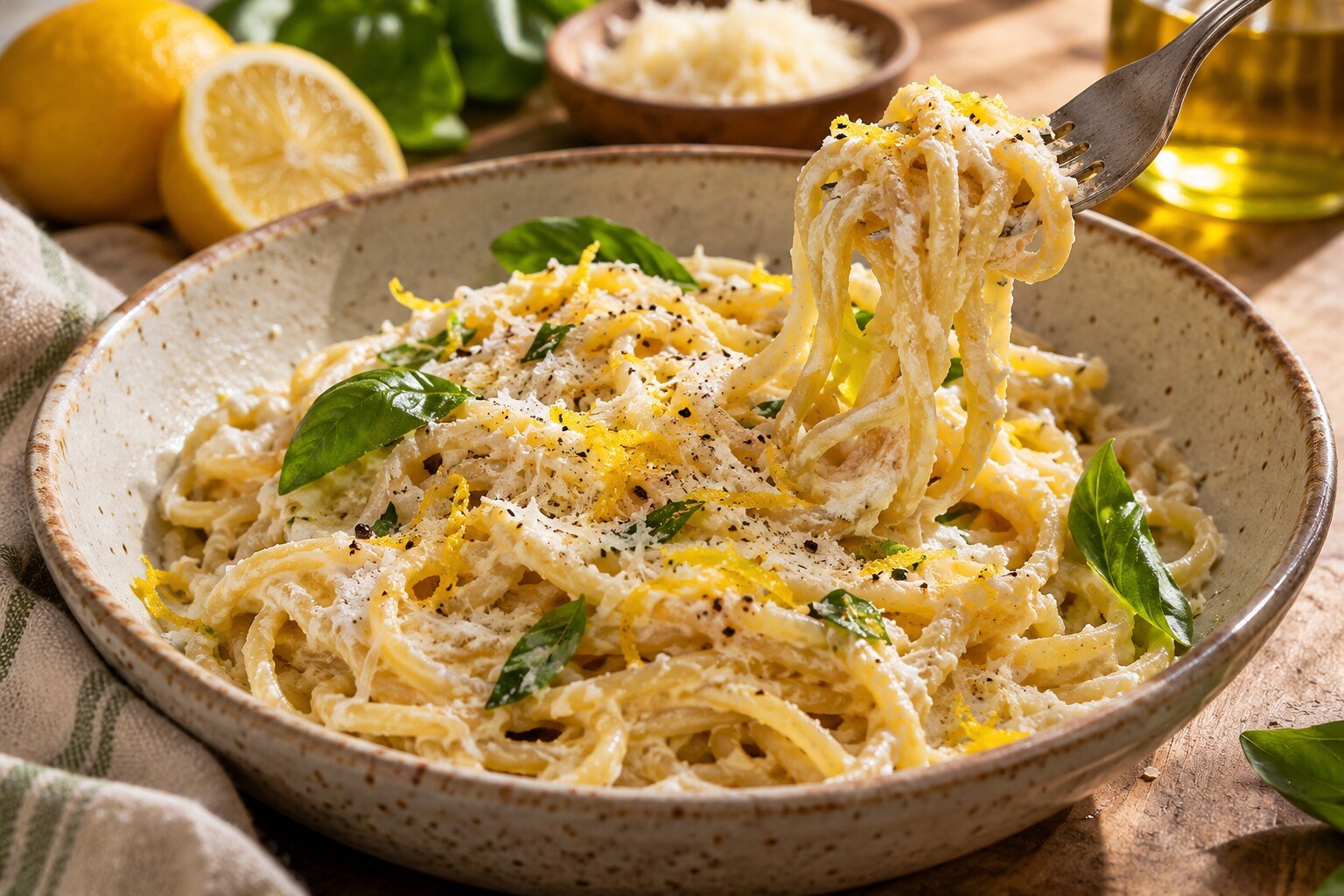
Lemon ricotta pasta is a bright, comforting dinner made with everyday ingredients. Ricotta turns into a light sauce when it is loosened with starchy pasta water, while lemon zest and juice keep each bite fresh. Baby spinach wilts right into the warm noodles, and a little Parmesan adds savory depth. The result feels special but comes together quickly enough for a weeknight.
Unlike a heavy cream sauce, this recipe relies on ricotta, olive oil, and pasta water for its silky texture. The key is to mix the cheese off the heat and add pasta water gradually. That keeps the sauce smooth and helps it cling to the noodles. Use the recipe as written, then adjust the lemon, pepper, and cheese to suit your table.
Why this pasta works
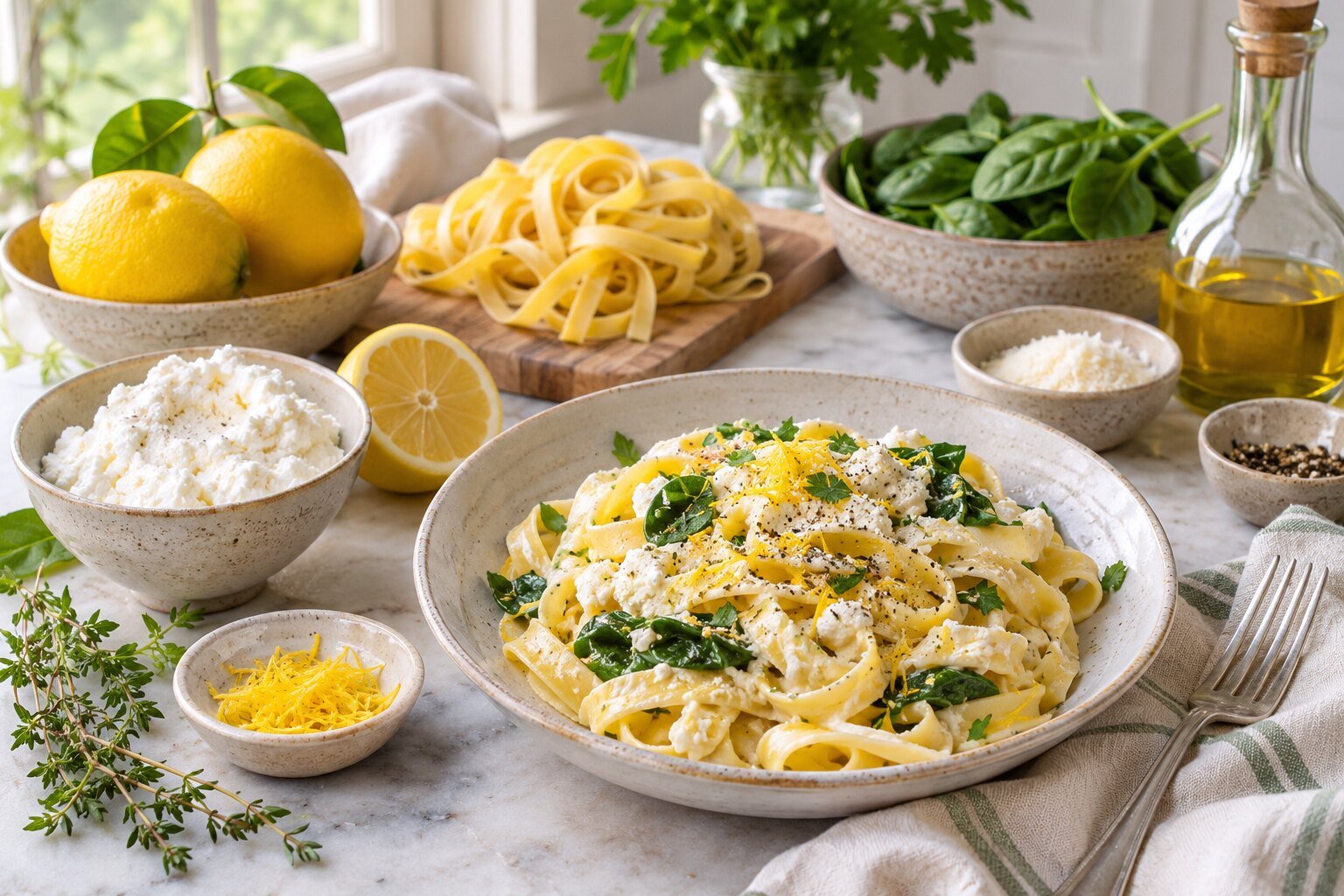
Ricotta has a mild flavor and soft texture, which makes it a useful base for a quick sauce. Pasta water contains starch released from the noodles; stirring a little into the cheese helps create a cohesive coating instead of a thick dollop. Lemon zest supplies fragrant citrus oils, while a measured amount of juice adds brightness. Spinach brings color and tenderness without needing a separate pan.
The recipe is flexible. Short pasta such as rigatoni, fusilli, or shells catches the ricotta in its ridges and curves. Long noodles like linguine or spaghetti also work well if you toss them thoroughly. Freshly grated Parmesan melts more smoothly than pre-shredded cheese, but use what you have and add it gradually. Keep a mug of pasta water nearby: a spoonful can refresh the sauce just before serving.
Ingredients
- 12 ounces (340 g) pasta, such as rigatoni, fusilli, or linguine
- 1 cup (about 240 g) whole-milk ricotta
- 2 tablespoons extra-virgin olive oil, plus a little for finishing
- 1 medium lemon, finely zested and juiced to taste
- 1 small garlic clove, finely grated or minced (optional)
- 3/4 cup finely grated Parmesan, divided
- 4 packed cups baby spinach
- 1/2 teaspoon kosher salt, plus more for pasta water
- Freshly ground black pepper, to taste
- Pinch of red pepper flakes (optional)
- 2 tablespoons chopped fresh basil or parsley (optional)
Before you cook
Set out and measure the ingredients first because the sauce comes together quickly once the pasta is drained. Zest the lemon before cutting it, and avoid scraping into the bitter white pith. If your ricotta looks watery, spoon it into a fine sieve for a few minutes or stir it well and use less pasta water at first. Wash and dry the spinach so extra water does not dilute the sauce.
Bring a large pot of water to a boil and salt it generously; it should taste pleasantly seasoned, not harsh. Cook the pasta until just shy of al dente according to its package directions. It will finish cooking briefly in the pan. Before draining, reserve at least one cup of pasta water. This is the most useful adjustment tool in the recipe, so do not pour it all away.
Step-by-step instructions
- Cook the pasta. Boil the pasta in well-salted water until it is just shy of al dente. Stir once or twice so pieces do not stick. Reserve one cup of cooking water, then drain the pasta.
- Make the ricotta mixture. While the pasta cooks, place ricotta, olive oil, lemon zest, half of the Parmesan, black pepper, and optional garlic in a large heatproof bowl. Stir until combined. Add one tablespoon of lemon juice, taste, and add more if you like a sharper citrus flavor.
- Wilt the spinach. Return the empty pasta pot to low heat. Add the spinach with a splash of reserved pasta water and stir just until it begins to wilt, about one minute. You can also add spinach to the drained pasta while it is still hot if your leaves are tender.
- Coat the pasta. Add the drained noodles to the pot with the spinach. Turn off the heat. Spoon in the ricotta mixture and toss. Add warm pasta water one tablespoon at a time until the sauce looks glossy and clings to the pasta. It may seem loose at first; the cheese and starch will come together as you toss.
- Finish and serve. Fold in the remaining Parmesan and taste for salt, pepper, and lemon. Add red pepper flakes or fresh herbs if desired. Serve immediately with a little olive oil and extra Parmesan.
How to get a smooth, creamy sauce
Keep the heat gentle. Ricotta can become grainy if it is boiled or cooked hard, so toss it with the pasta after turning off the burner. The residual heat is enough to warm the sauce. Add hot pasta water gradually instead of pouring in a large amount at once. If the sauce becomes too thick, loosen it with another spoonful. If it looks watery, keep tossing for 30 seconds; the starch often helps it thicken.
Use room-temperature ricotta if you have time, because it blends more easily. If the cheese is cold from the refrigerator, add a small splash of pasta water to the bowl and whisk before combining it with the noodles. Do not add lemon juice to very hot ricotta before loosening it, as acidity can make the texture seem curdled. Zest is forgiving, and juice can be added in small amounts at the end.
Helpful tips and easy substitutions
Choose a pasta shape you enjoy. Rigatoni and shells hold pockets of sauce; penne and fusilli are easy to toss; spaghetti makes a lighter, more delicate bowl. If using a very small pasta, reduce the cooking time slightly and watch the consistency because it can absorb liquid quickly.
Adjust the lemon to taste. Lemons vary in size and acidity. Start with zest and a tablespoon of juice, then taste after tossing. For a softer citrus flavor, use zest only. For a brighter dish, add juice in small increments. A little extra Parmesan can balance a tart sauce.
Add vegetables thoughtfully. Peas, asparagus tips, or thinly sliced zucchini can be cooked with the pasta during the final minutes. If using mushrooms, roast or sauté them separately so they brown instead of releasing excess water into the sauce. For a heartier meal, add cooked chicken or white beans.
Use what is on hand. Part-skim ricotta works, though the sauce may be less rich. Pecorino can replace some Parmesan, but it is saltier, so taste before adding extra salt. Baby kale can replace spinach; give it a little longer to soften. Gluten-free pasta also works, but reserve its cooking water and add it carefully because its starchiness differs from wheat pasta.
What to serve with lemon ricotta pasta
Serve this dish with a crisp green salad, roasted broccoli, or green beans for a simple dinner. Garlic bread is a welcome side if you want a more filling meal, though the pasta is already satisfying. A few toasted pine nuts or chopped walnuts add crunch; sprinkle them on at the table so they stay crisp. For a brunch-inspired menu, you can pair a smaller pasta portion with fruit or a simple salad and explore our golden brioche French toast for another weekend favorite. If you prefer a breakfast idea, our fluffy blueberry buttermilk pancakes are a reader-friendly option.
Storage and reheating
This pasta tastes best freshly tossed because ricotta thickens as it cools. Store leftovers in an airtight container in the refrigerator for up to three days. Reheat gently in a saucepan over low heat with one or two tablespoons of water or milk, stirring often. Add liquid a little at a time until the sauce loosens. Avoid high heat, which can make the cheese separate or turn grainy. A microwave also works: cover loosely, warm in short intervals, and stir between each one.
Freezing is not ideal for this recipe. Ricotta can change texture after freezing and thawing, and the spinach may become soft. If you want to prep ahead, grate the cheese, zest the lemon, and wash the spinach in advance. Cook the pasta and combine the sauce just before serving for the best texture.
Common questions
Can I make it without spinach? Yes. Leave it out or replace it with peas, asparagus, or another quick-cooking vegetable. Keep the pasta water and sauce method the same.
Can I use cottage cheese instead of ricotta? Ricotta gives the smoothest result. Cottage cheese can be blended until mostly smooth, but its flavor and texture differ. If you use it, blend first and add pasta water gradually.
Can I make the sauce ahead? Mix the ricotta, zest, pepper, and Parmesan a few hours ahead and refrigerate. Bring it closer to room temperature before tossing. Add lemon juice and pasta water when finishing the hot pasta.
Why is my sauce grainy? The pan may have been too hot, or the cheese was cooked rather than gently warmed. Turn off the burner before adding ricotta and toss with warm—not boiling—water a little at a time.
Recipe card
Prep: 10 minutes | Cook: 15 minutes | Total: 25 minutes | Serves: 4
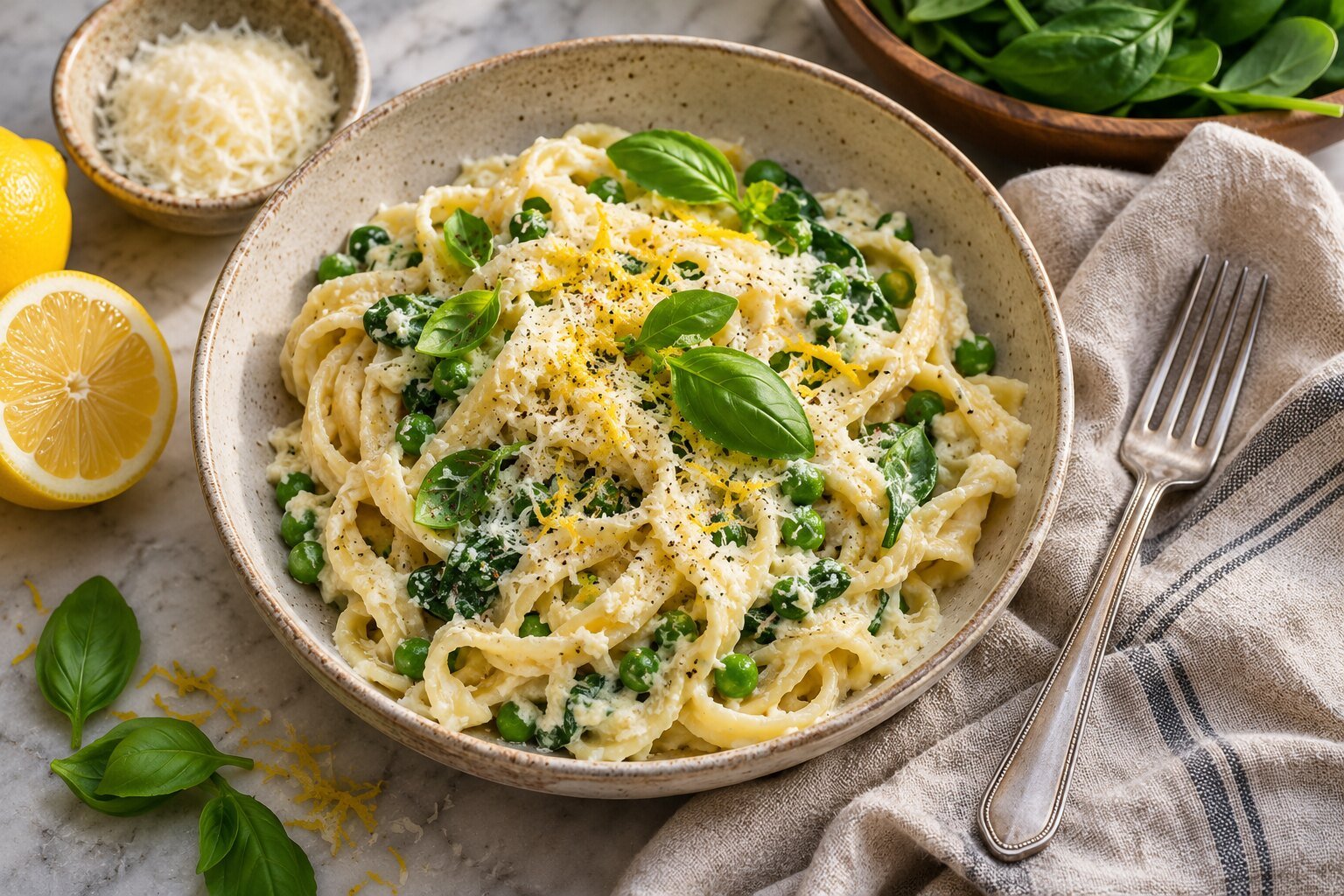
Ingredients: 12 oz pasta; 1 cup ricotta; 2 tbsp olive oil; zest and juice of 1 lemon; 3/4 cup grated Parmesan; 4 cups baby spinach; salt and pepper; optional garlic, red pepper flakes, and herbs.
Method: Cook pasta in salted water until just shy of al dente and reserve 1 cup water. Stir ricotta with olive oil, lemon zest, half the Parmesan, and pepper. Wilt spinach with a splash of pasta water. Turn off the heat, add pasta and ricotta mixture, then toss with reserved water a little at a time until glossy. Finish with remaining Parmesan, lemon juice to taste, and herbs. Serve warm.
This is a flexible home-cooking recipe rather than a fixed restaurant formula. Taste as you go, especially when adjusting salt, lemon, and cheese. The starchy cooking water is what helps the mild ricotta become a sauce, so keep it nearby and use only enough to coat the noodles. With a bright citrus finish and tender greens, this simple dinner is easy to repeat and easy to adapt.
Make it a balanced, flexible dinner
For a more substantial meal, add a source of protein without changing the sauce. Stir in shredded cooked chicken, crisp white beans, or drained chickpeas at the same time as the pasta. These additions should already be cooked and warm; let them heat through in the residual warmth rather than boiling the ricotta. A little extra lemon and black pepper help keep a richer bowl tasting fresh. If you add salty ingredients such as pancetta or olives, taste before seasoning the finished dish.
You can also build a fuller vegetable plate alongside it. Roasted broccoli or cauliflower adds browned edges, while a simple salad with cucumber and a mild vinaigrette balances the creamy texture. If serving a crowd, keep the pasta, sauce, and greens separate until close to dinner. Tossing too early lets the noodles absorb the moisture and the sauce may thicken before everyone sits down. Warm the plates if convenient, because this dish cools quickly once served.
Scaling the recipe
To serve two, halve the pasta, ricotta, and spinach, but still reserve plenty of cooking water. A smaller pot can make pasta water extra starchy, so begin with just a tablespoon in the sauce and add more only as needed. For six people, increase the ingredients by one and a half times and use a very large bowl for tossing. If the pot feels crowded, toss in two batches and combine them gently. Season in stages rather than multiplying salt exactly, since Parmesan brands differ in saltiness.
When doubling for a gathering, prepare the ricotta mixture in a large bowl and keep the lemon juice on the conservative side until the end. Pasta that sits on a buffet continues to absorb moisture, so serve a small pitcher of warm pasta water on the side or refresh the sauce before serving with a few spoonfuls. This recipe is best served right away, but a careful final toss makes it easy to share at a family table.
What makes this different from Alfredo?
Traditional Alfredo-style sauces often rely on butter and cheese, while this recipe uses ricotta as its creamy base and lemon for a brighter finish. It is not meant to imitate a classic Alfredo; it is a lighter-feeling, quick sauce with a soft cheese texture. The method is forgiving once you remember to keep the heat low and use pasta water gradually. If you enjoy a more savory finish, add extra Parmesan. If you like a sharper flavor, add lemon juice at the table.
Final cooking notes
Keep the ricotta mixture in a large bowl or warm pot where there is room to toss the noodles. Do not rinse the pasta after draining; rinsing removes surface starch that helps the sauce cling. If the spinach releases a little moisture, add less pasta water at first. Save the remaining water until the final texture is right, and finish with herbs only after taking the pot off the heat so their flavor stays fresh.
As with any adaptable recipe, the best version is the one that matches the ingredients you have and the acidity you enjoy. Start with the measured amounts, taste, and make small changes. A bright, creamy sauce, tender pasta, and a quick vegetable side make this an easy weeknight dinner that feels considered without requiring complicated steps.