Table of Contents
Introduction
Garlic butter sausage pasta is the kind of weeknight dish that tastes far more indulgent than the effort it requires: browned sausage, a glossy garlic butter sauce, and pasta, often with tomatoes or greens folded in. Because the dish combines pasta with butter and sausage, it isn’t naturally a low-carb or low-fat recipe, and it’s worth acknowledging that honestly. But that doesn’t mean it can’t fit into a balanced, weight-conscious approach. A leaner sausage, a moderate pasta portion, a lighter hand with the butter, and a generous quantity of vegetables change the nutritional picture considerably, and for readers who want a lighter option on certain nights, a zucchini noodle version delivers much of the same garlicky, savory flavor with meaningfully fewer carbohydrates.
It’s important to be clear from the outset: neither eating garlic butter sausage pasta nor avoiding it will, by itself, determine whether you lose weight. Weight management depends on a combination of factors, including total daily calorie intake, overall dietary quality, physical activity, consistency over time, sleep, and individual needs. What matters more than any single ingredient is how the meal is built as a whole — specifically, whether it includes enough protein and vegetables alongside the pasta to feel like a complete plate, and whether portions are reasonable.
This is why choosing protein, vegetables, healthy fats, and fiber matters even in a rich, buttery pasta dish like this one. A bowl heavy on pasta and butter with a small amount of sausage and few vegetables offers a very different nutritional picture than a version with a generous portion of lean sausage, spinach, tomatoes, or broccoli folded through, and a more moderate pasta and butter amount. It’s also worth noting that sausage is a processed meat, higher in sodium and saturated fat than unprocessed cuts, so it’s generally best treated as a flavorful ingredient enjoyed in moderation rather than a daily staple.
In this article, you’ll find a classic garlic butter sausage pasta recipe alongside lighter variations, a low-carb zucchini noodle version, quick recipes for busy weeknights, tips for building a balanced meal around this dish, and meal-prep strategies for the week — along with estimated nutritional information for representative recipes.
Best Garlic Butter Sausage Pasta Recipes for a Balanced Diet
Classic and Lighter Versions
These recipes keep the traditional garlicky, buttery flavor while paying attention to protein, vegetable content, and the type of sausage used, aligning with high protein lunch ideas extended into a comforting pasta dinner.
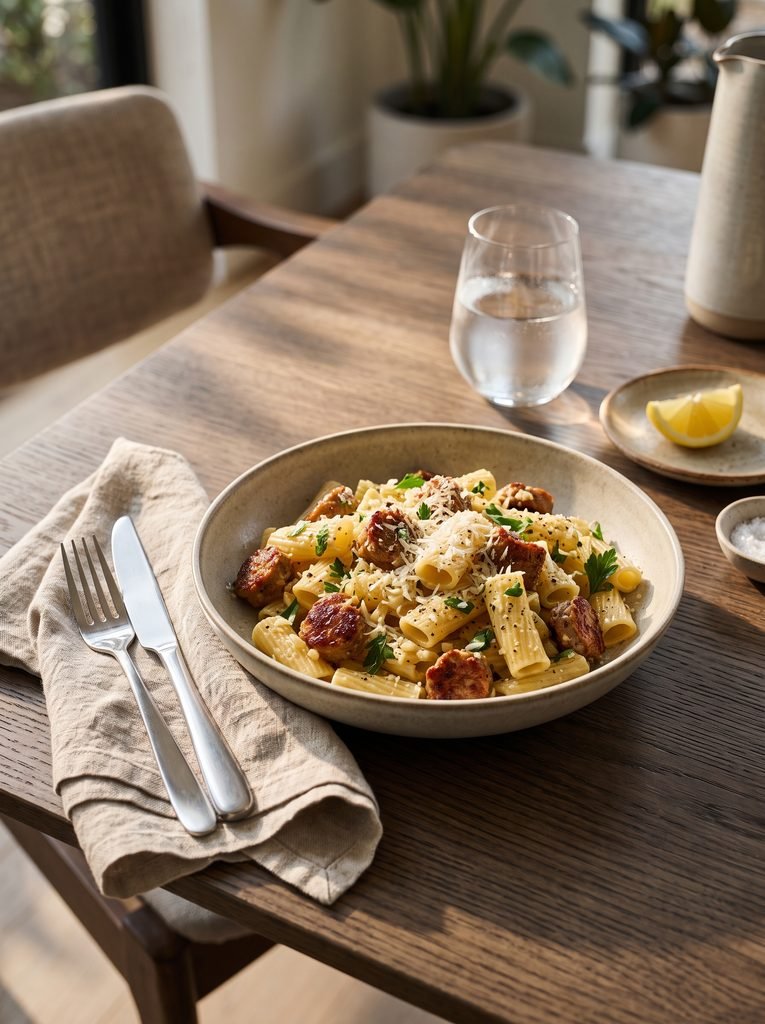
Classic Garlic Butter Sausage Pasta Italian sausage browned in a skillet, tossed with cooked pasta, garlic, a modest amount of butter, a splash of pasta water, and parmesan, creates the traditional version of this dish; using a moderate pasta portion relative to the amount of sausage and vegetables helps keep the dish satisfying without an excessive amount of carbohydrates per serving.
Garlic Butter Chicken Sausage Pasta Substituting chicken or turkey sausage for pork sausage typically reduces the overall saturated fat content of the dish while still delivering savory, protein-rich flavor.
Garlic Butter Sausage Pasta with Whole-Wheat Pasta Using whole-wheat pasta instead of regular pasta adds meaningfully more fiber to the dish without requiring any other changes to the recipe.
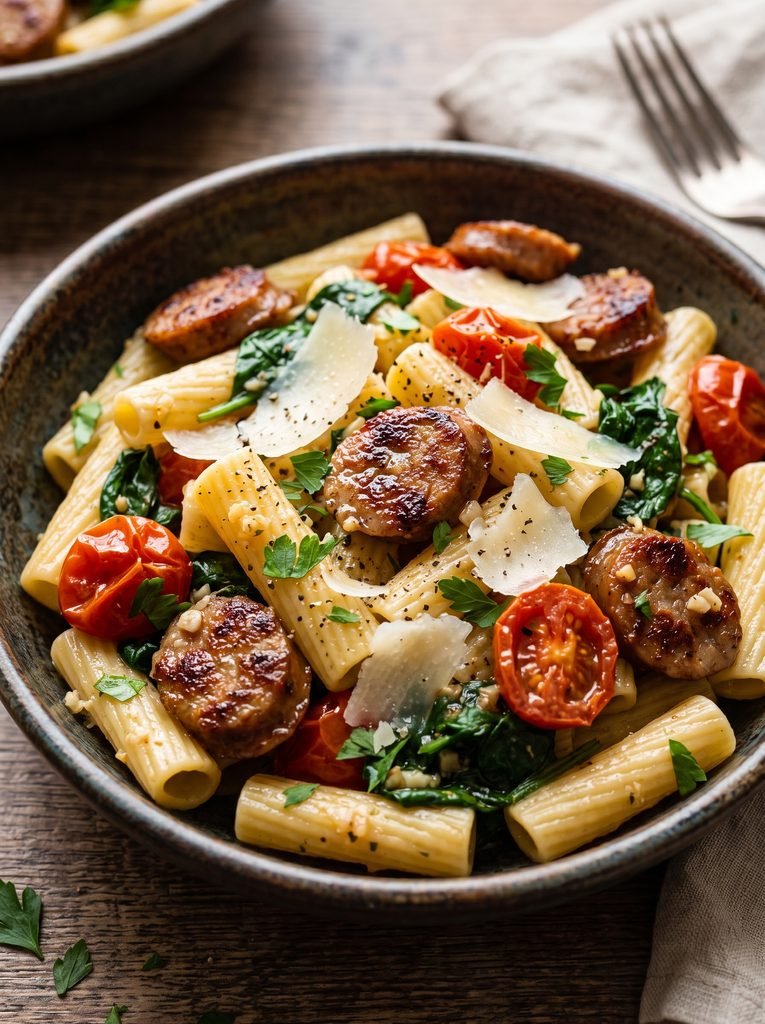
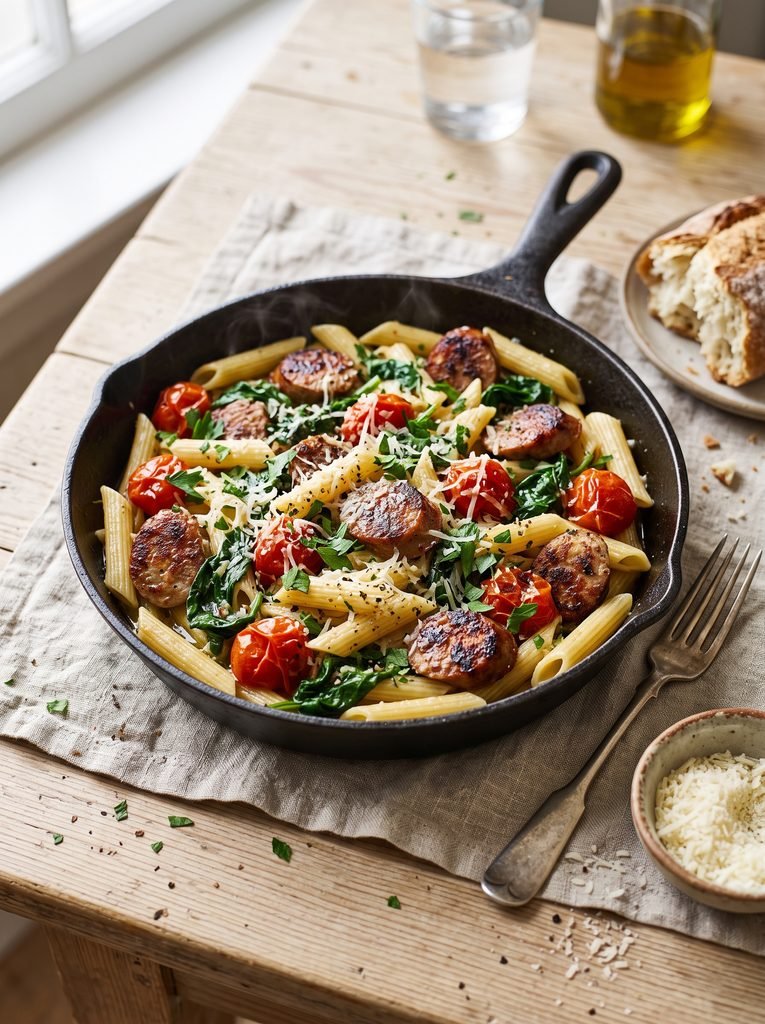
Garlic Butter Sausage Pasta with Spinach and Cherry Tomatoes Folding fresh spinach and halved cherry tomatoes into the pasta adds color, fiber, and nutrients, while the tomatoes’ acidity cuts through the richness of the butter.
Garlic Butter Sausage Pasta with Broccoli Adding steamed or sautéed broccoli florets increases the vegetable content of the dish substantially, helping to balance the pasta and butter with fiber-rich additions.
Low-Carb and Reduced-Pasta Variations
For readers who want the garlicky, savory flavor of this dish with meaningfully fewer carbohydrates, these variations fit within low carb lunch recipes principles.
Garlic Butter Sausage with Zucchini Noodles Zucchini noodles substituted for pasta, sautéed briefly in the same garlic butter sauce with the sausage, deliver a similar texture and flavor profile with significantly fewer carbohydrates; cooking them for just a minute or two prevents them from becoming watery.
Half-Pasta, Half-Zucchini Noodle Blend Combining a smaller portion of pasta with zucchini noodles offers a middle-ground option, moderating the carbohydrate content while preserving some of the familiar pasta texture.
Garlic Butter Sausage and Vegetable Skillet (Pasta-Free) Skipping pasta entirely and building the dish around sausage, zucchini, bell peppers, and a generous amount of garlic butter sauce creates a very low-carb skillet that still delivers the dish’s signature flavor.
Garlic Butter Sausage with Cauliflower Rice Serving the sausage and garlic butter sauce over cauliflower rice offers a lower-carb, rice-bowl-style alternative to a pasta-based dish.
Garlic Butter Sausage Pasta with Reduced Butter Using about half the butter called for in a traditional recipe, supplemented with a splash of olive oil and pasta cooking water for silkiness, reduces the overall saturated fat and calorie content while keeping the sauce glossy and flavorful.
Quick and Easy Garlic Butter Sausage Pasta for Busy Weeknights
These options focus on easy-to-make recipes for readers with limited time.
One-Skillet Twenty-Minute Version — Sausage, garlic, and a quick-cooking small pasta shape can come together in about 20 minutes with minimal cleanup.
Pre-Cooked Sausage Shortcut — Using fully cooked, sliced chicken or turkey sausage reduces cooking time, since it only needs to be warmed and lightly browned.
Pre-Minced Garlic Shortcut — Using jarred, pre-minced garlic saves a few minutes of prep time, though fresh garlic gives the brightest flavor.
Frozen Vegetable Addition — Adding a bag of frozen spinach or broccoli to the skillet during the last few minutes of cooking increases vegetable content with minimal extra effort.
Pasta Water Trick — Reserving a small cup of starchy pasta cooking water and using it to emulsify the sauce lets you use less butter while still achieving a glossy, clingy sauce.
For efficiency, brown a larger batch of sausage than one dinner requires, since it reheats well and can be used across multiple meals throughout the week.
How to Build a Balanced Meal Around Garlic Butter Sausage Pasta
Choosing the Right Protein
Chicken or turkey sausage offers a leaner option than traditional pork sausage, while still providing the savory, seasoned flavor that defines this dish. Reading labels for saturated fat and sodium content is worthwhile, since both can vary considerably between brands. Protein needs vary from person to person depending on factors such as body composition, activity level, and overall health goals, so readers should consider their individual dietary needs, ideally with guidance from a registered dietitian or healthcare provider.
Because sausage is a processed meat, many health organizations recommend limiting regular consumption of processed meats, so rotating protein sources throughout the week — for example, using shrimp, grilled chicken, or white beans in place of sausage on some nights — is a reasonable approach.
Adding Vegetables, Fiber, and Healthy Fats
Garlic butter sausage pasta benefits significantly from added vegetables, both because they contribute fiber the dish otherwise lacks and because they help balance the richness of the butter. Useful options include spinach, broccoli, cherry tomatoes, zucchini, bell peppers, and mushrooms, most of which can be cooked in the same skillet as the sausage.
Healthy fats in this dish come primarily from the butter, sausage, and parmesan. Portion awareness applies here as with any buttery dish — a moderate amount of butter, supplemented with olive oil and starchy pasta water for silkiness, is generally sufficient for a satisfying, flavorful sauce.
Fiber from added vegetables, or from choosing whole-wheat pasta, helps offset the more refined carbohydrate content of a traditional white pasta-based version.
Healthy Alternatives to High-Carb Ingredients
Since pasta is the primary carbohydrate source in this dish, a few practical adjustments can help moderate the overall carbohydrate content:
- Zucchini noodles instead of pasta for a substantially lower-carb version
- Whole-wheat pasta instead of regular pasta for added fiber while keeping some traditional texture
- A smaller pasta portion with extra vegetables instead of a pasta-heavy bowl
- A half-pasta, half-zucchini noodle blend as a middle-ground option
- Cauliflower rice or a pasta-free skillet instead of pasta entirely for the lowest-carb option
These swaps allow readers to enjoy the rich, garlicky appeal of this dish while adjusting the carbohydrate content to fit personal preferences. Most readers do not need to eliminate pasta entirely; a reasonably portioned traditional version, with plenty of vegetables, can also fit into a balanced approach.
For more inspiration, see our [Low Carb Recipes] and [Healthy Dinner Recipes] collections.
Meal Prep, Serving Suggestions & Nutrition
Meal-Prep Tips for Busy Weeks
Garlic butter sausage pasta can be prepared efficiently in batches, supporting meal prep lunch ideas principles:
- Cook sausage in batches — Browning more sausage than one dinner requires allows the extra to be used across multiple meals.
- Cook pasta or zucchini noodles separately — Preparing the base separately and combining it with the sauce closer to serving time helps prevent it from becoming overly soft during storage; zucchini noodles are best added fresh, just before eating.
- Wash and chop vegetables in advance — Prepping spinach, tomatoes, and other vegetables ahead of time speeds up weeknight cooking.
- Store pasta and sauce together for easy reheating — Since the butter sauce coats the pasta, storing them together generally works well, though a splash of water or broth when reheating restores silkiness.
- Use airtight containers — This dish typically stores well in the refrigerator for 3–4 days.
- Reheat gently — A gentle reheat on the stovetop or in short microwave intervals, with a splash of liquid, helps maintain the sauce’s smooth texture.
- Freeze with some caution — Pasta can soften after freezing and thawing, so this dish is generally best enjoyed within a few days from the refrigerator rather than frozen for long-term storage.
Serving Suggestions and Flavor Combinations
Rotating vegetable additions and base choices helps keep garlic butter sausage pasta interesting across multiple meals:
- Classic garlic butter sausage pasta + spinach and cherry tomatoes + fresh parsley
- Chicken sausage pasta with whole-wheat pasta + broccoli
- Zucchini noodle version + fresh basil + a squeeze of lemon
- Half-pasta, half-zucchini noodle blend + a side salad
- Sausage and vegetable skillet (pasta-free) + a sprinkle of parmesan
Fresh parsley, basil, red pepper flakes, and a squeeze of lemon can brighten this rich, buttery dish without contributing meaningful additional carbohydrates. A light grating of parmesan adds savory depth without requiring a heavier hand with the butter.
Explore our [High Protein Recipes] and [Easy Salad Recipes] for additional pairing ideas.
Nutritional Information and Weight-Loss Considerations
Nutritional values depend heavily on the type of sausage, amount of pasta and butter used, and portion size, so the figures below should be treated as general estimates, per serving.
| Garlic Butter Sausage Pasta Recipe | Estimated Calories | Protein | Carbohydrates | Fiber | Fat |
|---|---|---|---|---|---|
| Classic Garlic Butter Sausage Pasta (pork sausage) | 560–640 kcal | 26–30g | 44–50g | 3–4g | 32–36g |
| Garlic Butter Chicken Sausage Pasta (whole-wheat, with spinach) | 460–520 kcal | 28–32g | 42–48g | 7–9g | 20–24g |
| Half-Pasta, Half-Zucchini Noodle Blend | 400–460 kcal | 26–30g | 24–30g | 5–7g | 22–26g |
| Garlic Butter Sausage with Zucchini Noodles | 340–400 kcal | 24–28g | 10–14g | 3–5g | 24–28g |
| Garlic Butter Sausage and Vegetable Skillet (pasta-free) | 360–420 kcal | 24–28g | 10–14g | 3–5g | 26–30g |
These estimates show that the type of sausage, the amount and type of pasta, and the amount of butter all meaningfully affect the overall calorie, carbohydrate, and fat content of the dish. Choosing leaner sausage, whole-wheat pasta, and extra vegetables, or substituting zucchini noodles, can meaningfully shift the nutritional profile while keeping protein relatively stable. As with any meal, no single dish determines weight-loss outcomes — sustainable results come from consistent dietary patterns, adequate physical activity, sufficient sleep, and overall calorie balance over time.
Conclusion
Garlic butter sausage pasta doesn’t have to be off the table for readers focused on managing their weight. By choosing leaner chicken or turkey sausage, using whole-wheat pasta for added fiber, moderating the pasta and butter in favor of extra vegetables, or trying a zucchini noodle version for a lower-carb take, you can enjoy this garlic butter sausage pasta while keeping the overall meal reasonably balanced. Reserving a little starchy pasta water to emulsify the sauce is a simple technique that lets you use less butter without sacrificing the silky, glossy finish that makes this dish so appealing.
Meal preparation, including batch-browned sausage and a base prepared separately from the sauce, makes it easier to keep servings consistent throughout a busy week. Because sausage is a processed meat, it’s also worth rotating proteins across the week rather than leaning on it nightly. Portion awareness and overall dietary balance remain central to any long-term goal, and it’s worth remembering that no single dish determines your results — consistency, activity, and a well-rounded approach to eating matter far more than any individual meal.
Try one of the garlic butter sausage pasta variations above this week — whether it’s the classic version with chicken sausage and whole-wheat pasta or a lower-carb zucchini noodle take — and share your favorite version in the comments below.
For more inspiration, browse our [Healthy Dinner Recipes], [Meal Prep Recipes], and [Easy Healthy Recipes] collections.
More Recipe Inspiration
Looking for more delicious ideas to try? Visit Jowel Recipes to discover more recipe inspiration and creative dishes for your next meal.
Frequently Asked Questions
1. Is garlic butter sausage pasta a good option for weight loss recipe? Garlic butter sausage pasta can fit into a weight-conscious approach when a leaner sausage is used, the pasta portion is moderated relative to the amount of sausage and vegetables, and the butter is used thoughtfully. Choosing whole-wheat pasta or adding plenty of vegetables helps create a more balanced meal. Individual needs vary, so portions should be adjusted based on your own goals and appetite.
2. Can I make a low-carb version of garlic butter sausage pasta? Yes. Substituting zucchini noodles for pasta significantly reduces the carbohydrate content while preserving a similar texture and the dish’s garlicky, buttery flavor. A half-pasta, half-zucchini noodle blend, or a pasta-free sausage and vegetable skillet, also offers lower-carb options.
3. How can I make the sauce lighter without losing flavor? Using less butter, supplemented with a small amount of olive oil and a splash of starchy pasta cooking water, creates a glossy, silky sauce with less saturated fat. Adding a squeeze of lemon and fresh herbs at the end brightens the flavor without adding calories.
4. Is garlic butter sausage pasta suitable for meal prep? Yes, with some care. The dish generally keeps well in the refrigerator for 3–4 days, and a splash of water or broth when reheating restores the sauce’s silkiness. Zucchini noodle versions are best assembled fresh, since zucchini releases moisture over time.
5. Can eating garlic butter sausage pasta in moderation help with weight management? Garlic butter sausage pasta, prepared with leaner sausage, a reasonable pasta portion, and plenty of vegetables, can be part of a balanced approach to eating. That said, weight management depends on multiple factors, including total daily calories, dietary quality, physical activity, sleep, and consistency over time — not on any single dish, and sausage is a processed meat best enjoyed in moderation as part of a varied diet.