Table of Contents
Introduction
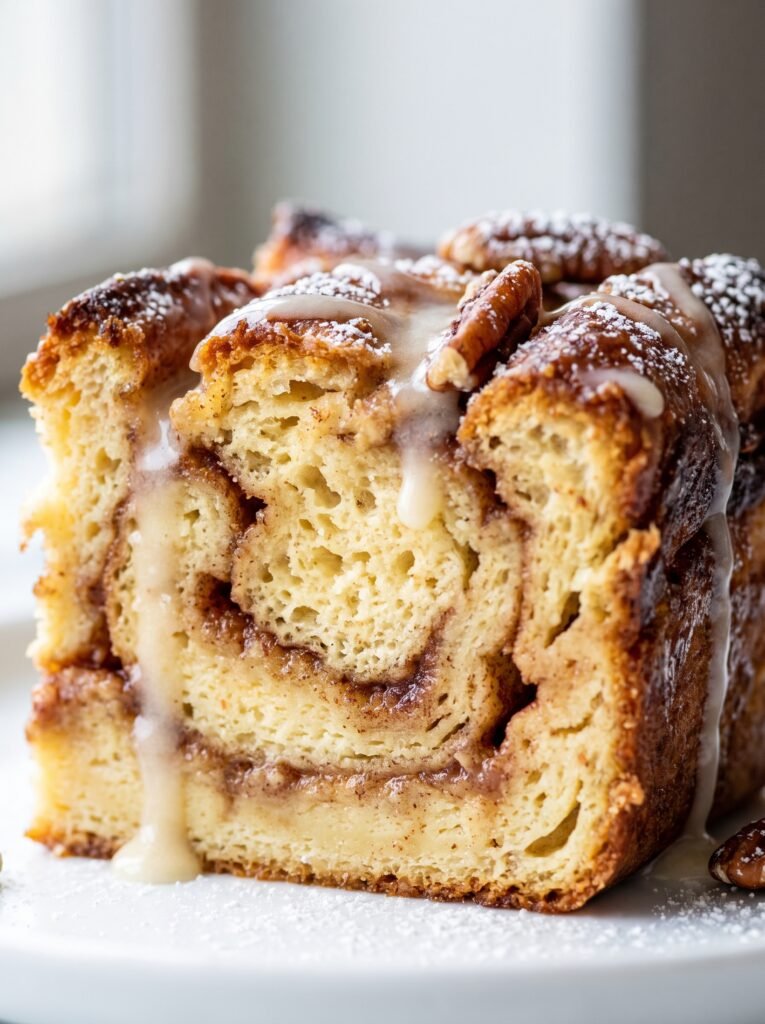
Cinnamon roll French toast casserole combines two breakfast favorites into one dish: the custardy, egg-soaked texture of French toast and the warm, cinnamon-sugar sweetness of a cinnamon roll, all baked together in a single pan. It’s worth being upfront that this is, by nature, one of the sweeter, more indulgent breakfast options covered on this site — the dish typically includes a meaningful amount of sugar in both the cinnamon swirl and the glaze. That doesn’t mean it has no place in a balanced approach to eating, but it does mean the recipe benefits more than most from thoughtful portioning and a few ingredient adjustments if you want to enjoy it regularly rather than as an occasional treat.
It’s important to be clear from the outset: neither eating this casserole nor avoiding it will, by itself, determine whether you lose weight. Weight management depends on a combination of factors, including total daily calorie intake, overall dietary quality, physical activity, consistency over time, sleep, and individual needs. What matters more than any single dish is how it fits into your overall pattern of eating — an occasional serving of a treat-level breakfast, portioned reasonably, is a very different consideration than a daily habit.
This is why choosing protein, fiber, and portion awareness matters even for a dish like this one. The eggs in the custard base already provide some protein, and boosting that further, along with keeping the sugar content of the swirl and glaze more moderate, can turn this from a purely indulgent dish into something a bit more balanced, without losing the qualities that make it a cozy, comforting breakfast.
In this article, you’ll find a classic cinnamon roll French toast casserole recipe, protein-boosted and reduced-sugar variations, a lower-carb version using almond flour bread, tips for building a more balanced version of this dish, and make-ahead strategies for the week — along with estimated nutritional information for representative versions.
Best Cinnamon Roll French Toast Casserole Recipes
Classic and Protein-Boosted Versions
These recipes preserve the cozy, cinnamon-forward flavor while looking for reasonable ways to add protein, relevant to high protein lunch ideas and their breakfast counterparts.
Classic Cinnamon Roll French Toast Casserole Cubed bread soaked in an egg-and-milk custard, swirled with a cinnamon-sugar mixture, and baked until set, then topped with a simple glaze, represents the traditional version of this dish — a genuine treat-level breakfast best enjoyed in a modest portion.
Extra-Egg Protein-Boosted Casserole Increasing the number of eggs relative to the amount of bread in the custard base adds meaningful protein to the dish without significantly altering its flavor or texture.
Cottage Cheese-Blended Casserole Blending cottage cheese into the egg custard before pouring it over the bread adds extra protein and moisture, with the cottage cheese blending smoothly enough that its presence isn’t noticeable in the final texture.
Greek Yogurt Glaze Casserole Using a glaze made partially or fully with Greek yogurt, rather than a traditional powdered sugar icing, adds protein to the finishing touch while still providing a creamy, slightly sweet topping.
Whole-Grain Bread Casserole Using whole-grain bread instead of white bread or brioche adds fiber to the dish, which whole-grain versions of this casserole don’t typically include.
Lower-Sugar and Lower-Carb Variations
For readers who want to meaningfully reduce the carbohydrate and added-sugar content of this dish, these variations fit within low carb lunch recipes principles, adapted for a treat-style breakfast.
Reduced-Sugar Cinnamon Swirl Cutting the sugar in the cinnamon swirl by half, while increasing the cinnamon itself, preserves much of the characteristic flavor with meaningfully less added sugar.
Almond Flour Bread Casserole Using low-carb almond flour bread in place of traditional bread significantly reduces the overall carbohydrate content of the dish while still allowing for the same custard-soaking and baking process.
No-Glaze Version Skipping the traditional powdered sugar glaze entirely, and instead finishing the casserole with a light dusting of cinnamon, removes a significant source of added sugar from the dish.
Portion-Controlled Muffin Tin Casserole Baking the same casserole mixture in a muffin tin instead of a large dish creates naturally portioned servings, which can help with portion awareness for a dish that’s easy to over-serve from a large pan.
Sugar-Free Sweetener Version Replacing the sugar in both the cinnamon swirl and the glaze with a granulated sugar substitute offers a significantly lower-sugar version of the dish while preserving much of its sweet, cinnamon-forward flavor.
Quick and Make-Ahead Options for Busy Mornings
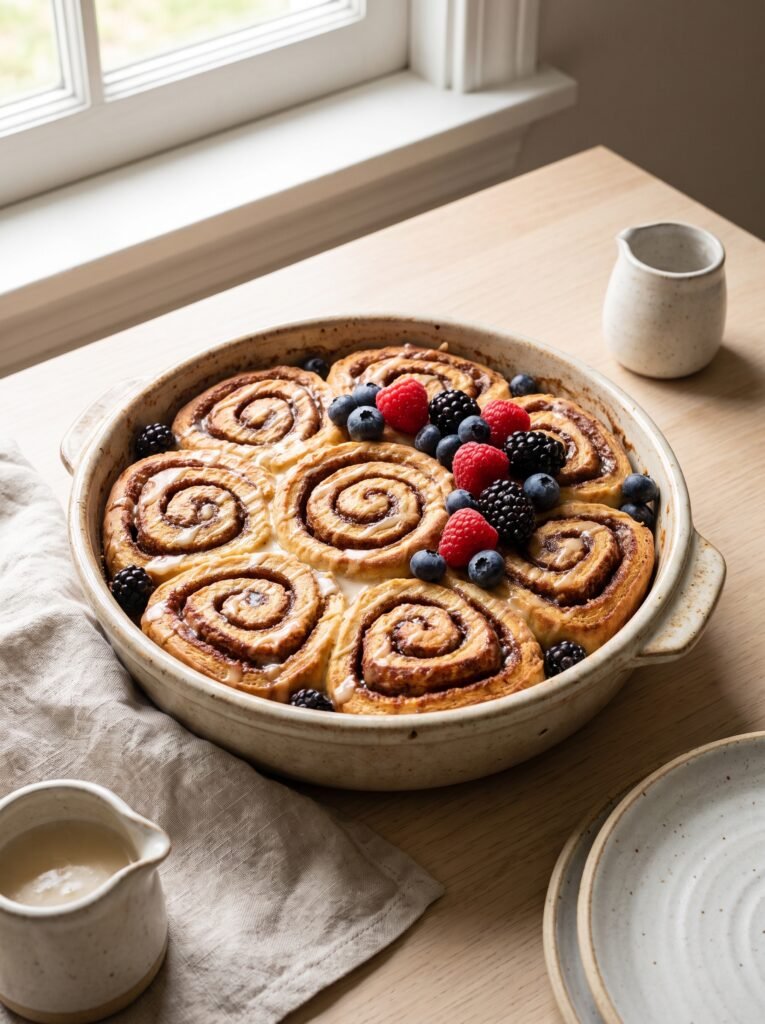
These options focus on easy-to-make recipes and make-ahead convenience for readers with limited weekday time.
Overnight Prep Casserole — Assembling the entire casserole the night before and refrigerating it allows the bread to fully absorb the custard, and it’s ready to bake first thing in the morning.
Single-Serving Ramekin Version — Preparing individual portions in ramekins allows for naturally controlled serving sizes and faster baking time than a full casserole.
Slow Cooker Adaptation — The same ingredients can be layered in a slow cooker and cooked on low for a few hours, offering a hands-off alternative to oven baking.
Freeze-Ahead Portions — Baking the full casserole, cutting it into individual portions, and freezing them allows for a quick reheated breakfast on a busy morning.
Weekend Batch, Weekday Portions — Preparing the casserole over the weekend and portioning out servings for reheating during the week turns this into a practical, if still treat-level, weekday breakfast option.
For efficiency, assemble the casserole the night before and refrigerate it, so it’s ready to bake first thing in the morning with minimal active effort.
How to Build a More Balanced Version of This Casserole
Choosing the Right Protein
The eggs in the custard base are the primary protein source in this dish, and increasing their proportion relative to the bread, or blending in cottage cheese, are the most straightforward ways to boost protein content. A side of additional protein — such as a hard-boiled egg or a scoop of Greek yogurt — served alongside a portion of the casserole can further round out the meal’s protein content, given that the casserole itself is more carbohydrate- and sugar-forward than protein-forward. Protein needs vary from person to person depending on factors such as body composition, activity level, and overall health goals, so readers should consider their individual dietary needs, ideally with guidance from a registered dietitian or healthcare provider.
Adding Fiber and Portion Awareness
Because this dish is inherently sweet and carbohydrate-dense, portion awareness plays an especially important role in fitting it into a balanced approach to eating. Baking the casserole in a muffin tin, or deliberately cutting a large casserole into a specific number of servings ahead of time, can help prevent the natural tendency to serve a larger-than-intended portion from a big pan.
Choosing whole-grain bread over white bread or brioche adds some fiber to the dish, and topping a serving with a small portion of fresh fruit, rather than additional glaze, adds further fiber and natural sweetness without meaningfully increasing the dish’s carbohydrate load beyond what’s already there.
Healthy Alternatives to High-Carb and High-Sugar Ingredients
Several practical substitutions can help reduce the sugar and refined-carbohydrate content of this dish without eliminating it as an occasional breakfast option:
- Whole-grain or low-carb almond flour bread instead of white bread or brioche
- A reduced-sugar cinnamon swirl instead of the traditional full-sugar version
- A Greek yogurt-based glaze instead of a powdered sugar icing
- A granulated sugar substitute instead of sugar in both the swirl and glaze
- Fresh fruit as a topping instead of additional glaze
These swaps allow readers to enjoy the cozy, cinnamon-forward appeal of this casserole in a more moderate form. Given the dish’s nature, most readers will find it fits best as an occasional breakfast rather than a daily staple, regardless of which modifications are made — and that’s a reasonable way to enjoy it within an otherwise balanced pattern of eating.
For more inspiration, see our [Healthy Breakfast Ideas] and [Low Carb Recipes] collections.
Meal Prep, Serving Suggestions & Nutrition
Meal-Prep Tips for Weekend Baking
This casserole is well-suited to weekend preparation, which can help with the broader meal prep lunch ideas approach applied to a special breakfast:
- Assemble the night before — Combining the bread and custard the night before and refrigerating it allows the bread to fully soak, and it’s ready to bake the next morning.
- Portion into individual servings after baking — Cutting the casserole into a predetermined number of servings right after baking helps with portion awareness.
- Freeze extra portions — Individual squares can be frozen and reheated for future mornings, which also naturally limits how much is easily accessible at once.
- Add the glaze fresh, not baked in — Drizzling glaze onto individual portions just before serving, rather than over the entire casserole, allows for better control over how much each serving receives.
- Store leftovers properly — This casserole typically keeps well in the refrigerator for 3–4 days.
- Reheat gently — A brief reheat in the microwave or oven restores the casserole’s texture without drying it out.
- Pair with a protein side — Serving a portion of the casserole alongside eggs or a scoop of Greek yogurt helps balance the meal’s protein content.
Serving Suggestions and Flavor Combinations
Considering portion size and pairing when serving this casserole helps keep it part of a more balanced breakfast:
- A modest portion of casserole + a side of scrambled eggs
- Reduced-sugar casserole + a small handful of fresh berries
- Almond flour bread casserole + a dollop of Greek yogurt
- No-glaze casserole + a light dusting of cinnamon
- Muffin tin portions + a side of fresh fruit
Cinnamon, vanilla extract, and a hint of nutmeg deliver much of this dish’s characteristic warmth and can be emphasized to help compensate for a reduced amount of sugar in the swirl or glaze.
Explore our [Healthy Breakfast Ideas] and [Easy Healthy Recipes] for additional morning pairing ideas.
Nutritional Information and Weight-Loss Considerations

Nutritional values depend heavily on the specific bread, sugar amount, and glaze used, so the figures below should be treated as general estimates, per serving of a casserole cut into 9–12 pieces.
| Casserole Variation | Estimated Calories | Protein | Carbohydrates | Fiber | Fat |
|---|---|---|---|---|---|
| Classic Cinnamon Roll French Toast Casserole | 340–400 kcal | 9–12g | 46–52g | 1–2g | 14–18g |
| Extra-Egg Protein-Boosted Casserole | 320–380 kcal | 14–18g | 40–46g | 1–2g | 14–18g |
| Reduced-Sugar Swirl (No Glaze) | 260–320 kcal | 9–12g | 32–38g | 1–2g | 12–16g |
| Almond Flour Bread Casserole (low-carb) | 280–340 kcal | 12–16g | 10–14g | 3–5g | 20–24g |
| Sugar-Free Sweetener Version | 240–300 kcal | 9–12g | 18–24g | 1–2g | 12–16g |
These estimates show that this casserole is meaningfully higher in carbohydrates and added sugar than most other breakfasts covered elsewhere on this site, even after adjustments, which reflects its nature as a treat-style dish rather than an everyday low-carb breakfast. Readers focused on a lower-carbohydrate pattern may find the almond flour or sugar-free versions more compatible with regular use, while the classic version is best reserved for occasional enjoyment. As with any food, no single dish determines weight-loss outcomes — sustainable results come from consistent dietary patterns, adequate physical activity, sufficient sleep, and overall calorie balance over time.
Conclusion
Cinnamon roll French toast casserole is, by design, one of the more indulgent breakfast options, and that’s worth acknowledging honestly rather than trying to reframe it as an everyday low-carb dish. That said, it doesn’t have to be entirely off-limits for readers focused on managing their weight. By boosting the protein content with extra eggs or cottage cheese, reducing the sugar in the swirl and glaze, portioning the casserole deliberately, or trying an almond flour-based version for a genuinely lower-carb take, you can enjoy cinnamon roll French toast casserole in a way that fits more comfortably into an overall balanced approach — whether that means an occasional full-indulgence serving or a more moderated version enjoyed more regularly.
Make-ahead preparation, including overnight assembly and portioned freezing, makes this dish practical even on a weekday when portioned out from a weekend batch. Portion awareness matters more for this dish than for most, given its inherent sweetness, and it’s worth remembering that no single breakfast determines your results — consistency, activity, and a well-rounded approach to eating matter far more than any individual meal.
Try one of the variations above for your next special breakfast — whether it’s the classic version in a modest portion or a lower-carb almond flour take — and share your favorite version in the comments below.
For more inspiration, browse our [Healthy Breakfast Ideas], [Meal Prep Recipes], and [Easy Healthy Recipes] collections.
More Recipe Inspiration
Looking for more delicious ideas to try? Visit Jowel Recipes to discover more recipe inspiration and creative dishes for your next meal.
Frequently Asked Questions
1. Is cinnamon roll French toast casserole a good option for weight loss recipe? This casserole is naturally one of the sweeter, more carbohydrate-dense breakfast options, so it’s best thought of as an occasional treat rather than an everyday low-carb dish, even with modifications. Reducing the sugar, boosting the protein with extra eggs, and being deliberate about portion size can help it fit more comfortably into an overall balanced approach when you do want to enjoy it. Individual needs vary, so portions should be adjusted based on your own goals.
2. Can I make a low-carb version of this casserole? Yes, to a meaningful extent. Using almond flour bread instead of traditional bread significantly reduces the carbohydrate content, and using a sugar-free sweetener in place of sugar in the swirl and glaze further lowers the carbohydrate and sugar content, though the dish will still be more carbohydrate-forward than many other low-carb breakfasts.
3. How can I add more protein to this casserole? Increasing the number of eggs relative to the bread, or blending cottage cheese into the custard, both add protein without significantly changing the dish’s flavor. Serving a portion of the casserole alongside a separate protein source, like scrambled eggs, also helps balance the meal.
4. Can I prepare this casserole in advance? Yes, this casserole is well-suited to advance preparation. It can be assembled the night before and baked in the morning, and baked portions can be frozen and reheated for future breakfasts, which also helps with portion control.
5. Is it okay to eat this casserole while trying to manage my weight? An occasional serving of this casserole, portioned reasonably, can fit into an overall balanced approach to eating, since weight management depends on total dietary patterns over time rather than any single meal. That said, given its higher sugar and carbohydrate content compared to many other breakfast options, it’s generally best enjoyed occasionally rather than as a daily habit, and portion size is worth paying attention to.