Table of Contents
Introduction
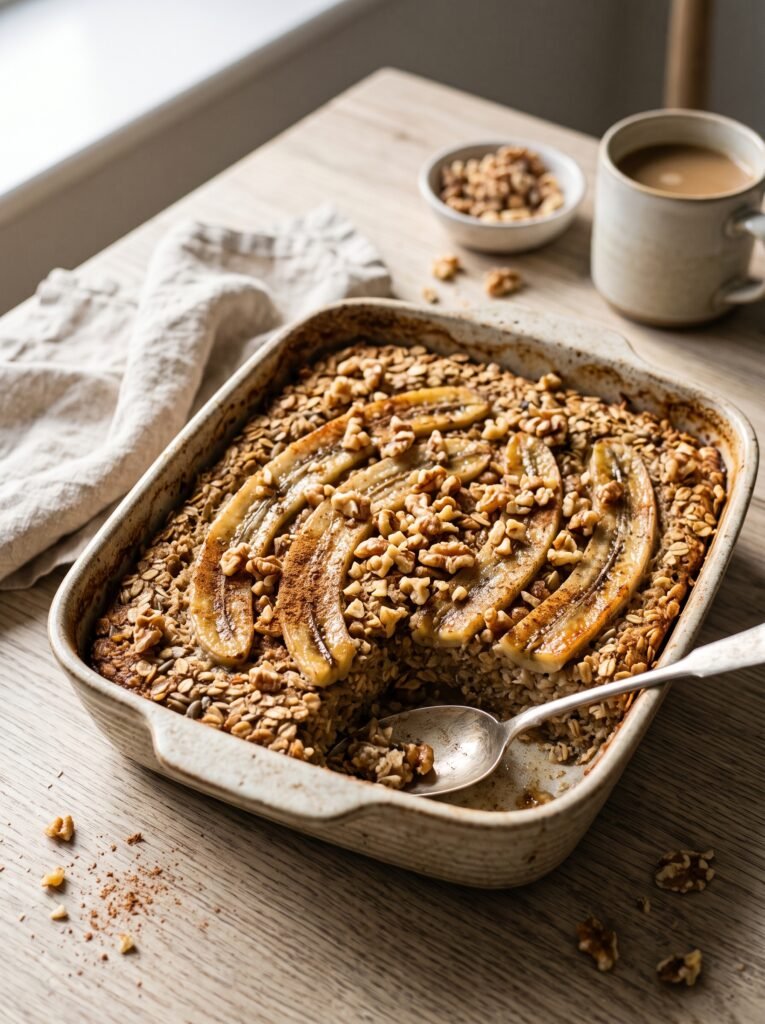
A banana oat breakfast bake turns a few simple pantry staples — oats, ripe bananas, and eggs — into a warm, naturally sweetened breakfast that’s easy to prepare in one dish and portion out across several mornings. Because oats and banana both contribute meaningful carbohydrates, this isn’t a low-carb breakfast in the strictest sense, but it’s built around whole, fiber-rich ingredients rather than refined flour and added sugar, which makes it a reasonable fit for a balanced, weight-conscious morning routine.
It’s worth being clear from the outset: no single breakfast, including a banana oat bake, causes weight loss on its own. Weight management depends on a combination of factors — total daily calorie intake, overall dietary quality, physical activity, consistency over time, sleep, and individual needs. What this breakfast can offer is a genuinely filling, make-ahead option that relies on the natural sweetness of ripe bananas rather than a large amount of added sugar, along with fiber from the oats that supports a longer-lasting feeling of fullness than a bowl of refined cereal.
This is why choosing protein, fiber, and portion awareness matters even for an oat-based breakfast like this one. Oats and banana alone provide fiber and some carbohydrate-based energy, but relatively little protein, so boosting the protein content — through eggs, protein powder, or Greek yogurt — helps turn this from a carbohydrate-forward breakfast into a more balanced, satisfying one.
In this article, you’ll find a classic banana oat breakfast bake recipe alongside protein-boosted and lower-sugar variations, quick preparation tips for busy mornings, guidance on building a more balanced version of this bake, and meal-prep strategies for the week — along with estimated nutritional information for representative versions.
Best Banana Oat Breakfast Bake Recipes for Weight Loss
Classic and Protein-Boosted Versions
These recipes preserve the naturally sweet, comforting appeal of the classic combination while looking for reasonable ways to add protein, relevant to high protein lunch ideas and their breakfast counterparts.
Classic Banana Oat Breakfast Bake Mashed ripe bananas combined with rolled oats, eggs, milk, and a touch of cinnamon, baked until set, create the traditional version of this dish — naturally sweetened primarily by the bananas themselves.
Extra-Egg Protein-Boosted Bake Increasing the number of eggs relative to the amount of oats and banana adds meaningful protein to the dish without significantly altering its flavor or texture.
Greek Yogurt Banana Oat Bake Incorporating plain Greek yogurt into the batter adds protein and moisture, resulting in a slightly denser, more protein-rich bake.
Protein Powder Banana Oat Bake Adding a scoop of vanilla or unflavored protein powder to the batter boosts the protein content substantially with minimal change to taste or texture.
Peanut Butter Banana Oat Bake Swirling natural peanut butter into the batter adds protein and healthy fat, along with a classic flavor pairing that complements the banana.
Lower-Sugar and Portion-Conscious Variations
For readers who want to moderate the carbohydrate content of this bake, or who want a more portion-controlled format, these variations fit within low carb lunch recipes principles adapted for a fiber-forward breakfast.
Reduced-Banana Version with Extra Cinnamon Using a smaller amount of banana relative to the oats, while increasing the cinnamon and vanilla extract, preserves much of the flavor with a somewhat lower natural sugar content per serving.
No-Added-Sugar Version Relying entirely on the natural sweetness of ripe bananas, without adding any honey, maple syrup, or brown sugar, keeps the added-sugar content of this bake at zero.
Muffin Tin Portion Control Baking the same batter in a muffin tin instead of a large dish creates naturally portioned servings, which can help with portion awareness for a dish that’s easy to over-serve from a large pan.
Half-Oat, Half-Almond Flour Bake Replacing half of the oats with almond flour reduces the overall carbohydrate content of the bake while adding healthy fat and a slightly different texture.
Extra-Egg White Version Using a combination of whole eggs and egg whites increases the protein-to-calorie ratio of the bake slightly compared to using only whole eggs.
Quick and Easy Options for Busy Mornings
These options focus on easy-to-make recipes and make-ahead convenience for readers with limited weekday time.
One-Bowl Mix and Bake — All ingredients combined in a single bowl and poured into a baking dish minimizes cleanup and prep time.
Overnight Batter Prep — Mixing the batter the night before and refrigerating it allows for a quicker bake time in the morning, since the oats will have already begun to soften.
Muffin Tin for Faster Baking — Individual portions in a muffin tin bake faster than a full casserole dish, useful for a slightly quicker turnaround.
Freeze-Ahead Portions — Baking the full dish, cutting it into individual portions, and freezing them allows for a quick reheated breakfast on a busy morning.
Weekend Batch, Weekday Portions — Preparing the bake over the weekend and portioning out servings for reheating during the week turns this into a practical, ready-made weekday breakfast.
For efficiency, prepare the batter the night before and refrigerate it, so it’s ready to bake first thing in the morning with minimal active effort.
How to Build a More Balanced Banana Oat Breakfast Bake
Choosing the Right Protein
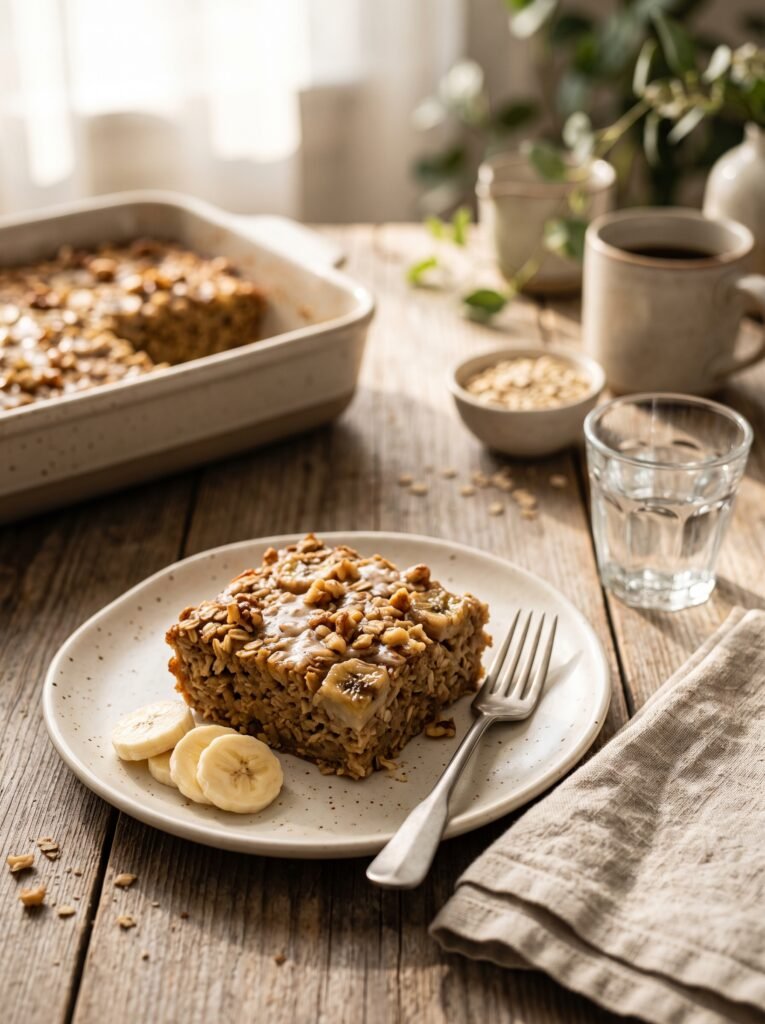
Eggs are the primary protein source in a classic banana oat bake, and increasing their proportion, or blending in Greek yogurt or a scoop of protein powder, are the most straightforward ways to boost the dish’s protein content. A side of additional protein — such as a dollop of Greek yogurt or a handful of nuts — served alongside a portion of the bake can further round out the meal, particularly since the bake itself is more carbohydrate-forward than protein-forward on its own. Protein needs vary from person to person depending on factors such as body composition, activity level, and overall health goals, so readers should consider their individual dietary needs, ideally with guidance from a registered dietitian or healthcare provider.
Adding Fiber and Healthy Fats
Oats themselves are a good source of fiber, and using rolled oats rather than a more processed instant variety helps preserve more of that fiber content. Adding a sprinkle of chia seeds, ground flaxseed, or chopped walnuts to the batter can further increase both fiber and healthy fat.
Portion awareness plays an important role in this dish, given its natural sweetness and carbohydrate content. Baking in a muffin tin, or deliberately cutting a large bake into a specific number of servings ahead of time, can help prevent an unintentionally large portion from a big pan.
Healthy Alternatives to High-Carb Ingredients
Several practical substitutions can help moderate the carbohydrate content of this bake without eliminating its core appeal:
- A smaller banana portion with extra cinnamon instead of a large amount of banana
- Half oats, half almond flour instead of oats alone, for a lower-carb blend
- No added sweetener instead of honey or maple syrup, relying on banana alone for sweetness
- Muffin tin portions instead of a large casserole dish, for built-in portion control
- Extra egg whites instead of only whole eggs, for a higher protein-to-carbohydrate ratio
These swaps allow readers to enjoy the comforting, naturally sweet appeal of this bake while adjusting the carbohydrate content to fit personal preferences. Most readers do not need to eliminate oats or banana entirely; a reasonably portioned version, with protein boosted through eggs or Greek yogurt, can fit comfortably into a balanced breakfast routine.
For more inspiration, see our [Healthy Breakfast Ideas] and [Low Carb Recipes] collections.
Meal Prep, Serving Suggestions & Nutrition
Meal-Prep Tips for Busy Mornings
This bake is inherently well-suited to meal prep, supporting meal prep lunch ideas principles applied to a make-ahead breakfast:
- Prepare the batter the night before — Refrigerating the mixed batter overnight allows the oats to soften slightly and speeds up morning baking.
- Bake in advance and reheat — This dish can be fully baked ahead of time and reheated in individual portions throughout the week.
- Cut into individual servings — Slicing a finished bake into a predetermined number of pieces makes portion control easier.
- Freeze extra portions — Individual squares can be frozen and reheated for future mornings, extending the usefulness of a single batch.
- Use airtight containers — This bake typically stores well in the refrigerator for 4–5 days.
- Reheat gently — A brief reheat in the microwave or toaster oven restores the bake’s texture without drying it out.
- Pair with a protein side — Serving a portion alongside Greek yogurt or a small handful of nuts helps balance the meal’s protein content.
Serving Suggestions and Flavor Combinations
Rotating toppings and mix-ins helps keep this bake interesting across multiple mornings:
- A slice of the classic bake + a dollop of Greek yogurt + a few walnuts
- Protein powder bake + a drizzle of nut butter
- Peanut butter banana bake + a few sliced strawberries
- Muffin tin portions + a side of scrambled eggs
- Half-oat, half-almond flour bake + a light dusting of cinnamon
Cinnamon, vanilla extract, and a pinch of nutmeg deliver much of this bake’s characteristic warmth without requiring additional added sugar. A few chopped nuts or a sprinkle of chia seeds add texture and extra fiber or healthy fat.
Explore our [Healthy Breakfast Ideas] and [Easy Healthy Recipes] for additional morning pairing ideas.
Nutritional Information and Weight-Loss Considerations
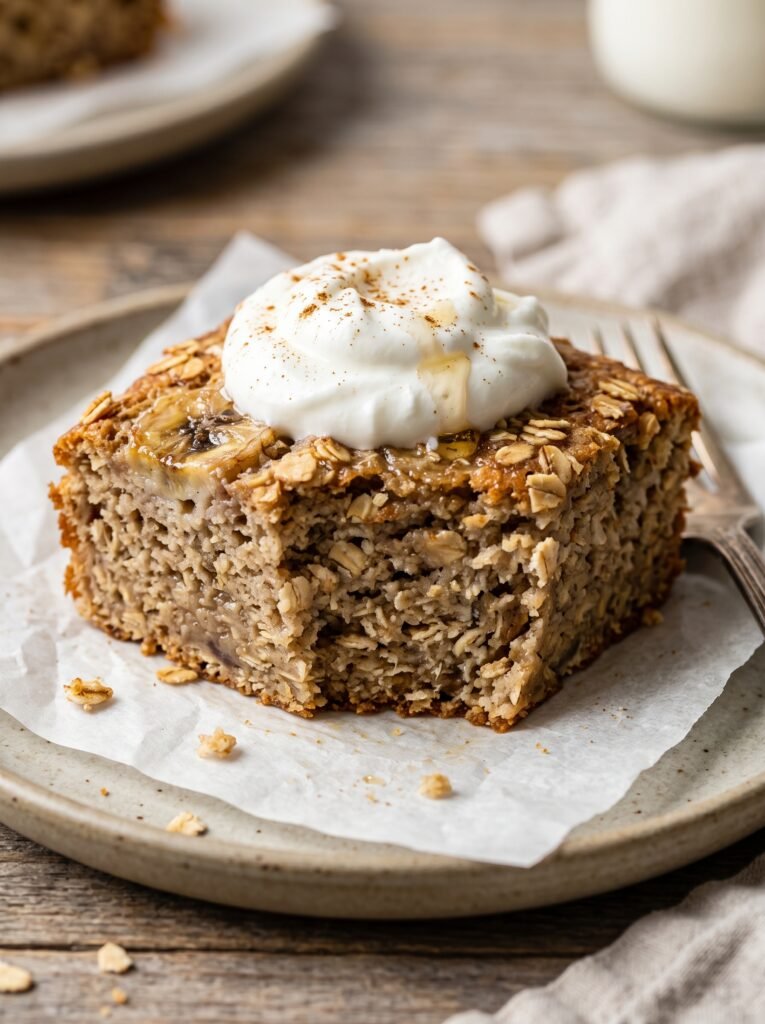
Nutritional values depend heavily on the specific ratio of oats to banana, added sweeteners, and portion size, so the figures below should be treated as general estimates, per serving of a bake cut into 9–12 pieces.
| Banana Oat Bake Variation | Estimated Calories | Protein | Carbohydrates | Fiber | Fat |
|---|---|---|---|---|---|
| Classic Banana Oat Breakfast Bake | 180–220 kcal | 6–8g | 28–32g | 3–4g | 5–7g |
| Extra-Egg Protein-Boosted Bake | 190–230 kcal | 10–13g | 26–30g | 3–4g | 6–8g |
| Greek Yogurt Banana Oat Bake | 190–230 kcal | 9–12g | 27–31g | 3–4g | 5–7g |
| Half-Oat, Half-Almond Flour Bake (lower-carb) | 210–250 kcal | 8–10g | 16–20g | 4–6g | 12–15g |
| Protein Powder Banana Oat Bake | 200–240 kcal | 13–16g | 25–29g | 3–4g | 6–8g |
These estimates suggest that this bake is meaningfully more carbohydrate-forward than many other breakfasts covered elsewhere on this site, reflecting its nature as an oat- and fruit-based dish rather than a low-carb option. Boosting the protein with extra eggs, Greek yogurt, or protein powder, or reducing the carbohydrate content with an almond flour blend, can help this bake fit more comfortably into a protein-focused breakfast routine. As with any food, no single dish determines weight-loss outcomes — sustainable results come from consistent dietary patterns, adequate physical activity, sufficient sleep, and overall calorie balance over time.
Conclusion
A banana oat breakfast bake offers a naturally sweetened, make-ahead breakfast that can fit into a balanced approach to eating, particularly when the protein content is boosted with eggs, Greek yogurt, or protein powder, and portion size is kept in mind given the dish’s natural carbohydrate content from oats and banana. By baking in a muffin tin for built-in portion control, relying on banana alone for sweetness rather than added sugar, or trying a half-oat, half-almond flour blend for a lower-carb take, you can create a banana oat breakfast bake that stays satisfying and adaptable to your own goals. Simple swaps — like extra egg whites or a scoop of protein powder — make it easy to shift this dish toward a more protein-forward breakfast.
Make-ahead preparation, including overnight batter mixing and portioned freezing, makes this dish practical even on a weekday morning when portioned out from a weekend batch. Portion awareness matters given this dish’s natural sweetness and carbohydrate content, and it’s worth remembering that no single breakfast determines your results — consistency, activity, and a well-rounded approach to eating matter far more than any individual meal.
Try one of the variations above this week — whether it’s the classic version with a dollop of Greek yogurt or a protein-boosted take with added protein powder — and share your favorite version in the comments below.
For more inspiration, browse our [Healthy Breakfast Ideas], [Meal Prep Recipes], and [Easy Healthy Recipes] collections.
More Recipe Inspiration
Looking for more delicious ideas to try? Visit Jowel Recipes to discover more recipe inspiration and creative dishes for your next meal.
Frequently Asked Questions
1. Is a banana oat breakfast bake a good option for weight loss recipe? A banana oat breakfast bake can fit into a balanced approach to eating, since it relies on the natural sweetness of bananas rather than a large amount of added sugar, and oats provide meaningful fiber. Boosting the protein content with extra eggs, Greek yogurt, or protein powder helps make the meal more filling and balanced. Individual needs vary, so portions should be adjusted based on your own goals.
2. Can I make a lower-carb version of this bake? To some extent. Replacing half of the oats with almond flour, using a smaller portion of banana, and skipping any added sweetener all help reduce the carbohydrate content, though the dish will still be more carbohydrate-forward than a purely low-carb breakfast, given its reliance on oats and fruit.
3. How can I add more protein to a banana oat bake? Increasing the number of eggs, blending in Greek yogurt, or adding a scoop of protein powder to the batter are all straightforward ways to boost the protein content without significantly changing the flavor or texture of the finished bake.
4. Can I prepare this bake in advance? Yes, this bake is well-suited to advance preparation. The batter can be mixed the night before and refrigerated, and the baked dish can be portioned and frozen for quick reheating throughout the week.
5. Can eating a banana oat breakfast bake help with weight management? A protein-boosted version of this bake, portioned reasonably, may help support a more filling, balanced breakfast, which can aid overall calorie management. That said, weight management depends on multiple factors, including total daily calories, dietary quality, physical activity, sleep, and consistency over time — not on any single meal or food choice.