Table of Contents
Introduction
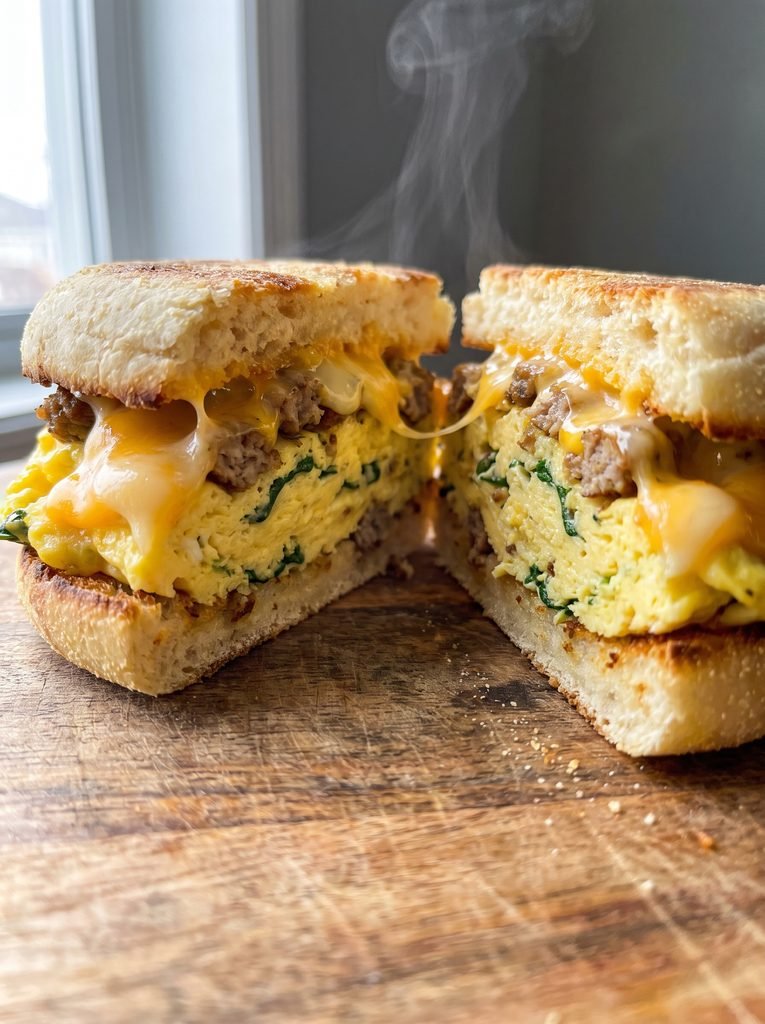
“Breakfast muffin” can mean two different things, and both are worth knowing about. The first is a crustless egg muffin: a mixture of eggs, sausage, and cheese baked in a muffin tin until set, with no flour or bread involved. The second is a breakfast sandwich built on an English muffin, layered with a sausage patty, a cooked egg, and a slice of cheese. Both are familiar, satisfying, and easy to prepare in advance, and both can fit into a balanced, weight-conscious morning routine — the egg-cup version is naturally very low in carbohydrates, while the English muffin version offers a more traditional sandwich format with a single, portion-controlled serving of bread.
It’s worth being clear from the outset: no single breakfast, including sausage egg and cheese muffins, causes weight loss on its own. Weight management depends on a combination of factors — total daily calorie intake, overall dietary quality, physical activity, consistency over time, sleep, and individual needs. What these muffins can offer is a genuinely filling, high-protein start to the day that’s easy to batch-prepare, which may reduce the temptation to rely on a less nutritious option on a rushed morning. They are, however, a food where choices about the sausage and cheese matter, since both contribute meaningful saturated fat and sodium.
This is why choosing protein, vegetables, healthy fats, and fiber matters even in a savory, protein-forward breakfast like this one. Sausage, egg, and cheese provide protein and fat but very little fiber, so folding in vegetables like spinach or bell pepper, and pairing the muffin with a piece of fruit, helps round out the meal.
In this article, you’ll find a classic sausage egg and cheese muffin recipe alongside lighter variations, an English muffin sandwich version with portion-conscious tips, quick recipes for busy mornings, guidance on building a more balanced muffin, and meal-prep strategies for the week — along with estimated nutritional information for representative versions.
Best Sausage Egg & Cheese Breakfast Muffin Recipes for Weight Loss
Classic and Protein-Forward Versions
These recipes make eggs and sausage the clear stars, aligning with high protein lunch ideas extended into a portable breakfast.
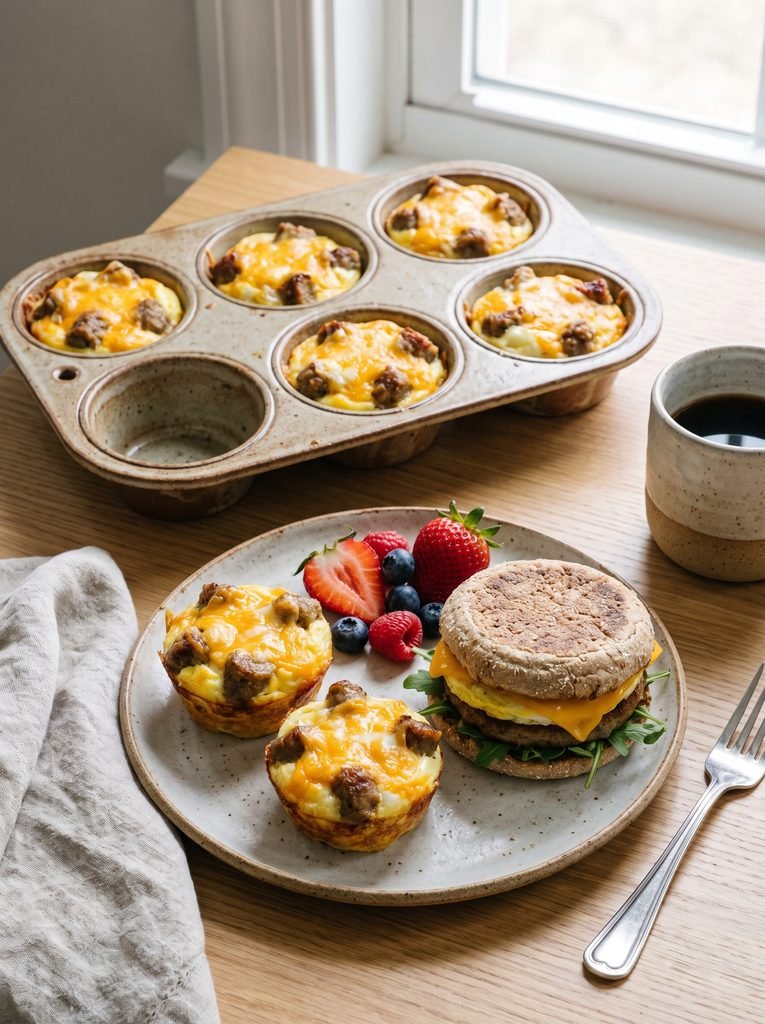
Classic Sausage Egg and Cheese Egg Muffins Eggs whisked with crumbled cooked sausage and shredded cheddar, poured into a greased muffin tin and baked until set, create the traditional crustless version of this breakfast — naturally low in carbohydrates and easy to reheat throughout the week.
Turkey Sausage Egg and Cheese Muffins Substituting lean turkey sausage for pork sausage reduces the overall saturated fat content of the muffins while still delivering a savory, protein-rich filling.
Sausage Egg and Cheese Muffins with Spinach Folding chopped spinach into the egg mixture increases the vegetable content of the muffin substantially, adding fiber and nutrients with minimal change to flavor.
Sausage Egg and Cheese Muffins with Bell Pepper and Onion Adding finely diced bell pepper and onion introduces sweetness and crunch, along with a modest amount of fiber and vitamin C.
Extra-Egg-White Sausage Muffins Using a combination of whole eggs and egg whites increases the protein-to-fat ratio of the muffins slightly compared to using only whole eggs, for readers who want to moderate fat intake.
English Muffin Sandwich Versions and Lighter Variations
For readers who prefer a sandwich format, or who want to lighten the traditional breakfast sandwich, these variations fit within low carb lunch recipes principles adapted for breakfast.
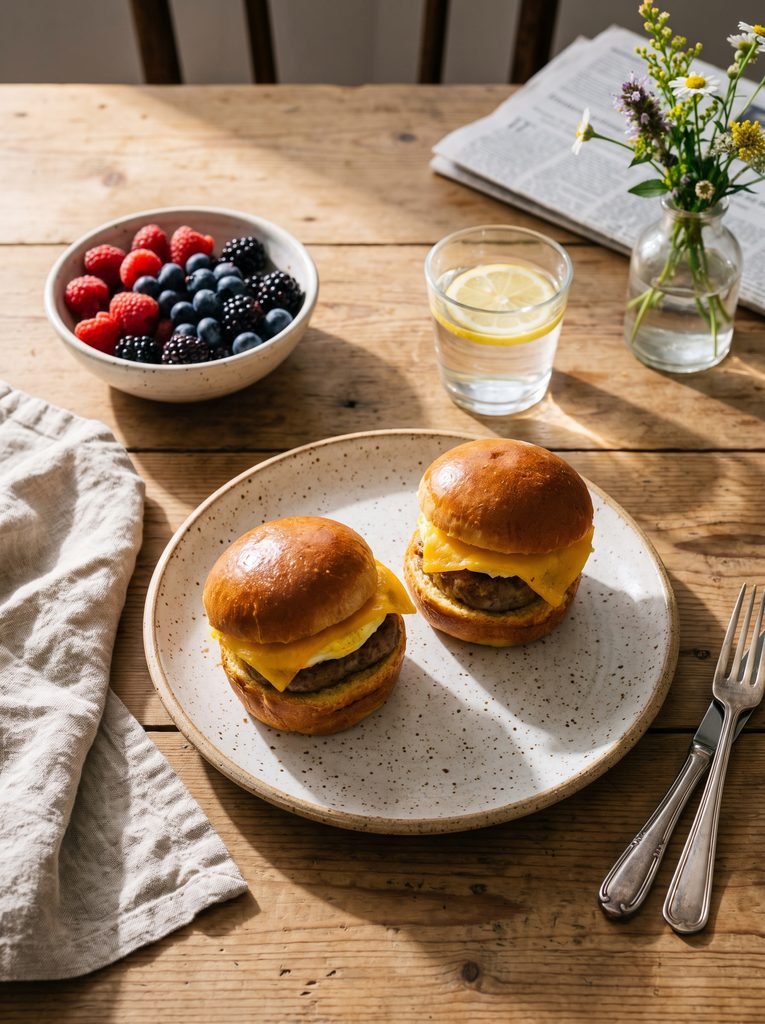
Classic Sausage Egg and Cheese English Muffin Sandwich A toasted English muffin layered with a cooked sausage patty, a fried or baked egg, and a slice of cheese represents the traditional sandwich version; using a whole-grain English muffin adds meaningful fiber compared to a standard white version.
Open-Faced English Muffin Sandwich Using only half of an English muffin, with the egg, sausage, and cheese stacked on top, naturally moderates the bread portion while keeping the same flavors.
Lettuce-Wrapped Sausage Egg and Cheese Wrapping the sausage patty, egg, and cheese in a large lettuce leaf in place of the muffin offers a very low-carbohydrate, handheld alternative.
Low-Carb English Muffin Version Several commercially available low-carb or high-fiber English muffins can be used in place of traditional ones, offering a familiar sandwich format with fewer net carbohydrates.
Chicken Sausage Egg and Cheese Muffin Sandwich Using chicken sausage in place of pork sausage offers a leaner protein option for the sandwich version, with a milder flavor and lower fat content.
Quick and Easy Options for Busy Mornings
These options focus on easy-to-make recipes for readers with limited weekday time.
One-Bowl Mix and Bake — Whisking the eggs, cooked sausage, and cheese in a single bowl and pouring into a muffin tin minimizes cleanup and prep time.
Pre-Cooked Sausage Crumbles Shortcut — Using pre-cooked sausage crumbles or sliced pre-cooked sausage links eliminates the step of browning raw sausage.
Pre-Shredded Cheese Shortcut — Using pre-shredded cheese saves a few minutes of prep time compared to shredding a block.
Silicone Muffin Cups — Silicone liners make removing the baked muffins easier and reduce the need for added grease or oil.
Microwave Single-Serving Method — Cooking a single egg and sausage mixture in a microwave-safe mug or small bowl offers a very fast option for readers who need a breakfast in just a few minutes.
For efficiency, bake a full tray of egg muffins on the weekend and refrigerate or freeze individual portions, so breakfast is ready to reheat in under a minute throughout the week.
How to Build a More Balanced Sausage Egg & Cheese Muffin
Choosing the Right Protein
Eggs are the foundation of both muffin styles, providing high-quality protein, while sausage adds flavor and additional protein along with saturated fat and sodium. Choosing a leaner sausage, such as turkey or chicken sausage, and reading labels for sodium content can help moderate these. Protein needs vary from person to person depending on factors such as body composition, activity level, and overall health goals, so readers should consider their individual dietary needs, ideally with guidance from a registered dietitian or healthcare provider.
Processed meats like sausage are generally best enjoyed in moderation as part of an overall varied diet, so rotating protein sources throughout the week — for example, alternating sausage muffins with versions made with diced ham, turkey, or additional vegetables — is a reasonable approach.
Adding Vegetables, Fiber, and Healthy Fats
Egg muffins are one of the easiest ways to work vegetables into breakfast, since ingredients like spinach, bell pepper, onion, mushrooms, and tomatoes can be diced finely and mixed directly into the egg base. Each of these adds fiber and nutrients without significantly changing the muffin’s flavor.
Healthy fats in this dish come primarily from the eggs, sausage, and cheese. Portion awareness applies here as with any cheese-containing dish — a moderate amount of a flavorful cheese, such as sharp cheddar, delivers satisfying flavor without requiring a heavy hand. A side of avocado or a small handful of nuts can add additional healthy fat if desired.
Fiber, whether from vegetables folded into the muffins, a whole-grain English muffin, or a side of fresh fruit, complements the protein and fat in this breakfast and supports a longer-lasting feeling of fullness.
Healthy Alternatives to High-Carb Ingredients
Since the muffin format itself is the main source of carbohydrates in the sandwich version, a few practical substitutions can help moderate the overall carbohydrate content:
- Crustless egg muffins instead of an English muffin sandwich
- A whole-grain or low-carb English muffin instead of a standard white English muffin
- An open-faced sandwich with half an English muffin instead of a full one
- A lettuce wrap instead of any muffin or bread at all
- Extra vegetables folded into the egg mixture instead of a larger portion of bread
These swaps allow readers to enjoy the familiar flavors of a sausage egg and cheese breakfast while adjusting the carbohydrate content to fit personal preferences. Most readers do not need to eliminate bread entirely from breakfast; a whole-grain English muffin sandwich, enjoyed in a reasonable portion alongside fruit or vegetables, can also fit into a balanced approach.
For more inspiration, see our [Healthy Breakfast Ideas] and [Low Carb Recipes] collections.
Meal Prep, Serving Suggestions & Nutrition
Meal-Prep Tips for Busy Mornings
Breakfast muffins are inherently well-suited to batch preparation, supporting meal prep lunch ideas principles applied to a make-ahead breakfast:
- Bake a full tray at once — A standard 12-cup muffin tin makes enough egg muffins for several mornings in a single baking session.
- Cool completely before storing — Allowing the muffins to cool fully helps prevent condensation and sogginess in storage containers.
- Refrigerate for up to 4 days — Egg muffins generally keep well in airtight containers in the refrigerator for 3–4 days.
- Freeze individual portions — Wrapping each muffin individually and freezing them allows for grab-and-reheat convenience for weeks, generally best used within about 2–3 months.
- Reheat gently — Reheating in the microwave for 30–60 seconds, or in a toaster oven, restores warmth without drying out the egg.
- Prepare English muffin sandwiches in advance — Assembled sandwiches can be wrapped individually, refrigerated or frozen, and reheated, though the muffin may soften slightly compared to freshly toasted.
- Pair with a simple side — A piece of fruit or a small side of vegetables rounds out the meal with additional fiber.
Serving Suggestions and Flavor Combinations
Rotating ingredients and sides helps keep sausage egg and cheese muffins interesting throughout the week:
- Classic sausage egg muffins + a side of fresh fruit + hot sauce
- Turkey sausage and spinach egg muffins + sliced avocado
- Bell pepper and onion egg muffins + a small side salad
- Whole-grain English muffin sandwich + sliced tomato + a piece of fruit
- Lettuce-wrapped sausage, egg, and cheese + fresh herbs
Fresh herbs such as chives, parsley, and dill, along with spices like paprika, black pepper, and a pinch of cayenne, can add flavor to egg muffins without adding extra sodium or fat. A dash of hot sauce or a spoonful of salsa is a low-calorie way to add brightness.
Explore our [High Protein Recipes] and [Easy Healthy Recipes] for additional breakfast pairing ideas.
Nutritional Information and Weight-Loss Considerations
Nutritional values depend heavily on the type of sausage, amount of cheese, and portion size, so the figures below should be treated as general estimates, per two egg muffins or one sandwich.
| Breakfast Muffin Variation | Estimated Calories | Protein | Carbohydrates | Fiber | Fat |
|---|---|---|---|---|---|
| Classic Sausage Egg and Cheese Egg Muffins (2) | 280–340 kcal | 18–22g | 2–4g | 0–1g | 22–26g |
| Turkey Sausage Egg and Cheese Muffins (2) | 220–280 kcal | 20–24g | 2–4g | 0–1g | 14–18g |
| Turkey Sausage and Spinach Egg Muffins (2) | 230–290 kcal | 21–25g | 3–5g | 1–2g | 14–18g |
| Sausage Egg and Cheese on Whole-Grain English Muffin | 380–440 kcal | 22–26g | 26–32g | 4–6g | 18–22g |
| Lettuce-Wrapped Sausage Egg and Cheese | 260–320 kcal | 18–22g | 2–4g | 1–2g | 20–24g |
These estimates suggest that the crustless egg muffin format is very low in carbohydrates and high in protein, while the English muffin sandwich version provides more carbohydrates and fiber. Both are fairly energy-dense because of the sausage and cheese, and the sodium content can be meaningful, so label reading is worthwhile. As with any food, no single dish determines weight-loss outcomes — sustainable results come from consistent dietary patterns, adequate physical activity, sufficient sleep, and overall calorie balance over time.
Conclusion
Sausage egg and cheese breakfast muffins offer a genuinely filling, make-ahead breakfast that can fit into a balanced, weight-conscious approach to eating, whether you prefer the crustless egg muffin format or a portion-controlled English muffin sandwich. By choosing leaner turkey or chicken sausage, using a moderate amount of flavorful cheese, folding in vegetables like spinach and bell pepper, and pairing the muffin with fresh fruit, you can create sausage egg and cheese breakfast muffins that stay satisfying while keeping saturated fat and sodium more moderate. Simple swaps — like an open-faced sandwich or a lettuce wrap — make it easy to adjust the carbohydrate content to fit your own preferences.
Batch preparation, including baking a full tray and freezing individual portions, is one of the most practical strategies for making this breakfast work across a busy week. Portion awareness and overall dietary balance remain central to any long-term goal, and it’s worth remembering that no single breakfast determines your results — consistency, activity, and a well-rounded approach to eating matter far more than any individual meal.
Try one of the breakfast muffin variations above this week — whether it’s the classic egg muffin or a whole-grain English muffin sandwich — and share your favorite combination in the comments below.
For more inspiration, browse our [Healthy Breakfast Ideas], [Meal Prep Recipes], and [Easy Healthy Recipes] collections.
More Recipe Inspiration
Looking for more delicious ideas to try? Visit Jowel Recipes to discover more recipe inspiration and creative dishes for your next meal.
Frequently Asked Questions
1. Are sausage egg and cheese breakfast muffins a good option for weight loss recipe? Sausage egg and cheese muffins can fit into a balanced approach to eating, since eggs and sausage provide substantial protein that supports a longer-lasting feeling of fullness. Choosing leaner turkey or chicken sausage, using a moderate amount of cheese, and adding vegetables helps keep the muffins more balanced. Individual needs vary, so portions should be adjusted based on your own goals and appetite.
2. Can I make a low-carb version of breakfast muffins? Yes. Crustless egg muffins, made with eggs, sausage, and cheese baked in a muffin tin, contain essentially no flour or bread and are naturally very low in carbohydrates. A lettuce-wrapped version of the sandwich is another low-carb option.
3. How can I reduce the fat and sodium in sausage egg and cheese muffins? Using lean turkey or chicken sausage, choosing a lower-sodium sausage, using a smaller amount of cheese or a reduced-fat variety, and replacing some whole eggs with egg whites all help moderate fat and sodium while keeping the muffins flavorful.
4. Can I prepare these muffins in advance? Yes, these muffins are very well-suited to advance preparation. Egg muffins keep in the refrigerator for 3–4 days and can be frozen individually for longer storage, then reheated in under a minute for a quick breakfast.
5. Can eating breakfast muffins help with weight management? A protein-rich breakfast muffin may help support a more filling morning meal, which can aid overall calorie management and reduce the temptation to rely on less nutritious options on a rushed morning. That said, weight management depends on multiple factors, including total daily calories, dietary quality, physical activity, sleep, and consistency over time — not on any single meal or food choice.