Table of Contents
Introduction
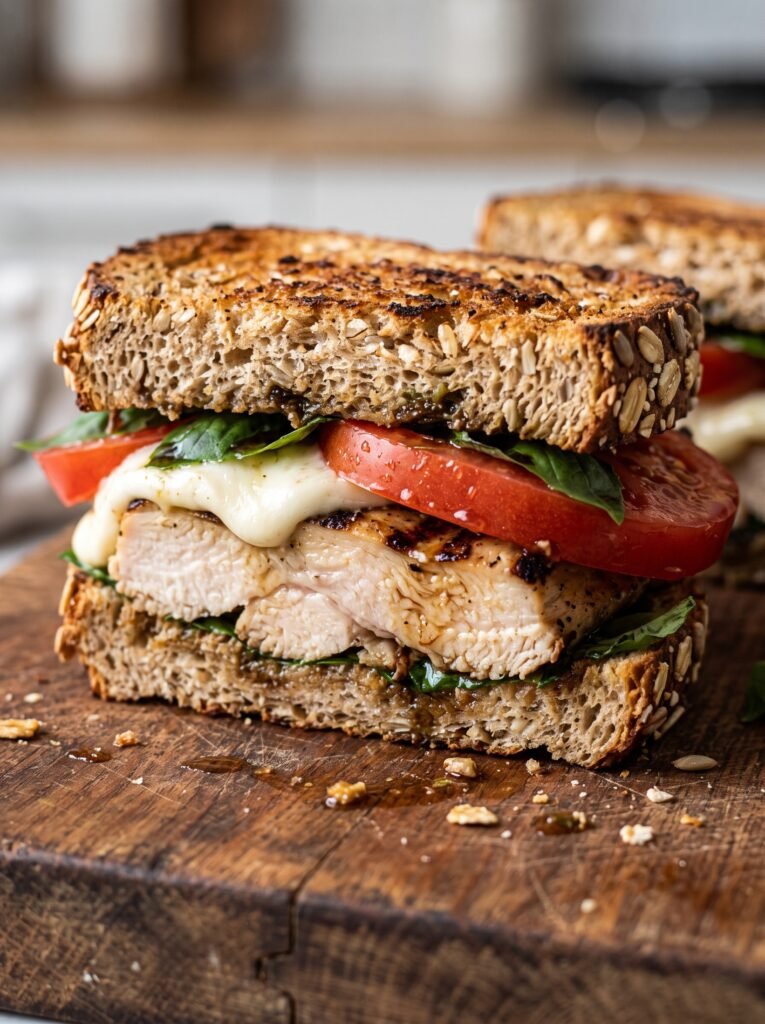
A Caprese chicken sandwich brings together the classic Italian combination of fresh mozzarella, tomato, and basil with the substantial protein of grilled chicken, creating a lunch that feels both fresh and satisfying. Built on whole-grain bread with a light drizzle of balsamic and olive oil, this sandwich can be a practical, protein-forward lunch that supports a balanced, weight-conscious approach — and for readers who want an even lighter option, swapping the bread for a lettuce wrap delivers the same bright, fresh flavors with meaningfully fewer refined carbohydrates.
It’s worth being clear from the outset: no single sandwich, and no single ingredient, causes weight loss on its own. Weight management depends on a combination of factors — total daily calorie intake, overall dietary quality, physical activity, consistency over time, sleep, and individual needs. What a well-built Caprese chicken sandwich can offer is a genuinely filling lunch, since chicken’s protein and mozzarella’s protein and fat both contribute to a longer-lasting feeling of fullness than a sandwich built mostly around bread and a few slices of tomato.
This is why choosing protein, vegetables, healthy fats, and fiber matters even in a fresh, simple sandwich like this one. A sandwich with a thin layer of chicken, a small amount of mozzarella, and little else offers a different nutritional picture than one built with a generous chicken portion, a full layer of fresh mozzarella and tomato, and a drizzle of good olive oil.
In this article, you’ll find a classic Caprese chicken sandwich recipe alongside protein-boosted and lower-carb variations, quick preparation tips for busy days, guidance on building a balanced version of this sandwich, and meal-prep strategies for the week — along with estimated nutritional information for representative versions.
Best Caprese Chicken Sandwich Ideas for Weight Loss
Classic High-Protein Caprese Chicken Sandwich
These recipes make chicken and fresh mozzarella the clear stars, aligning with high protein lunch ideas.
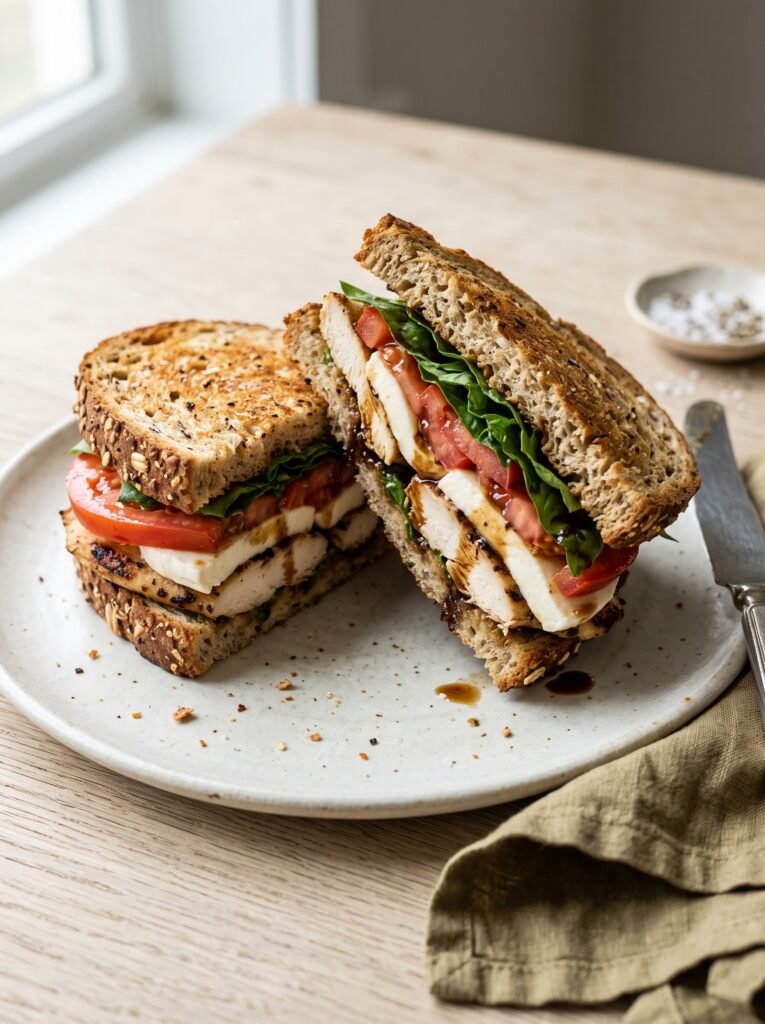
Classic Caprese Chicken Sandwich Grilled chicken breast, fresh mozzarella, sliced tomato, and basil leaves on whole-grain bread, finished with a drizzle of balsamic glaze and olive oil, create the traditional version of this sandwich.
Double-Chicken Protein Sandwich Using a more generous portion of chicken than a typical sandwich meaningfully increases the protein content, helping the sandwich feel more substantial and satisfying.
Caprese Chicken and Egg Sandwich Adding a sliced hard-boiled egg to the classic combination further boosts the protein content, creating an especially filling sandwich.
Pesto Caprese Chicken Sandwich Adding a thin layer of basil pesto in place of some of the olive oil introduces additional flavor along with a bit of healthy fat from the pine nuts and olive oil in the pesto.
Open-Faced Caprese Chicken Sandwich Using a single slice of whole-grain bread instead of two naturally reduces the bread portion while still delivering the same flavors, making this a simple way to moderate the sandwich’s overall carbohydrate content.
Low-Carb Caprese Chicken Sandwich Alternatives
For readers who want the same flavors with meaningfully fewer carbohydrates, these variations fit within low carb lunch recipes principles.
Caprese Chicken Lettuce Wrap Large lettuce leaves used in place of bread recreate the classic sandwich experience with a fraction of the carbohydrates, while still holding the chicken, mozzarella, and tomato together well.
Caprese Chicken Salad Combining all the same ingredients — chicken, mozzarella, tomato, basil — in a bowl instead of a sandwich offers all the same flavors and nutrition without any bread at all.
Caprese Chicken Skewers Alternating cubes of chicken, mozzarella, and cherry tomatoes on skewers, drizzled with balsamic and olive oil, recreates the Caprese flavor profile in a bread-free, portable format.
Low-Carb Bread Caprese Chicken Sandwich Using a commercially available low-carb or high-fiber bread in place of traditional bread significantly reduces the overall carbohydrate content while keeping the same sandwich format.
Caprese Chicken Cucumber Stacks Sliced cucumber rounds layered with chicken, mozzarella, and tomato offer a crunchy, very low-carb alternative to a traditional sandwich.
Quick and Easy Caprese Chicken Sandwiches for Busy Days
These options focus on easy-to-make recipes for readers with limited time.
Five-Minute Assembly with Rotisserie Chicken — Pre-cooked rotisserie chicken, pre-sliced mozzarella, and fresh tomato come together in under five minutes.
Pre-Sliced Mozzarella and Tomato — Using pre-sliced fresh mozzarella and pre-washed tomatoes speeds up assembly considerably.
Make-Ahead Chicken Prep — Grilling a larger batch of chicken at the start of the week allows for quick daily assembly.
Grab-and-Go Lettuce Wrap Version — A lettuce wrap version can be assembled the night before and stays reasonably fresh for a next-day lunch.
Office-Friendly Component Assembly — Bringing chicken, mozzarella, tomato, and bread or lettuce separately to assemble just before eating helps prevent a soggy sandwich if lunch is eaten several hours after packing.
For efficiency, grill a larger batch of chicken than one sandwich requires, so the protein is ready for quick assembly throughout the week.
How to Build a Balanced Caprese Chicken Sandwich
Choosing the Right Protein
Grilled chicken breast offers a lean protein choice for this sandwich, and using a generous portion, rather than a thin layer, helps ensure the sandwich is genuinely protein-forward. Fresh mozzarella also contributes some protein alongside its fat content, adding to the overall protein count of the sandwich. Protein needs vary from person to person depending on factors such as body composition, activity level, and overall health goals, so readers should consider their individual dietary needs, ideally with guidance from a registered dietitian or healthcare provider.
Adding Vegetables, Fiber, and Healthy Fats
This sandwich already incorporates tomato and basil as fresh, fiber-contributing ingredients, along with healthy fat from both the mozzarella and a drizzle of olive oil. Additional vegetables like arugula or spinach can further increase the fiber and volume of the sandwich without adding significant calories.
Portion awareness applies to both the mozzarella and the olive oil, since both are calorie-dense — a modest slice or two of fresh mozzarella and a light drizzle of olive oil are generally sufficient, rather than a heavy hand with either.
Fiber from whole-grain bread, tomato, and any added greens makes this sandwich notably more filling than one made with white bread and minimal vegetables.
Healthy Alternatives to High-Carb Ingredients
Since bread is typically the primary carbohydrate source in this sandwich, a few practical substitutions can help moderate the overall carbohydrate content:
- Lettuce wraps instead of bread
- A low-carb bread instead of traditional bread
- An open-faced version with a single slice of bread instead of two
- Cucumber stacks or skewers instead of bread entirely
- Whole-grain bread instead of white bread, for readers who want to keep the classic format while adding fiber
These swaps allow readers to enjoy the same fresh Caprese flavor combination while adjusting the carbohydrate content to fit personal preferences. Most readers do not need to eliminate bread entirely; a sandwich made with whole-grain bread in a reasonable portion can also fit into a balanced approach.
For more inspiration, see our [Low Carb Recipes] and [Easy Salad Recipes] collections.
Meal Prep, Serving Suggestions & Nutrition
Meal-Prep Tips for Busy Weekdays
A Caprese chicken sandwich can be prepared efficiently with a few simple strategies, supporting meal prep lunch ideas principles:
- Grill chicken and prep vegetables in advance — Preparing these components at the start of the week speeds up daily assembly.
- Slice mozzarella and tomato ahead of time — Pre-slicing these components, and storing them separately, saves a few minutes each day.
- Keep components separate until assembly — Storing bread, chicken, mozzarella, and tomato separately, and assembling the sandwich just before eating, helps prevent sogginess.
- Use airtight containers — Proper storage keeps grilled chicken and sliced vegetables fresh for several days.
- Prepare lettuce wraps in bulk — Washing and drying a larger batch of lettuce leaves at once makes the lettuce wrap version quick to assemble throughout the week.
- Pack components for on-the-go assembly — Bringing the sandwich unassembled, with components in separate containers, works well for readers eating lunch away from home several hours after packing.
- Prepare balsamic glaze or dressing ahead of time — A batch of balsamic reduction can be made in advance and stored for quick use throughout the week.
Serving Suggestions and Flavor Combinations
Rotating formats and additions keeps the Caprese chicken sandwich interesting throughout the week:
- Classic Caprese chicken sandwich + a side salad
- Caprese chicken lettuce wrap + extra basil + balsamic drizzle
- Pesto Caprese chicken sandwich + arugula
- Caprese chicken skewers + a light vinaigrette for dipping
- Open-faced Caprese chicken sandwich + fresh cracked pepper
Fresh basil, a drizzle of good balsamic vinegar, and a light finish of flaky salt can elevate this sandwich’s fresh flavors without contributing meaningful carbohydrates. A squeeze of lemon can also brighten the dish if a lighter finish is preferred over balsamic.
Explore our [High Protein Recipes] and [Easy Salad Recipes] for additional pairing ideas.
Nutritional Information and Weight-Loss Considerations

Nutritional values depend heavily on the amount of chicken and mozzarella used, bread choice, and portion size, so the figures below should be treated as general estimates.
| Caprese Chicken Sandwich Variation | Estimated Calories | Protein | Carbohydrates | Fiber | Fat |
|---|---|---|---|---|---|
| Classic Caprese Chicken Sandwich (whole-grain bread) | 420–480 kcal | 34–38g | 30–36g | 5–7g | 18–22g |
| Caprese Chicken Lettuce Wrap | 300–360 kcal | 32–36g | 6–9g | 2–4g | 16–20g |
| Caprese Chicken Salad | 320–380 kcal | 32–36g | 8–11g | 3–5g | 18–22g |
| Open-Faced Caprese Chicken Sandwich | 300–360 kcal | 28–32g | 18–22g | 3–5g | 16–20g |
| Caprese Chicken Skewers | 280–340 kcal | 30–34g | 5–8g | 1–3g | 16–20g |
These estimates show that swapping bread for lettuce or preparing this dish as a skewer or salad meaningfully reduces the carbohydrate content while keeping protein relatively stable, since the chicken and mozzarella themselves remain unchanged across variations. As with any meal, no single sandwich determines weight-loss outcomes — sustainable results come from consistent dietary patterns, adequate physical activity, sufficient sleep, and overall calorie balance over time.
Conclusion
The Caprese chicken sandwich offers a fresh, satisfying lunch that fits comfortably into a balanced, weight-conscious approach to eating, thanks to the combination of lean protein from chicken and mozzarella alongside the bright flavors of tomato and basil. By choosing whole-grain bread in a reasonable portion, adding extra greens, or swapping bread for a lettuce wrap or skewer format on days when a lighter option feels right, you can create a Caprese chicken sandwich that stays satisfying and adaptable to your own preferences. Simple swaps — like an open-faced version or a low-carb bread — make it easy to adjust the carbohydrate content without giving up the fresh flavors that make this sandwich a favorite.
Meal preparation, including pre-grilled chicken and pre-sliced mozzarella and tomato, makes this sandwich one of the quickest, most practical lunches to assemble throughout a busy week. Portion awareness and overall dietary balance remain central to any long-term goal, and it’s worth remembering that no single lunch determines your results — consistency, activity, and a well-rounded approach to eating matter far more than any individual meal.
Try one of the Caprese chicken sandwich variations above this week — whether it’s the classic version on whole-grain bread or a fresh lettuce wrap take — and share your favorite combination in the comments below.
For more inspiration, browse our [Healthy Dinner Recipes], [Meal Prep Recipes], and [Easy Healthy Recipes] collections.
More Recipe Inspiration
Looking for more delicious ideas to try? Visit Jowel Recipes to discover more recipe inspiration and creative dishes for your next meal.
Frequently Asked Questions
1. Is a Caprese chicken sandwich a good option for weight loss? A Caprese chicken sandwich can be a genuinely filling lunch option, since chicken and mozzarella both provide protein, and the fresh tomato and basil add fiber and flavor without excess calories. Choosing whole-grain bread and a reasonable mozzarella portion helps keep the sandwich balanced. Individual needs vary, so portions should be adjusted based on your own goals and appetite.
2. Can I make a low-carb version of this sandwich? Yes. Using large lettuce leaves, preparing the ingredients as skewers, or serving everything as a Caprese chicken salad instead of a traditional sandwich significantly reduces the carbohydrate content while preserving the classic flavor combination.
3. What can I add to a Caprese chicken sandwich for more fiber? Adding arugula, spinach, or extra tomato all increase the fiber content of this sandwich without significantly changing its core flavor. Choosing whole-grain bread over white bread also adds fiber if a traditional sandwich format is preferred.
4. Is a Caprese chicken sandwich suitable for meal prep? Yes, this sandwich is well-suited to meal prep. Chicken can be grilled in advance, and mozzarella and tomato can be pre-sliced, though it’s generally best to assemble the sandwich just before eating to prevent the bread from becoming soggy.
5. Can eating a Caprese chicken sandwich help with weight management? A Caprese chicken sandwich, particularly one built with a generous chicken portion and fresh vegetables, may help you feel fuller for longer, which can support efforts to manage overall calorie intake. That said, weight management depends on multiple factors, including total daily calories, dietary quality, physical activity, sleep, and consistency over time — not on any single meal or ingredient.