Table of Contents
Introduction
The bowl format has become a go-to for a reason: it’s endlessly customizable, easy to prepare in advance, and naturally lends itself to combining protein, vegetables, and healthy fats in a single, well-balanced dish. Easy High-Protein Chicken Bowls built around a generous portion of chicken, colorful vegetables, and a flavorful sauce or dressing offer a genuinely satisfying meal that supports a balanced, weight-conscious approach without requiring elaborate cooking skills.
It’s worth being clear from the start: no bowl, and no single ingredient, causes weight loss on its own. Weight management depends on a combination of factors — total daily calorie intake, overall dietary quality, physical activity, consistency over time, sleep, and individual needs. What a well-built chicken bowl can offer is a meal that keeps you satisfied for hours, since chicken’s substantial protein content, combined with fiber from vegetables, is widely recognized for supporting a longer-lasting feeling of fullness than meals built primarily around refined carbohydrates.
This is why choosing protein, vegetables, healthy fats, and fiber matters so much when building a chicken bowl. A bowl loaded mostly with rice and a small amount of chicken offers a very different nutritional profile than one built with a generous chicken portion, a variety of vegetables, and a modest amount of healthy fat from a dressing or topping.
In this article, you’ll find practical high-protein chicken bowl ideas across several flavor profiles, lower-carb vegetable-forward variations, quick recipes for busy days, guidance on building a balanced bowl, and meal-prep strategies that make chicken bowls one of the most convenient options for the week — along with estimated nutritional information for representative bowls.
Best Easy High-Protein Chicken Bowls for Weight Loss
Classic High-Protein Chicken Bowls
These bowls make chicken the clear centerpiece, a strong fit within high protein lunch ideas.
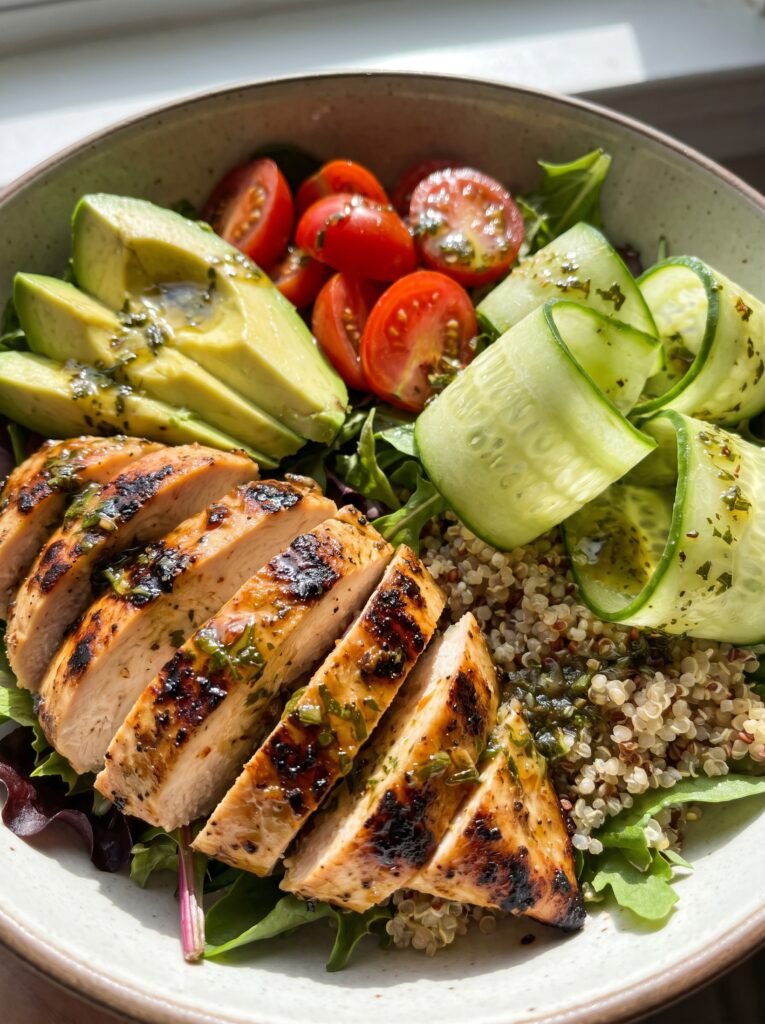
Grilled Chicken and Quinoa Bowl Grilled chicken breast served over a portion of quinoa with roasted vegetables and a light lemon-tahini dressing offers a substantial, protein- and fiber-rich bowl that works well for meal prep.
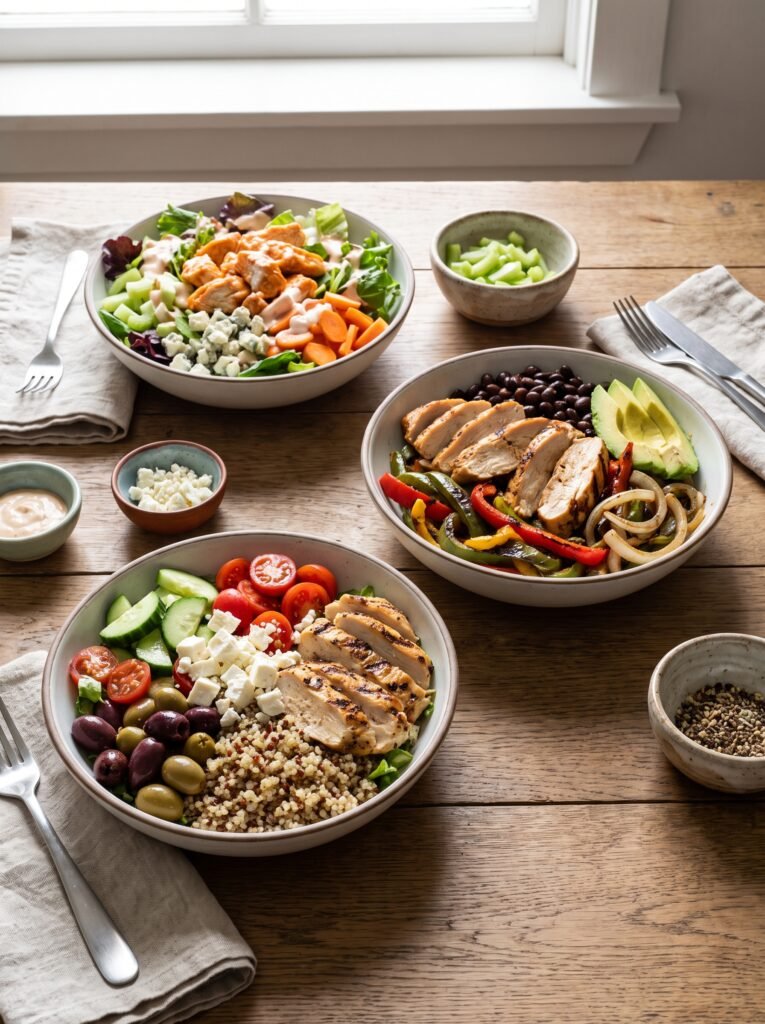
Chicken Fajita Bowl Chicken strips cooked with peppers and onions and fajita seasoning, served over a bed of greens or cauliflower rice with salsa and avocado, provide a bold, protein-forward bowl.
Mediterranean Chicken Bowl Grilled chicken paired with cucumber, tomato, olives, and feta over greens, finished with a drizzle of olive oil and lemon, offers a fresh, protein-rich bowl inspired by Mediterranean flavors.
Asian-Inspired Sesame Chicken Bowl Diced chicken tossed in a light sesame-ginger sauce, served over a bed of shredded cabbage and carrots, offers a crunchy, protein-forward bowl with bold flavor.
BBQ Chicken and Black Bean Bowl Shredded chicken tossed in a light barbecue sauce, combined with black beans, corn, and a bed of greens, provides a hearty, protein- and fiber-rich bowl with familiar, comforting flavor.
Low-Carb Chicken Bowl Variations
These bowls emphasize vegetables over grains, aligning with low carb lunch recipes principles.
Chicken and Cauliflower Rice Bowl Grilled or roasted chicken served over cauliflower rice with a variety of roasted vegetables offers a lower-carb alternative to a traditional grain bowl.
Buffalo Chicken Salad Bowl Shredded chicken tossed in a light buffalo sauce, served over greens with celery, carrots, and a drizzle of ranch or blue cheese dressing, delivers bold flavor with minimal carbohydrates.
Greek Chicken and Zucchini Bowl Grilled chicken paired with roasted zucchini, cherry tomatoes, and olives, finished with a light tzatziki sauce, offers a lower-carb, Mediterranean-inspired bowl.
Chicken and Broccoli Stir-Fry Bowl Chicken and broccoli stir-fried in a light sauce, served over a small portion of cauliflower rice, provides a satisfying, lower-carb take on a classic stir-fry bowl.
Cobb-Style Chicken Bowl Grilled chicken combined with hard-boiled egg, avocado, tomato, and a small amount of bacon over greens offers a protein- and healthy-fat-rich bowl with essentially no refined carbohydrates.
Quick and Easy Chicken Bowls for Busy Days
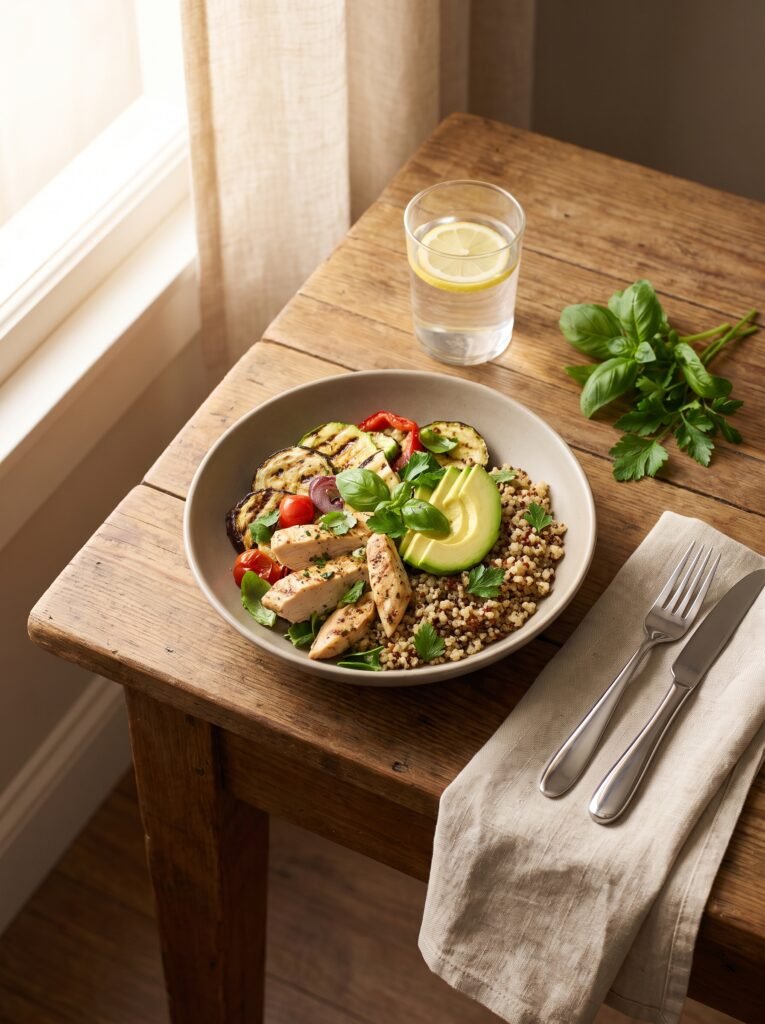
These options focus on easy-to-make recipes for readers with limited time.
Rotisserie Chicken and Salad Bowl — Shredded rotisserie chicken combined with a bagged salad mix and a simple dressing for a fast, minimal-prep bowl.
Frozen Vegetable and Chicken Bowl — Pre-cooked chicken combined with a bag of frozen roasted vegetables, microwaved and topped with a quick sauce.
Canned Bean and Chicken Bowl — Canned black beans, pre-cooked chicken, and salsa combined for a fast, protein- and fiber-rich bowl.
Pre-Marinated Chicken and Bagged Slaw Bowl — Store-bought marinated chicken, quickly pan-seared, served over a bagged coleslaw mix with a light dressing.
Meal-Prepped Component Bowl — Assembling a bowl from pre-cooked chicken, pre-chopped vegetables, and a pre-made dressing, all prepared earlier in the week, for a nearly instant lunch or dinner.
For efficiency, cook a large batch of plain grilled or roasted chicken at the start of the week, then use different sauces and vegetable combinations to create several distinct bowls without repeating the same flavor twice.
How to Build a Healthy Chicken Bowl
Choosing the Right Protein
Chicken breast offers a lean, versatile protein base, while chicken thighs provide a slightly richer flavor and more forgiving texture — both work well in a bowl format. Shredding, dicing, or slicing the chicken, depending on the bowl style, makes it easy to distribute protein evenly throughout the dish.
Cooking a larger batch of plain chicken than one bowl requires, then portioning it across multiple meals with different sauces and toppings, is one of the most efficient ways to build variety into a week of chicken bowls. Protein needs vary from person to person depending on factors such as body composition, activity level, and overall health goals, so readers should consider their individual dietary needs, ideally with guidance from a registered dietitian or healthcare provider.
Adding Vegetables, Fiber, and Healthy Fats
The bowl format is particularly well-suited to incorporating a wide variety of vegetables, since there’s no need to balance the dish around a single starch. Useful options include leafy greens, broccoli, cauliflower, cucumber, zucchini, bell peppers, and tomatoes.
Healthy fats such as avocado, olive oil, nuts, seeds, and tahini can round out a chicken bowl, adding flavor and helping the meal feel satisfying. Portion awareness still applies — a quarter of an avocado, a tablespoon of dressing, or a small handful of nuts is generally a reasonable addition, since these fats are calorie-dense.
Fiber from a generous vegetable portion adds valuable bulk to a chicken bowl, helping it feel more substantial and satisfying than a bowl built mostly around chicken and a starch.
Healthy Alternatives to High-Carb Ingredients
Several practical substitutions can help lower the refined-carbohydrate content of a chicken bowl without eliminating carbohydrates entirely:
- Cauliflower rice instead of white rice or quinoa
- A bed of greens instead of a grain base
- Zucchini noodles instead of regular noodles for an Asian-inspired bowl
- Extra roasted vegetables instead of a larger portion of grains
- A lighter, yogurt-based dressing instead of a heavier, oil-based one
These swaps allow readers to enjoy the same satisfying chicken bowl format while adjusting the carbohydrate content to fit personal preferences. Most readers do not need to eliminate grains entirely; a modest portion of quinoa or rice alongside plenty of vegetables can also fit comfortably into a balanced bowl.
For more inspiration, see our [Healthy Chicken Recipes] and [Low Carb Recipes] collections.
Meal Prep, Serving Suggestions & Nutrition
Meal-Prep Tips for Busy Weekdays
Chicken bowls are especially well-suited to batch preparation, supporting meal prep lunch ideas principles:
- Cook chicken in batches — Grilling or roasting a larger portion of chicken than one bowl requires allows it to be portioned across several meals.
- Wash and chop vegetables in advance — Prepping vegetables ahead of time removes a major barrier to quick bowl assembly.
- Prepare sauces and dressings ahead — A lemon-tahini dressing, a sesame-ginger sauce, or a light buffalo sauce can each be made in bulk and stored for the week.
- Store components separately — Keeping chicken, vegetables, grains, and sauce apart until serving helps preserve texture and prevents sogginess.
- Use compartmentalized containers — Containers with separate sections make it easy to pack bowl components without them mixing together during storage.
- Prepare 3–5 bowls at once — Batch-preparing multiple bowls’ worth of components on a single day reduces daily effort throughout the week.
- Keep sauces separate until serving — This is especially important for salad-style bowls, which can become soggy if dressed too early.
Serving Suggestions and Flavor Combinations
Rotating sauces and vegetable combinations keeps chicken bowls interesting throughout the week:
- Grilled chicken + quinoa + roasted vegetables + lemon-tahini dressing
- Chicken fajita bowl + peppers and onions + salsa + avocado
- Mediterranean chicken bowl + cucumber + olives + feta
- Buffalo chicken salad bowl + celery + a light ranch drizzle
- Asian-inspired chicken bowl + shredded cabbage + sesame-ginger sauce
Fresh herbs such as cilantro, basil, and parsley, along with spices like cumin, smoked paprika, and garlic powder, can add substantial flavor to chicken bowls without relying on refined carbohydrates. A squeeze of lemon or lime, or a light homemade dressing, is often lower in added sugar than many bottled dressings and sauces.
Explore our [High Protein Recipes] and [Easy Salad Recipes] for additional pairing ideas.
Nutritional Information and Weight-Loss Considerations
Nutritional values depend heavily on specific ingredients, portion sizes, and preparation methods, so the figures below should be treated as general estimates.
| Chicken Bowl Idea | Estimated Calories | Protein | Carbohydrates | Fiber | Fat |
|---|---|---|---|---|---|
| Grilled Chicken and Quinoa Bowl | 420–480 kcal | 34–38g | 34–40g | 6–8g | 16–20g |
| Chicken Fajita Bowl (cauliflower rice) | 360–420 kcal | 32–36g | 16–20g | 5–7g | 18–22g |
| Buffalo Chicken Salad Bowl | 320–380 kcal | 30–34g | 8–11g | 3–5g | 18–22g |
| Cobb-Style Chicken Bowl | 380–440 kcal | 32–36g | 8–11g | 4–6g | 24–28g |
| Asian-Inspired Sesame Chicken Bowl | 340–400 kcal | 30–34g | 14–18g | 4–6g | 16–20g |
These estimates suggest that chicken bowls can provide a substantial amount of protein and fiber, particularly when built around a generous chicken portion and a variety of vegetables, with carbohydrate content varying considerably depending on whether a grain, cauliflower rice, or a bed of greens is used as the base. As with any meal, no single bowl determines weight-loss outcomes. Sustainable results generally come from consistent dietary patterns over time, adequate physical activity, sufficient sleep, and overall calorie balance — not from any one recipe.
Conclusion
The bowl format makes it remarkably easy to build a satisfying, protein-forward meal that fits into a balanced, weight-conscious approach to eating. By anchoring each bowl around a generous portion of chicken, adding a wide variety of vegetables, and using sauces and dressings thoughtfully, you can create easy high-protein chicken bowls that stay interesting throughout the week without much repeated effort. Simple swaps — like cauliflower rice instead of grains or a bed of greens instead of a starchy base — make it easy to adjust the carbohydrate content to fit your own preferences.
Batch cooking chicken and prepping a few different sauces at the start of the week is one of the most practical strategies for making this approach sustainable, since it allows you to mix and match components into several distinct bowls throughout the week. Portion awareness and overall dietary balance remain central to any long-term goal, and it’s worth remembering that no single bowl determines your results — consistency, activity, and a well-rounded approach to eating matter far more than any individual meal.
Try one of the chicken bowl ideas above this week — whether it’s a fresh Mediterranean chicken bowl or a bold buffalo chicken salad bowl — and share your favorite combination in the comments below.
For more inspiration, browse our [Healthy Dinner Recipes], [Meal Prep Recipes], and [Easy Healthy Recipes] collections.
More Recipe Inspiration
Looking for more delicious ideas to try? Visit Jowel Recipes to discover more recipe inspiration and creative dishes for your next meal.
Frequently Asked Questions
1. What is a good high-protein chicken bowl for weight loss recipe? A good high-protein chicken bowl for weight management typically centers on a generous portion of chicken, paired with a wide variety of vegetables and a modest amount of healthy fat from a dressing or topping. Options like a Mediterranean chicken bowl or a buffalo chicken salad bowl offer a filling balance of protein and fiber. Individual needs vary, so portions should be adjusted based on your own goals and appetite.
2. Can chicken bowls fit into a low-carb approach? Yes. Many chicken bowls can be adapted to a low-carb pattern by using cauliflower rice or a bed of greens instead of grains like rice or quinoa, and by choosing lighter, yogurt-based dressings over heavier, oil-based ones.
3. What ingredients should I include in a healthy chicken bowl? A balanced chicken bowl generally includes a generous portion of chicken, a variety of vegetables (leafy greens, bell peppers, cucumber, tomatoes), and a modest amount of healthy fat such as avocado, olive oil, or a light dressing. Fresh herbs and spices add flavor without relying on refined carbohydrates.
4. Are chicken bowls suitable for meal prep? Yes, chicken bowls are especially well-suited to meal prep. Cooking a larger batch of chicken and preparing a few sauces or dressings in advance allows you to assemble several different bowls throughout the week using compartmentalized containers to keep components fresh.
5. Can eating high-protein chicken bowls help with weight management? Chicken bowls that are high in protein and fiber may help you feel fuller for longer, which can support efforts to manage overall calorie intake. That said, weight management depends on multiple factors, including total daily calories, dietary quality, physical activity, sleep, and consistency over time — not on any single meal or food choice.