Table of Contents
Introduction
Chicken’s mild flavor and lean protein content make it one of the most versatile proteins for a ketogenic approach to eating, especially once paired with healthy fats and non-starchy vegetables. Keto Dinner Recipes with Chicken typically emphasize a higher proportion of fat, a moderate amount of protein, and very limited carbohydrates — generally aiming for a much lower carbohydrate intake than a standard low-carb diet, often in the range of 20 to 50 grams of net carbohydrates per day, though individual targets vary.
It’s important to be upfront: a ketogenic approach, like any dietary pattern, does not automatically cause weight loss, and it isn’t the right fit for everyone. Weight management depends on a combination of factors — total daily calorie intake, overall dietary quality, physical activity, consistency over time, sleep, and individual needs. Because keto is considerably more restrictive than a general low-carb approach, it’s worth discussing with a healthcare provider before starting, particularly for anyone with existing health conditions or taking medications, since the diet can require adjustments in some cases.
What keto chicken dinners can offer is a genuinely satisfying, high-fat, high-protein meal, since fat carries flavor well and chicken pairs naturally with butter, olive oil, cheese, and cream-based sauces used in moderation. This combination of protein and fat tends to be filling, which is one reason some people find a ketogenic approach easier to sustain than a low-fat diet, though individual experiences vary considerably.
In this article, you’ll find practical high-protein, high-fat keto chicken dinner ideas, low-carb vegetable sides and sauces designed to complement chicken, quick recipes for busy weeknights, guidance on building a balanced keto plate, and meal-prep strategies for the week — along with estimated nutritional information for representative recipes.
Best Keto Dinner Recipes with Chicken for Weight Loss
High-Fat, High-Protein Keto Chicken Dinners
These recipes combine chicken with meaningful fat content, a core principle of high protein lunch ideas adapted to a ketogenic framework.
Creamy Garlic Butter Chicken Chicken breasts seared in butter, then finished in a cream and garlic sauce, deliver a rich, high-fat dinner that’s naturally very low in carbohydrates, since the sauce relies on cream and butter rather than flour for thickness.
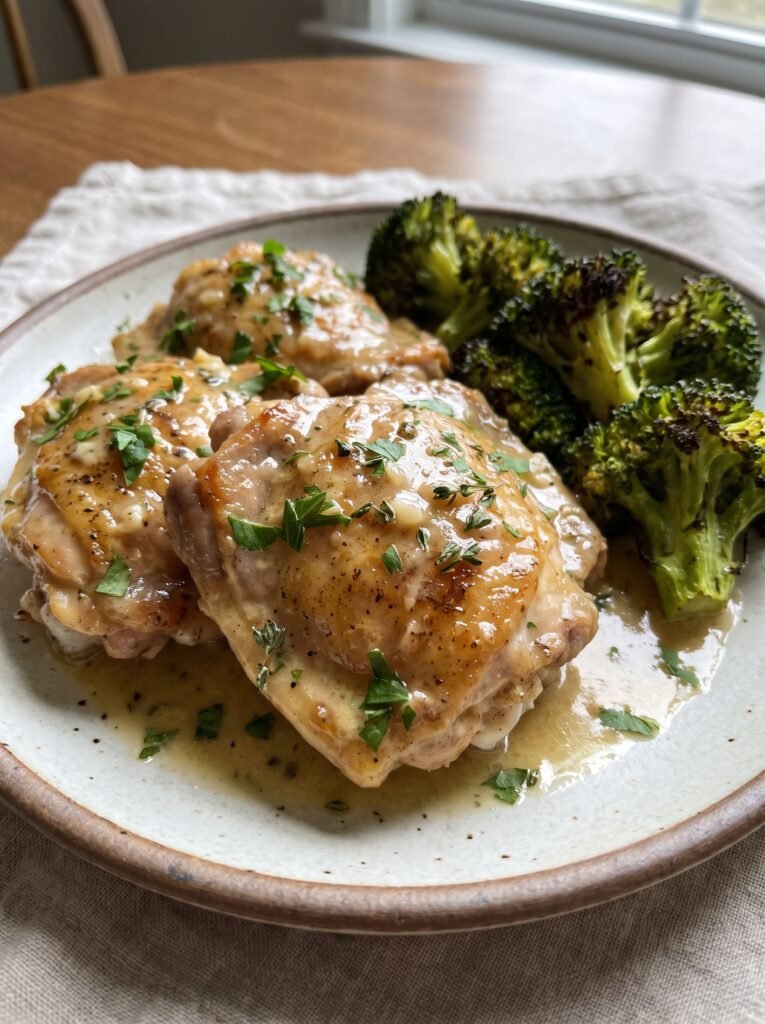
Chicken Thighs with Crispy Skin and Roasted Vegetables Bone-in, skin-on chicken thighs roasted until the skin is crispy, served alongside roasted broccoli or Brussels sprouts tossed in olive oil, provide a naturally higher-fat cut of chicken paired with fiber-rich vegetables.
Bacon-Wrapped Chicken Breast Chicken breast wrapped in bacon and baked until crispy offers a flavorful combination of two proteins along with substantial fat content, well-suited to a ketogenic approach.
Chicken Alfredo with Zucchini Noodles A rich alfredo sauce made from butter, cream, and parmesan, tossed with chicken and zucchini noodles instead of pasta, delivers the indulgent flavor of a classic Italian dish with a fraction of the carbohydrates.
Cheesy Baked Chicken with Cream Cheese and Bacon Chicken breasts topped with a mixture of cream cheese, shredded cheddar, and crumbled bacon, then baked until bubbly, create an indulgent, high-fat dinner reminiscent of a jalapeño popper flavor profile.
Low-Carb Sides and Sauces for Keto Chicken Dinners
Since chicken itself is naturally carbohydrate-free, the sides and sauces are what determine whether a chicken dinner stays within keto guidelines, aligning with low carb lunch recipes principles extended to dinner.
Garlic Butter Roasted Cauliflower Cauliflower florets roasted with garlic and a generous amount of butter or olive oil provide a satisfying, higher-fat side dish that pairs well with almost any chicken preparation.
Creamy Cauliflower Mash Steamed cauliflower blended with butter, cream cheese, and a touch of garlic offers a rich, keto-friendly alternative to mashed potatoes.
Bacon and Parmesan Brussels Sprouts Roasted Brussels sprouts tossed with crispy bacon pieces and a sprinkle of parmesan provide a flavorful, higher-fat vegetable side.
Avocado and Cucumber Salad Sliced avocado and cucumber with a simple olive oil and vinegar dressing offer a fresh, high-fat, very low-carb side that balances a richer chicken main.
Keto Caesar Salad Romaine lettuce tossed with a traditional egg-yolk-based Caesar dressing, parmesan, and crumbled bacon (in place of croutons) provides a classic, satisfying keto-friendly side salad.
Quick and Easy Keto Chicken Dinners for Busy Weeknights
These options focus on easy-to-make recipes for readers with limited time.
Pan-Seared Chicken Thighs with Butter — Chicken thighs seared in a hot pan and finished with a pat of butter and fresh herbs, ready in under 20 minutes.
Rotisserie Chicken with Roasted Vegetables — Store-bought rotisserie chicken, with the skin left on for additional fat, paired with a quick tray of roasted low-carb vegetables.
Chicken and Cheese Lettuce Wraps — Shredded chicken combined with cream cheese and shredded cheddar, wrapped in large lettuce leaves for a fast, high-fat, low-carb dinner.
One-Pan Chicken and Cauliflower Rice — Diced chicken thighs cooked with cauliflower rice and a butter-based sauce in a single pan for minimal cleanup.
Frozen Vegetable and Chicken Skillet — Pre-cooked chicken combined with a bag of frozen low-carb vegetables and a butter or olive oil-based sauce for a nearly effortless dinner.
For efficiency, cook a larger batch of chicken thighs or breasts than a single dinner requires, then use the extra across salads, lettuce wraps, or a second dinner later in the week.
How to Build a Balanced Keto Chicken Dinner
Choosing the Right Cut and Preparation Method
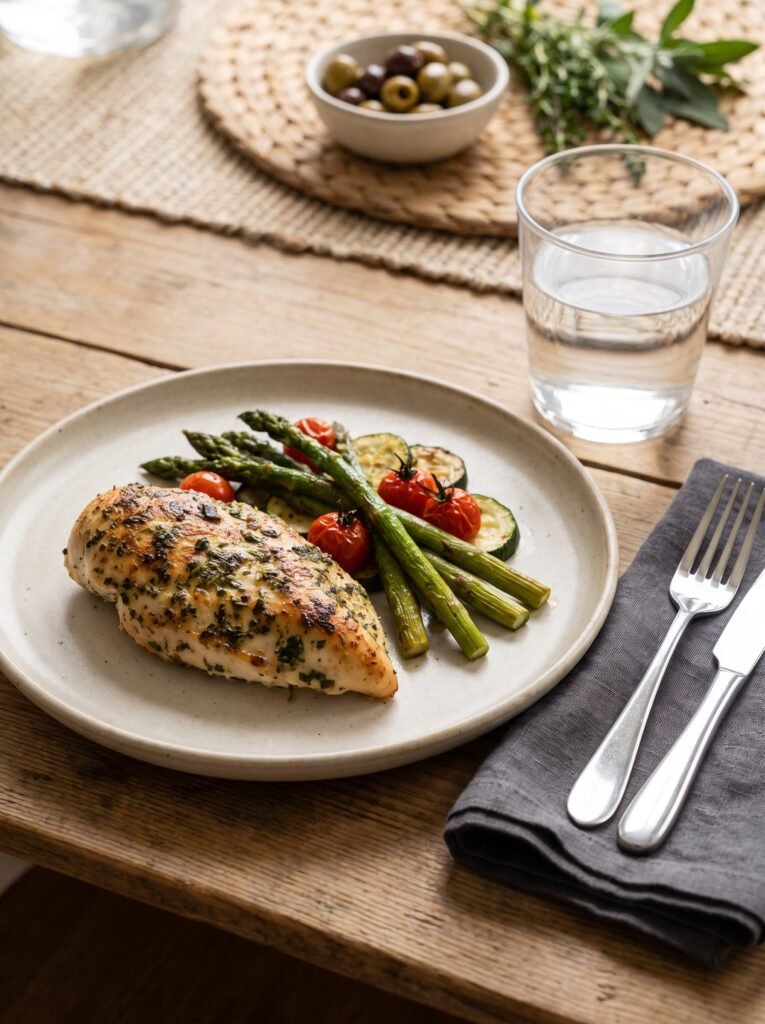
Chicken thighs, with their higher natural fat content compared to chicken breast, are often a good fit for a ketogenic approach, since they help meet the diet’s higher fat targets without requiring as much added fat from butter or oil. Chicken breast works well too, particularly when paired with a fat-rich sauce or topping like butter, cream, or cheese.
Leaving the skin on, when desired, adds further fat and flavor, though this is a matter of personal preference. Protein needs vary from person to person depending on factors such as body composition, activity level, and overall health goals, so readers should consider their individual dietary needs, ideally with guidance from a registered dietitian or healthcare provider, particularly given keto’s more restrictive nature.
Adding Vegetables, Fiber, and Healthy Fats
A ketogenic approach still benefits from non-starchy vegetables, which provide fiber and nutrients while contributing minimal carbohydrates. Useful options include leafy greens, broccoli, cauliflower, zucchini, bell peppers, Brussels sprouts, and asparagus.
Fat is intentionally more prominent in a keto meal than in a standard low-carb approach — butter, olive oil, cream, cheese, and avocado are all commonly used to reach the diet’s higher fat targets. That said, portion awareness still matters, since even keto-friendly fats are calorie-dense, and total calorie intake remains relevant to weight management regardless of macronutrient breakdown.
Fiber from non-starchy vegetables remains important on keto, since fiber intake can be more challenging to maintain when carbohydrate sources like whole grains, fruit, and legumes are limited or excluded. Prioritizing fibrous vegetables at each meal helps address this.
Healthy Alternatives to High-Carb Ingredients
Several practical substitutions help keep chicken dinners within keto guidelines without leaving the meal feeling restrictive:
- Cauliflower rice or cauliflower mash instead of rice or potatoes
- Zucchini noodles instead of pasta
- Almond flour breading instead of traditional breadcrumbs
- A cream or cheese-based sauce instead of a flour-thickened gravy
- Lettuce wraps instead of tortillas or bread
These swaps allow readers to recreate familiar, comforting chicken dinner formats while staying within a much lower carbohydrate range than a traditional recipe would allow. Because keto is more restrictive than a general low-carb approach, these substitutions are generally necessary rather than optional for those following the diet strictly.
For more inspiration, see our [Healthy Chicken Recipes] and [Low Carb Recipes] collections.
Meal Prep, Serving Suggestions & Nutrition
Meal-Prep Tips for Busy Weeknights
A few meal-prep strategies can make keto chicken dinners more manageable during a busy week, supporting meal prep lunch ideas principles applied to a ketogenic approach:
- Cook chicken in batches — Preparing more chicken thighs or breasts than one dinner requires allows the extra to be used across multiple keto-friendly meals.
- Prepare sauces separately — A batch of alfredo or garlic butter sauce can be made ahead and stored, then reheated with freshly cooked chicken.
- Wash and chop vegetables in advance — Prepping cauliflower, broccoli, and other low-carb vegetables ahead of time speeds up weeknight cooking.
- Portion fats intentionally — Since fat is central to a keto meal, pre-portioning items like cheese, butter, or nuts helps maintain consistency across meals.
- Use one-pan methods — These reduce both active cooking time and cleanup, making keto dinners more manageable on busy nights.
- Freeze extra portions — Many keto chicken dishes, like a butter- or cream-based bake, freeze and reheat reasonably well.
- Track net carbohydrates if following strict keto — Reading labels and being mindful of hidden carbohydrates in sauces or seasoning blends helps maintain consistency with keto’s more restrictive carbohydrate limits.
Serving Suggestions and Flavor Combinations
Rotating flavors and preparations helps keep keto chicken dinners interesting throughout the week:
- Creamy garlic butter chicken + roasted broccoli + a pat of extra butter
- Bacon-wrapped chicken breast + a keto Caesar salad
- Chicken alfredo with zucchini noodles + fresh basil + extra parmesan
- Chicken thighs with crispy skin + garlic butter roasted cauliflower
- Cheesy baked chicken + a side of avocado and cucumber salad
Fresh herbs such as basil, thyme, and rosemary, along with garlic, lemon zest, and a generous use of butter or olive oil, can add significant richness and flavor to keto chicken dinners. Cheese, cream, and bacon are frequently used to add both fat and flavor within keto guidelines.
Explore our [High Protein Recipes] and [Easy Salad Recipes] for additional keto-friendly pairing ideas.
Nutritional Information and Weight-Loss Considerations
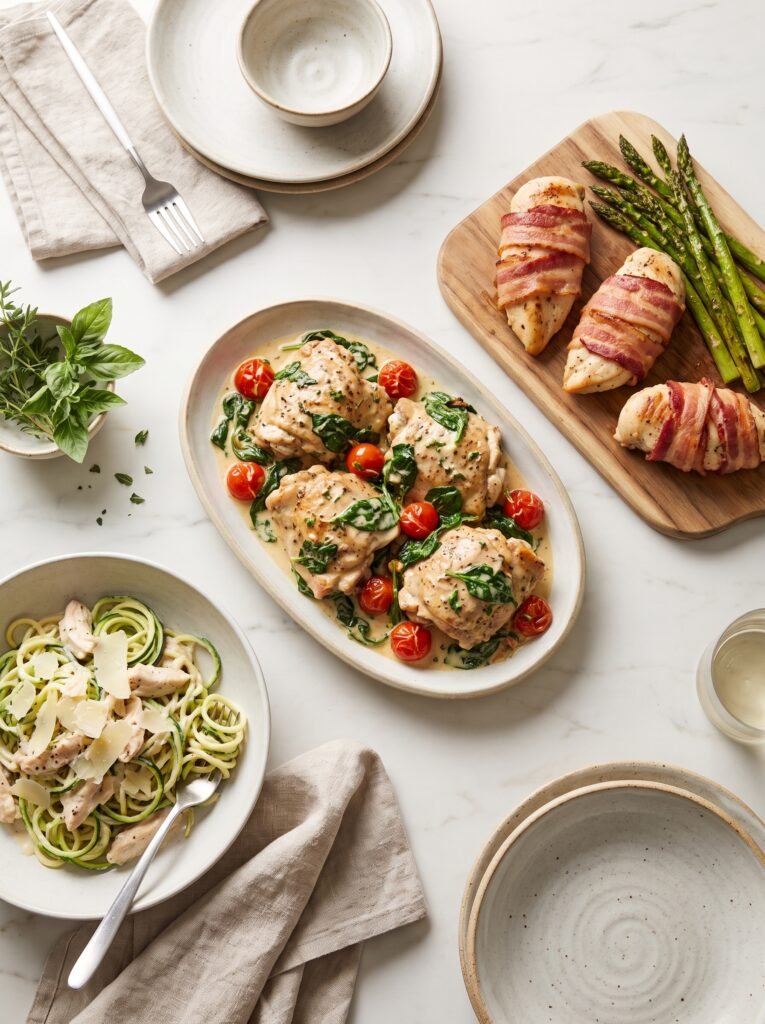
Nutritional values depend heavily on specific ingredients, portion sizes, and preparation methods, so the figures below should be treated as general estimates, per serving.
| Keto Chicken Dinner | Estimated Calories | Protein | Carbohydrates | Fiber | Fat |
|---|---|---|---|---|---|
| Creamy Garlic Butter Chicken (with vegetables) | 440–500 kcal | 34–38g | 6–9g | 2–4g | 30–34g |
| Bacon-Wrapped Chicken Breast | 400–460 kcal | 36–40g | 1–3g | 0–1g | 26–30g |
| Chicken Alfredo with Zucchini Noodles | 460–520 kcal | 32–36g | 8–11g | 3–5g | 32–36g |
| Chicken Thighs with Crispy Skin and Vegetables | 420–480 kcal | 30–34g | 9–12g | 4–6g | 28–32g |
| Cheesy Baked Chicken with Cream Cheese and Bacon | 480–540 kcal | 34–38g | 4–6g | 1–2g | 34–38g |
These estimates illustrate the higher fat content characteristic of a ketogenic approach compared to a standard low-carb meal, while still keeping net carbohydrates quite low. As with any dietary pattern, no single dinner determines weight-loss outcomes. Sustainable results generally come from consistent dietary patterns over time, adequate physical activity, sufficient sleep, and overall calorie balance — not from any one recipe, and total calorie intake still matters even on a high-fat, ketogenic approach.
Conclusion
Chicken’s versatility makes it a natural fit for a ketogenic approach to dinner, whether you favor higher-fat cuts like thighs with crispy skin or lean chicken breast dressed up with a rich, cream-based sauce. By pairing chicken generously with non-starchy vegetables and using fats like butter, olive oil, and cheese intentionally, you can create keto dinner recipes with chicken that feel indulgent while remaining within a much lower carbohydrate range than a traditional recipe. Simple swaps — like cauliflower rice instead of white rice or zucchini noodles instead of pasta — make it possible to recreate familiar comfort foods within keto guidelines.
Meal preparation, including batch-cooked chicken and pre-made sauces, remains one of the most practical tools for making a ketogenic approach sustainable during a busy week. Because keto is considerably more restrictive than general low-carb eating, it’s worth checking in with a healthcare provider before starting, particularly for anyone managing an existing health condition. Portion awareness and overall dietary balance remain important for any individual’s long-term goals, and it’s worth remembering that no single dinner determines results — consistency, activity, and a well-rounded approach to eating matter far more than any individual meal.
Try one of the keto chicken dinner ideas above this week — whether it’s a rich garlic butter chicken or a bacon-wrapped chicken breast — and share your favorite keto chicken combination in the comments below.
For more inspiration, browse our [Healthy Dinner Recipes], [Meal Prep Recipes], and [Easy Healthy Recipes] collections.
More Recipe Inspiration
Looking for more delicious ideas to try? Visit Jowel Recipes to discover more recipe inspiration and creative dishes for your next meal.
Frequently Asked Questions
1. What is a good keto chicken dinner for weight loss recipe? A good keto chicken dinner typically pairs chicken — often a fattier cut like thighs, or breast dressed with a rich sauce — with non-starchy vegetables and intentional amounts of added fat, such as butter, cream, or cheese. Options like creamy garlic butter chicken or bacon-wrapped chicken breast offer a satisfying, high-fat, high-protein meal that stays within a very low carbohydrate range. Individual needs and appropriate calorie intake vary, so it’s worth adjusting portions based on your own goals.
2. Is keto different from a general low-carb approach? Yes. Keto is generally more restrictive than a standard low-carb diet, typically limiting net carbohydrates to a much lower range, often 20 to 50 grams per day, and emphasizing a higher proportion of dietary fat. A general low-carb approach usually allows for more flexibility and a higher carbohydrate intake.
3. What ingredients pair well with chicken for a keto dinner? Chicken pairs well with non-starchy vegetables such as broccoli, cauliflower, zucchini, and Brussels sprouts, along with keto-friendly fats like butter, olive oil, cream, and cheese. Herbs, garlic, and lemon add flavor without contributing meaningful carbohydrates.
4. Are these keto chicken dinners suitable for meal prep? Yes, many keto chicken dinners are well-suited to meal prep. Cooking a larger batch of chicken and preparing sauces separately allows for varied meals throughout the week, and several dishes, like butter- or cream-based bakes, freeze and reheat reasonably well.
5. Can a keto approach with chicken dinners help with weight management? Some people find a higher-fat, higher-protein ketogenic approach more satisfying and easier to sustain than a low-fat diet, which may support consistent calorie management for those who find it a good fit. However, keto is more restrictive than general low-carb eating and isn’t right for everyone, so it’s worth discussing with a healthcare provider before starting. As with any dietary pattern, weight management depends on multiple factors, including total daily calories, dietary quality, physical activity, sleep, and consistency over time.