Table of Contents
Introduction
Breakfast sets the tone for the rest of the day, and for readers trying to manage their weight, it’s worth choosing a morning meal that’s genuinely filling rather than one that leaves you hungry an hour later. Easy Breakfast Ideas built around protein, healthy fats, and fiber-rich ingredients tend to be far more satisfying than breakfasts centered on refined carbohydrates like sugary cereal, pastries, or white toast alone.
It’s important to be upfront from the start: no single breakfast, and no particular macronutrient balance, automatically leads to weight loss. Weight management depends on a combination of factors — total daily calorie intake, overall dietary quality, physical activity, consistency over time, sleep, and individual needs. What a well-built breakfast can do is help curb mid-morning hunger and reduce the temptation to reach for less nutritious snacks before lunch, largely because protein and fiber are widely recognized for supporting a longer-lasting feeling of fullness.
This is exactly why choosing protein, vegetables, healthy fats, and fiber matters at breakfast just as much as at any other meal. A bowl of sugary cereal or a plain bagel may be quick, but it tends to digest rapidly and leave you hungry again soon after. A breakfast built around eggs, Greek yogurt, or a protein smoothie, paired with vegetables or fruit and a modest amount of healthy fat, tends to be far more satisfying and better aligned with a balanced, weight-conscious approach.
In this article, you’ll find practical high-protein breakfast ideas, vegetarian options built around eggs and dairy, quick recipes for busy mornings, tips for building a balanced breakfast plate, and meal-prep strategies that make healthy mornings realistic — along with estimated nutritional information for representative meals.
Best Easy Breakfast Ideas for Weight Loss
High-Protein Breakfast Ideas
Starting the day with a substantial protein source is one of the most effective ways to build a filling breakfast, a core focus within high protein lunch ideas and their breakfast equivalents.
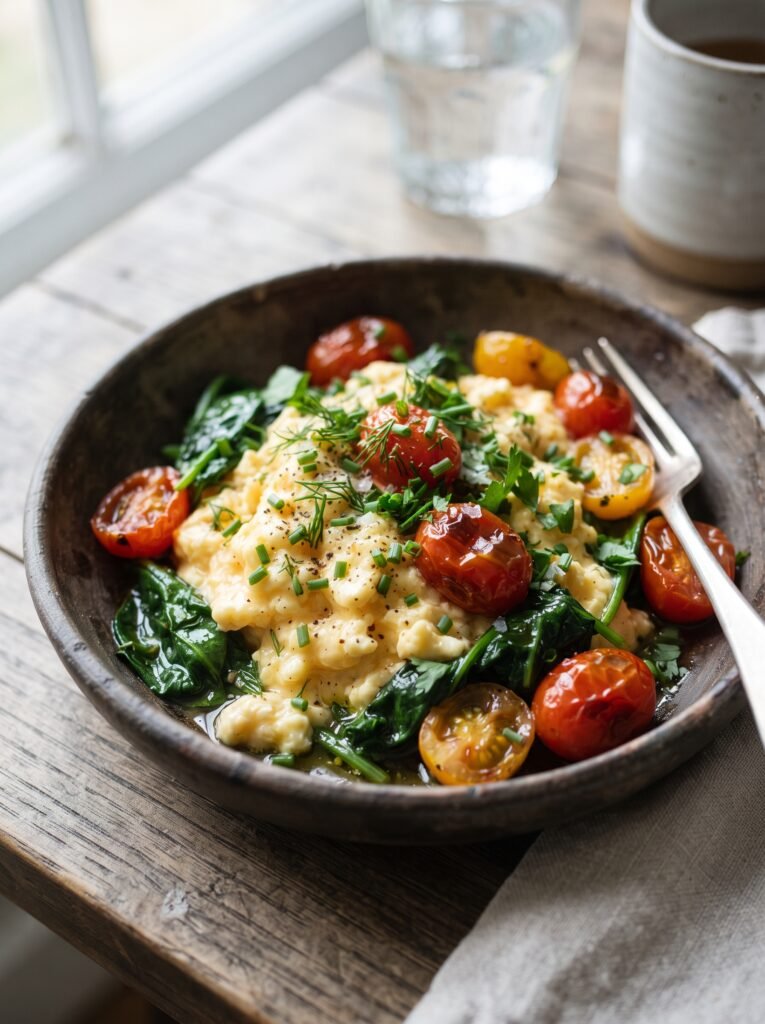
Veggie and Egg Scramble Scrambled eggs cooked with spinach, bell peppers, and tomatoes offer a protein-rich, vegetable-forward breakfast that’s quick to prepare. Adding a sprinkle of cheese provides extra flavor and a small amount of additional protein.
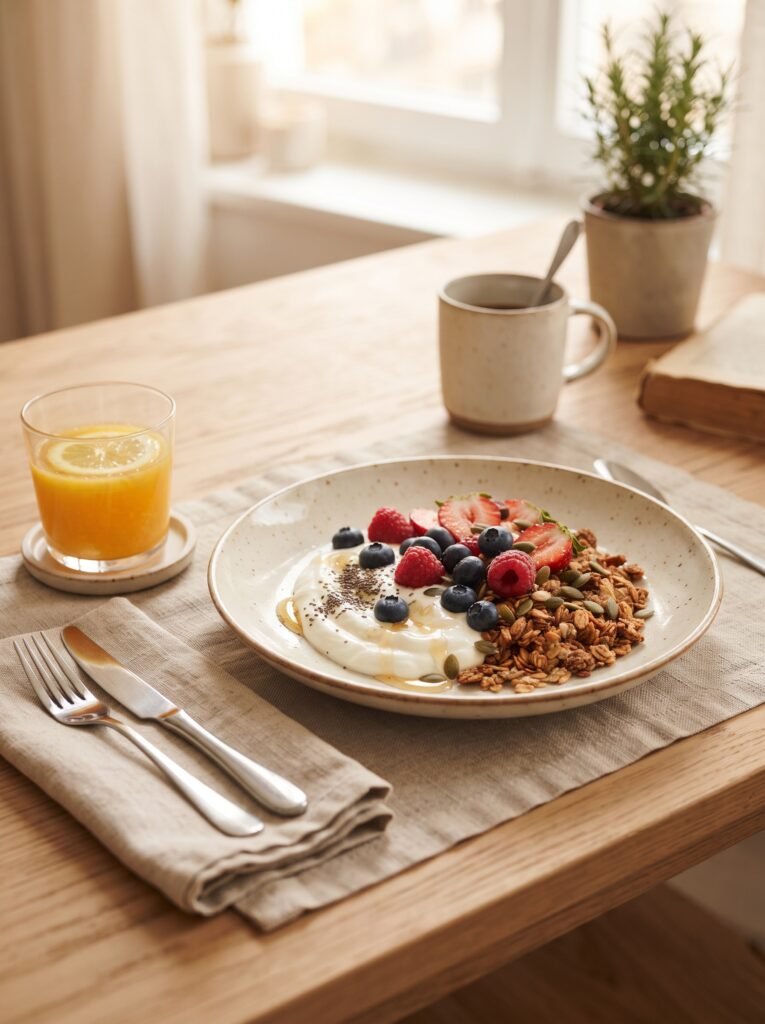
Greek Yogurt Protein Bowl Plain Greek yogurt topped with a small portion of berries, a sprinkle of nuts, and a drizzle of honey (used sparingly) provides a high-protein, relatively low-sugar alternative to flavored yogurt cups, which often contain significant added sugar.
Smoked Salmon and Egg Plate Smoked salmon served alongside soft-boiled or poached eggs and a side of cucumber offers a protein- and healthy-fat-rich breakfast inspired by classic brunch flavors.
Cottage Cheese and Fruit Bowl Cottage cheese paired with sliced peaches or berries and a sprinkle of seeds delivers a substantial protein dose along with natural sweetness and fiber.
Turkey Sausage and Vegetable Hash Lean turkey sausage sautéed with diced bell peppers, zucchini, and onion creates a savory, protein-rich breakfast that can be made in batches for the week.
Low-Carb Vegetarian Breakfast Ideas
Vegetarian breakfasts can still supply meaningful protein and fiber, making them a valuable category of healthy lunch ideas and their morning counterparts.
Avocado and Egg Breakfast Bowl Sliced avocado paired with a fried or poached egg and a handful of cherry tomatoes provides a satisfying combination of protein and healthy fat, with minimal preparation required.
Cauliflower Hash Browns with Eggs Grated cauliflower seasoned and pan-fried until golden, served alongside scrambled or fried eggs, offers a lower-carb alternative to traditional potato hash browns.
Chia Seed Pudding (Unsweetened or Lightly Sweetened) Chia seeds soaked in unsweetened almond or coconut milk overnight create a fiber- and healthy-fat-rich pudding, though portion awareness and minimal added sweetener are useful given chia’s natural carbohydrate content.
Spinach and Feta Egg Muffins Eggs baked with spinach and feta in a muffin tin create a portable, protein-rich breakfast that can be prepared in advance and reheated throughout the week.
Greek Yogurt and Nut Butter Bowl Plain Greek yogurt combined with a small spoonful of natural nut butter and a few sliced strawberries offers a creamy, protein- and healthy-fat-rich breakfast with a touch of natural sweetness.
Quick and Easy Breakfasts for Busy Mornings
These options focus on easy-to-make recipes suited to a rushed morning schedule.
Hard-Boiled Eggs and Avocado — Pre-boiled eggs paired with sliced avocado for a fast, no-cook breakfast.
Protein Smoothie — Unsweetened almond milk, a scoop of protein powder, spinach, and a small portion of berries blended together for a quick, portable breakfast.
Cottage Cheese and Cucumber — Cottage cheese topped with sliced cucumber and a sprinkle of black pepper for a savory, no-prep option.
Turkey and Cheese Roll-Ups — Turkey slices rolled around cheese, paired with cherry tomatoes, for a fast, protein-rich breakfast that requires no cooking.
Greek Yogurt with Nuts and Seeds — Plain Greek yogurt topped with a small handful of walnuts or almonds for added healthy fat and crunch.
To streamline mornings, hard-boil a batch of eggs, prepare egg muffins, or portion out cottage cheese and toppings into individual containers at the start of the week.
How to Build a Healthy Breakfast
Choosing the Right Protein
Protein deserves particular attention at breakfast, since a protein-rich morning meal tends to promote fullness more effectively than a carbohydrate-heavy one. Reliable sources include eggs, Greek yogurt, cottage cheese, smoked salmon, turkey sausage, and tofu, along with protein powder as a convenient option for smoothies.
Eggs in particular are a versatile, widely available breakfast protein that can be prepared in numerous ways — scrambled, poached, boiled, or baked into muffins — making them easy to incorporate regularly. Protein needs vary from person to person depending on factors such as body composition, activity level, age, and overall health goals, so readers should consider their individual dietary needs, ideally with guidance from a registered dietitian or healthcare provider.
Adding Vegetables, Fiber, and Healthy Fats
While breakfast is sometimes treated as an afterthought when it comes to vegetables, incorporating them can add valuable fiber and nutrients. Useful options include leafy greens, broccoli, cauliflower, cucumber, zucchini, bell peppers, and tomatoes — many of which work well in egg dishes or as simple sides.
Healthy fats such as avocado, olive oil, nuts, and seeds add flavor and can support satiety when included at breakfast. As with other meals, portion awareness matters — a quarter of an avocado or a small handful of nuts is generally a reasonable serving.
Fiber, whether from vegetables, chia seeds, or a small portion of fruit, complements protein’s satiety effect and supports digestive health, making the combination especially useful for a breakfast meant to hold you over until lunch.
Healthy Alternatives to High-Carb Ingredients
Simple substitutions can help reduce reliance on refined carbohydrates at breakfast without requiring complete carbohydrate elimination:
- Cauliflower hash browns instead of traditional potato hash browns
- Egg muffins instead of pastries or muffins made with refined flour
- Chia seed pudding instead of sugary cereal
- Greek yogurt instead of flavored, sugar-heavy yogurt cups
- Lettuce or collard wraps instead of bread for a breakfast sandwich
These swaps can help readers reduce added sugar and refined carbohydrates at breakfast while still enjoying familiar formats. Most readers do not need to eliminate carbohydrates entirely at breakfast; the goal is a balanced morning meal that supports satiety and fits personal preferences.
For more inspiration, see our [Healthy Breakfast Ideas] and [Low Carb Recipes] collections.
Meal Prep, Serving Suggestions & Nutrition
Meal-Prep Tips for Busy Mornings
Meal preparation is one of the most effective strategies for maintaining a consistent, healthy breakfast routine, supporting meal prep lunch ideas and their breakfast equivalent:
- Cook proteins in batches — Hard-boil a dozen eggs or bake a tray of egg muffins at the start of the week.
- Wash and chop vegetables in advance — Pre-chopped spinach, peppers, and onions speed up morning scrambles.
- Prepare overnight options — Chia pudding or overnight oats (for those including moderate carbohydrates) can be assembled the night before.
- Store ingredients separately — Keep toppings like nuts or berries separate from yogurt or cottage cheese until ready to eat.
- Use airtight containers — Proper storage keeps prepared eggs, muffins, and toppings fresh for several days.
- Prepare 3–5 breakfasts at once — Batch-preparing egg muffins or hard-boiled eggs on a single day covers most of the week.
- Keep smoothie ingredients pre-portioned — Freezing pre-measured spinach and fruit in bags makes morning blending faster.
Serving Suggestions and Flavor Combinations
Rotating combinations helps prevent breakfast from feeling repetitive. Consider pairings such as:
- Eggs + spinach + feta + tomato
- Greek yogurt + berries + almonds
- Smoked salmon + cucumber + soft-boiled egg
- Cottage cheese + cucumber + black pepper
- Turkey sausage + roasted vegetables
- Avocado + egg + cherry tomatoes
Fresh herbs such as chives, dill, and basil, along with spices like paprika and black pepper, can add flavor to egg-based breakfasts without relying on refined carbohydrates. A light drizzle of olive oil or a sprinkle of everything-bagel seasoning (without the bagel) can add satisfying flavor to simple dishes like avocado and eggs.
Explore our [High Protein Recipes] and [Easy Healthy Recipes] for additional breakfast pairing ideas.
Nutritional Information and Weight-Loss Considerations
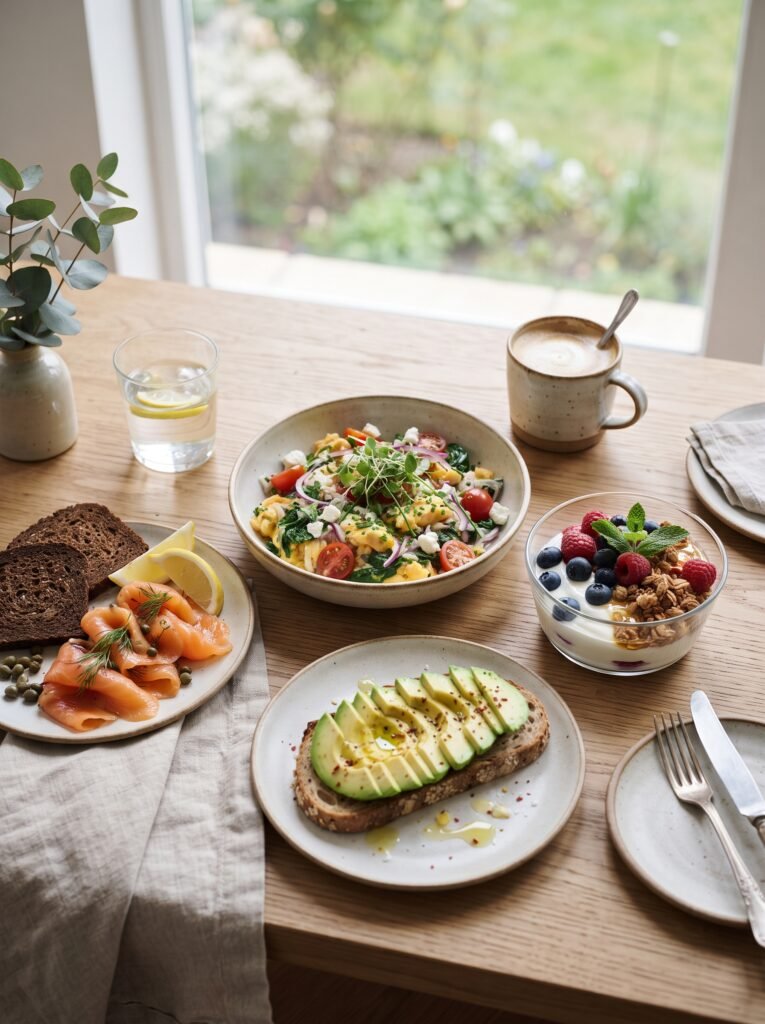
Nutritional values depend heavily on specific ingredients, portion sizes, and preparation methods, so the figures below should be treated as general estimates.
| Breakfast Idea | Estimated Calories | Protein | Carbohydrates | Fiber | Fat |
|---|---|---|---|---|---|
| Veggie and Egg Scramble | 280–340 kcal | 20–24g | 8–11g | 3–5g | 18–22g |
| Greek Yogurt Protein Bowl | 220–280 kcal | 22–26g | 16–20g | 2–4g | 6–10g |
| Smoked Salmon and Egg Plate | 300–360 kcal | 24–28g | 4–7g | 1–3g | 20–24g |
| Cauliflower Hash Browns with Eggs | 260–320 kcal | 16–20g | 12–16g | 4–6g | 16–20g |
| Protein Smoothie | 220–280 kcal | 24–28g | 14–18g | 4–6g | 6–10g |
These estimates suggest that a protein-forward breakfast can provide a substantial amount of protein relative to its carbohydrate content, which may support a longer feeling of fullness through the morning. Still, it’s essential to reiterate that no single meal determines weight-loss outcomes. Sustainable weight management is generally the result of consistent dietary patterns over weeks and months, combined with adequate physical activity, sufficient sleep, and attention to overall calorie balance — not any one meal or ingredient in isolation.
Conclusion
Starting the day with a protein-forward, fiber-rich breakfast doesn’t require elaborate recipes or a long list of ingredients. By prioritizing eggs, Greek yogurt, cottage cheese, or lean protein alongside vegetables and a moderate amount of healthy fat, you can build easy breakfast ideas that genuinely keep you satisfied until lunch. Simple swaps, like cauliflower hash browns instead of potato hash browns or Greek yogurt instead of sugary yogurt cups, make it easy to reduce refined carbohydrates without sacrificing flavor or convenience.
Meal preparation remains one of the most practical tools for making this approach sustainable on busy mornings, while portion awareness and overall dietary balance are central to any long-term weight-management goal. Remember that no single breakfast will determine your results — consistency, activity, and a well-rounded approach to eating matter far more than any individual meal.
Try one of the breakfast ideas above this week — whether it’s a quick protein smoothie or a hearty veggie and egg scramble — and share your favorite breakfast combination in the comments below.
For more inspiration, browse our [Healthy Dinner Recipes], [Meal Prep Recipes], and [Easy Healthy Recipes] collections.
More Recipe Inspiration
Looking for more delicious ideas to try? Visit Jowel Recipes to discover more recipe inspiration and creative dishes for your next meal.
Frequently Asked Questions
1. What is a good breakfast for weight loss recipe? A good breakfast typically centers on a lean protein source — such as eggs, Greek yogurt, or cottage cheese — paired with vegetables or a small portion of fruit and a moderate amount of healthy fat. Options like a veggie and egg scramble or a Greek yogurt protein bowl offer a filling balance of protein and fiber while keeping refined carbohydrates to a minimum. Individual needs vary, so portions should be adjusted based on your own goals and appetite.
2. Can I eat breakfast while following a low-carb approach? Yes. A low-carb approach doesn’t mean skipping breakfast — it simply means choosing options that emphasize protein and vegetables over sugary cereal, pastries, or large portions of toast. Dishes like a veggie egg scramble or cauliflower hash browns with eggs fit comfortably within a low-carb pattern.
3. What foods should I include in a healthy breakfast? A balanced breakfast generally includes a protein source (eggs, Greek yogurt, cottage cheese, or smoked salmon), a portion of vegetables or fruit for fiber, and a modest amount of healthy fat (avocado, olive oil, or nuts). Keeping added sugar to a minimum, especially in yogurt and smoothies, helps support a more filling, balanced meal.
4. Are these breakfast ideas suitable for meal prep? Yes, many of these breakfast ideas are well-suited to meal prep. Hard-boiled eggs, egg muffins, and chia pudding can be prepared in batches and stored for several days. Smoothie ingredients can also be pre-portioned and frozen for quick morning assembly.
5. Can a high-protein breakfast help with weight management? A high-protein breakfast that also includes fiber-rich vegetables or fruit may help you feel fuller for longer, which can support efforts to manage overall calorie intake through the morning. However, weight management depends on multiple factors, including total daily calories, dietary quality, physical activity, sleep, and consistency over time — not on any single meal or food choice. It’s best to view a healthy breakfast as one helpful component of a broader, balanced approach.