Table of Contents
Introduction
French toast has a reputation as an indulgent weekend treat, but it doesn’t have to be entirely off-limits for readers focused on managing their weight. Easy French Toast Recipes can fit into a balanced approach when the bread is chosen thoughtfully, portions are kept reasonable, and the custard base — which is naturally egg-rich — is allowed to do some of the nutritional heavy lifting. For readers who want a lighter option on certain mornings, low-carb alternatives using almond flour bread or a protein-forward batter can deliver a similar sweet, fluffy experience with meaningfully fewer refined carbohydrates.
It’s important to be clear from the outset: neither eating French toast nor avoiding it will, by itself, determine whether you lose weight. Weight management depends on a combination of factors, including total daily calorie intake, overall dietary quality, physical activity, consistency over time, sleep, and individual needs. What matters more than any single dish is how the meal is built — specifically, whether it includes enough protein and fiber to keep you satisfied, and whether portions and added sugar are kept in a reasonable range.
This is why choosing protein, healthy fats, and fiber matters even in a dish like French toast. The custard base of eggs (and often a splash of milk) already provides a meaningful amount of protein, which is one reason French toast, in moderation, can be more filling than plain toast or a pastry. Choosing whole-grain bread over white bread, being mindful of syrup and sugar toppings, and pairing the dish with fresh fruit or a side of protein can turn French toast into a more balanced breakfast.
In this article, you’ll find practical high-protein French toast recipes, whole-grain and portion-controlled options, low-carb French toast alternatives for a lighter morning, tips for building a more balanced version of this classic dish, and meal-prep strategies for busy mornings — along with estimated nutritional information for representative recipes.
Best Easy French Toast Recipes for Weight Loss
High-Protein French Toast Recipes
Since French toast is inherently egg-based, boosting the protein content further is a straightforward way to make it more filling, aligning with high protein lunch ideas and their breakfast equivalents.
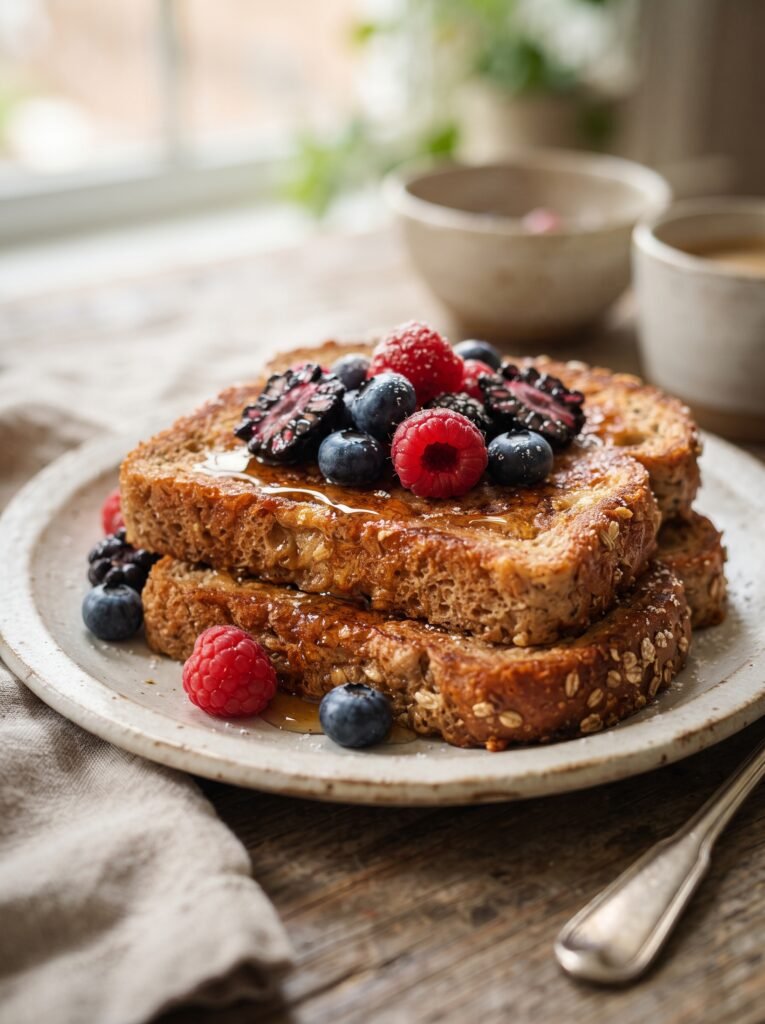
Whole-Grain Protein French Toast Whole-grain bread dipped in a custard made from eggs, a splash of milk, cinnamon, and vanilla extract, then cooked in a small amount of butter or oil, offers more fiber than white bread while keeping the classic French toast texture. Using two eggs per two slices of bread boosts the protein content of the dish.
Cottage Cheese French Toast Batter Blending cottage cheese into the egg custard before dipping the bread creates a creamier, higher-protein batter without significantly altering the final flavor, since the cottage cheese blends smoothly and cooks into the toast.
Protein Powder French Toast A small scoop of unflavored or vanilla protein powder whisked into the egg custard adds extra protein with minimal change to taste or texture, making this a simple modification to any French toast recipe.
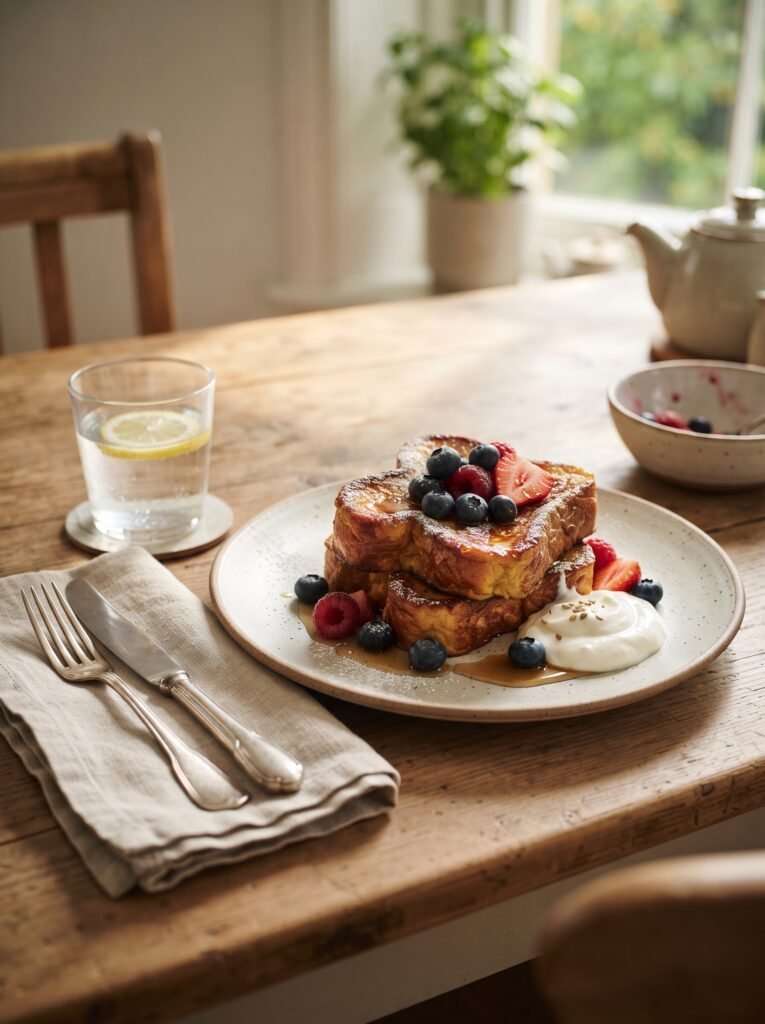
Greek Yogurt-Topped French Toast Rather than syrup alone, topping whole-grain French toast with a dollop of plain or lightly sweetened Greek yogurt adds a substantial protein boost and a tangy contrast to the dish’s sweetness.
Egg White and Whole Egg Blend French Toast Using a combination of whole eggs and egg whites in the custard increases the protein-to-fat ratio slightly compared to using whole eggs alone, while still providing enough fat for a rich, custardy texture.
Low-Carb French Toast Alternatives
For readers who want the flavor of French toast with fewer refined carbohydrates, these options fit within low carb lunch recipes principles.
Almond Flour Bread French Toast Store-bought or homemade almond flour bread, dipped in the same egg custard and cooked the same way as traditional French toast, offers a significantly lower-carbohydrate base while still delivering a satisfying, custardy result.
Cloud Bread French Toast Cloud bread, made primarily from eggs and cream cheese with minimal to no flour, can be used as a very low-carb base for French toast, though the texture is somewhat different from traditional bread.
Protein Pancake-Style “Toast” A thick, eggy protein pancake made from eggs, cottage cheese, and a small amount of almond flour, cooked like a thick pancake and treated as a French toast base, offers a protein-forward, lower-carb alternative to bread-based French toast.
Zucchini and Egg “French Toast” Bites While a more creative interpretation, thick slices of baked zucchini dipped in the same cinnamon-egg custard and pan-fried offer a vegetable-based, very low-carb alternative with a similar sweet, custardy coating.
Low-Carb Bread French Toast Several commercially available low-carb or high-fiber bread products can be used in place of traditional bread, offering a more familiar texture than almond flour bread while still reducing the overall carbohydrate content.
Quick and Easy French Toast Ideas for Busy Mornings
These options focus on easy-to-make recipes for readers with limited time.
Single-Serving French Toast — One or two slices of whole-grain bread and a quick two-egg custard, cooked in under ten minutes for a fast, portion-controlled breakfast.
Baked French Toast Casserole (Make-Ahead) — Bread cubes soaked in custard and baked in a single dish, prepared the night before and portioned into servings throughout the week.
Air Fryer French Toast Sticks — Bread cut into sticks, dipped in custard, and air-fried for a quicker, lower-mess version of traditional stovetop French toast.
Frozen Whole-Grain Waffle French Toast Swap — On especially busy mornings, a whole-grain frozen waffle topped with a small amount of Greek yogurt and fruit offers a faster alternative with a similar sweet breakfast appeal.
Overnight French Toast Bake — Bread and custard combined in a baking dish and refrigerated overnight, ready to bake first thing in the morning with no dipping required.
For efficiency, prepare a batch of French toast on the weekend and freeze individual slices between pieces of parchment paper, so they can be toasted directly from frozen on busy weekday mornings.
How to Build a Healthier French Toast
Choosing the Right Protein
The egg custard is the foundation of any French toast recipe’s protein content, and there are several ways to increase it further: using more eggs relative to bread, blending in cottage cheese or protein powder, or topping the finished dish with Greek yogurt. Other protein additions, such as a side of turkey sausage or a hard-boiled egg, can round out the meal further.
Protein needs vary from person to person depending on factors such as body composition, activity level, and overall health goals, so readers should consider their individual dietary needs, ideally with guidance from a registered dietitian or healthcare provider.
Adding Fiber and Healthy Fats
Choosing whole-grain bread over white bread is one of the simplest ways to add fiber to French toast, since whole grains retain more of the bran and germ that contribute fiber and nutrients. Topping the finished dish with fresh fruit, such as sliced berries or banana, adds further fiber alongside natural sweetness.
Healthy fats can come from the small amount of butter or oil used for cooking, as well as toppings like a light sprinkle of chopped nuts. As with any dish, portion awareness applies — a thin layer of butter for cooking and a modest topping of nuts are generally sufficient, rather than a heavy pat of butter and a large handful of nuts.
Fiber from whole-grain bread and fresh fruit toppings complements the protein from the egg custard, helping the dish feel more balanced and satisfying than a version made with white bread and a heavy syrup topping alone.
Healthy Alternatives to High-Carb and High-Sugar Ingredients
Several practical substitutions can help lower the refined-carbohydrate and added-sugar content of French toast without eliminating the dish entirely:
- Whole-grain or low-carb bread instead of white bread
- Fresh fruit instead of a large portion of syrup
- A light drizzle of pure maple syrup instead of a heavy pour of syrup or a sugar-based topping
- Greek yogurt instead of whipped cream as a topping
- Cinnamon and vanilla extract instead of added sugar in the custard itself, since these add sweetness perception without extra carbohydrates
These swaps allow readers to enjoy French toast’s familiar sweet, comforting flavor while reducing the overall sugar and refined-carbohydrate content of the meal. Most readers do not need to eliminate French toast entirely; the goal is a version that fits comfortably within a balanced approach to eating.
For more inspiration, see our [Healthy Breakfast Ideas] and [Low Carb Recipes] collections.
Meal Prep, Serving Suggestions & Nutrition
Meal-Prep Tips for Busy Mornings
French toast can be prepared efficiently with a few simple strategies that support meal prep lunch ideas and their breakfast equivalent:
- Cook a large batch on the weekend — Preparing multiple slices at once and freezing extras makes weekday mornings faster.
- Freeze individual slices — Separating cooked slices with parchment paper before freezing allows you to reheat just what you need.
- Prepare custard in advance — The egg custard mixture can be whisked the night before and stored in the refrigerator, ready for quick dipping in the morning.
- Use a toaster or air fryer to reheat — Reheating frozen French toast in a toaster or air fryer helps restore a crisp exterior better than a microwave.
- Portion toppings separately — Pre-portioning fruit or a small container of syrup helps control added sugar at serving time.
- Consider a make-ahead baked casserole — A baked French toast casserole can be portioned into individual servings for the week.
- Pair with a protein side — Keeping a batch of hard-boiled eggs or turkey sausage on hand makes it easy to round out the meal with extra protein.
Serving Suggestions and Flavor Combinations
Rotating toppings and flavors keeps French toast feeling special without relying heavily on syrup:
- Whole-grain French toast + fresh berries + a light drizzle of maple syrup
- Cottage cheese French toast + sliced banana + cinnamon
- Almond flour French toast + Greek yogurt + a few walnuts
- Protein powder French toast + fresh strawberries
- Baked French toast casserole + a dollop of Greek yogurt + a dusting of cinnamon
Cinnamon, vanilla extract, and nutmeg can add significant flavor to the custard itself, reducing the need for a heavy syrup topping to make the dish taste sweet and satisfying. Fresh fruit, rather than syrup, is often the more nutrient-dense way to add natural sweetness to the finished dish.
Explore our [Healthy Breakfast Ideas] and [Easy Healthy Recipes] for additional morning pairing ideas.
Nutritional Information and Weight-Loss Considerations

Nutritional values depend heavily on specific ingredients, bread choice, and topping portions, so the figures below should be treated as general estimates.
| French Toast Idea | Estimated Calories | Protein | Carbohydrates | Fiber | Fat |
|---|---|---|---|---|---|
| Whole-Grain Protein French Toast (2 slices) | 340–400 kcal | 20–24g | 34–40g | 5–7g | 12–16g |
| Cottage Cheese French Toast Batter (2 slices) | 360–420 kcal | 24–28g | 32–38g | 4–6g | 14–18g |
| Almond Flour Bread French Toast (2 slices) | 300–360 kcal | 18–22g | 10–14g | 5–7g | 20–24g |
| Cloud Bread French Toast (2 pieces) | 220–280 kcal | 14–18g | 4–7g | 0–2g | 16–20g |
| Baked French Toast Casserole (1 serving) | 320–380 kcal | 18–22g | 30–36g | 4–6g | 14–18g |
These estimates show that French toast’s carbohydrate content varies considerably depending on whether traditional or low-carb bread is used, and that boosting the egg or dairy content of the custard can meaningfully increase protein. As with any meal, no single dish determines weight-loss outcomes — sustainable results come from consistent dietary patterns, adequate physical activity, sufficient sleep, and overall calorie balance over time.
Conclusion
French toast doesn’t have to be reserved for rare indulgences when readers are focused on managing their weight. By choosing whole-grain bread, boosting the protein content of the custard with extra eggs, cottage cheese, or protein powder, and being thoughtful about syrup and sugar toppings, you can enjoy easy French toast recipes that are both satisfying and reasonably balanced. On mornings when a lighter option feels right, almond flour bread, cloud bread, or a protein pancake-style base offer the same sweet, custardy experience with significantly fewer refined carbohydrates.
Meal preparation makes both approaches realistic during a busy week, since French toast freezes and reheats well, allowing you to prepare a batch in advance rather than making it fresh every time. Portion awareness and overall dietary balance remain central to any long-term goal, and it’s worth remembering that no single breakfast — French toast or otherwise — determines your results; consistency, activity, and a well-rounded approach to eating matter far more than any individual meal.
Try one of the French toast ideas above this week — whether it’s a protein-boosted whole-grain version or a lighter almond flour alternative — and share your favorite topping combination in the comments below.
For more inspiration, browse our [Healthy Breakfast Ideas], [Meal Prep Recipes], and [Easy Healthy Recipes] collections.
More Recipe Inspiration
Looking for more delicious ideas to try? Visit Jowel Recipes to discover more recipe inspiration and creative dishes for your next meal.
Frequently Asked Questions
1. What is a good French toast recipe for weight loss recipe? A good French toast recipe for weight management typically uses whole-grain bread in a moderate portion, paired with an egg-rich custard and topped with fresh fruit rather than a heavy pour of syrup. Boosting the custard with extra egg whites, cottage cheese, or a scoop of protein powder can further increase the protein content. Individual needs vary, so portions should be adjusted based on your own goals and appetite.
2. Can I make low-carb French toast? Yes. Traditional wheat bread is relatively high in carbohydrates, but readers can enjoy similar flavors within a lower-carb framework by using almond flour bread, cloud bread, or a protein pancake-style base in place of traditional bread, dipped in the same egg custard.
3. What can I add to French toast to make it healthier? Adding extra eggs, egg whites, cottage cheese, or protein powder to the custard boosts protein content, while topping the finished dish with fresh fruit instead of a large amount of syrup reduces added sugar. Choosing whole-grain bread over white bread also adds valuable fiber to the meal.
4. Is French toast suitable for meal prep? Yes, French toast is well-suited to meal prep. Cooked slices can be frozen individually between pieces of parchment paper and reheated directly from frozen in a toaster or air fryer, making it easy to prepare a batch in advance for busy mornings.
5. Can low-carb French toast alternatives help with weight management? Low-carb French toast alternatives, such as almond flour bread or cloud bread, are generally lower in carbohydrates than traditional wheat bread versions, which may make it easier to manage overall calorie and carbohydrate intake when used as part of a balanced breakfast. That said, weight management depends on multiple factors, including total daily calories, dietary quality, physical activity, sleep, and consistency over time — not on any single ingredient or meal choice.