Table of Contents
Pasta dinners hold a special place in family cooking, offering versatility, broad appeal, and the ability to incorporate protein and vegetables in approachable, familiar ways. This collection of easy pasta dinner recipes for the whole family focuses on nutritious, satisfying dishes that balance traditional pasta comfort with genuine nutritional value through thoughtful ingredient choices. Readers will discover ten dependable pasta recipes along with practical guidance on building balanced meals that appeal to both children and health-conscious adults alike.
Rather than suggesting that pasta must be avoided or dramatically altered to support healthy eating, this article emphasizes practical strategies: incorporating lean proteins and vegetables, choosing whole grain options where appropriate, and understanding portion sizes within a broader, balanced approach to family meals. What follows are ten dependable pasta dinner recipes along with guidance on preparing and serving them efficiently throughout a busy week.
10 Easy Pasta Dinner Recipes for the Whole Family
Protein-Rich Pasta Dinners
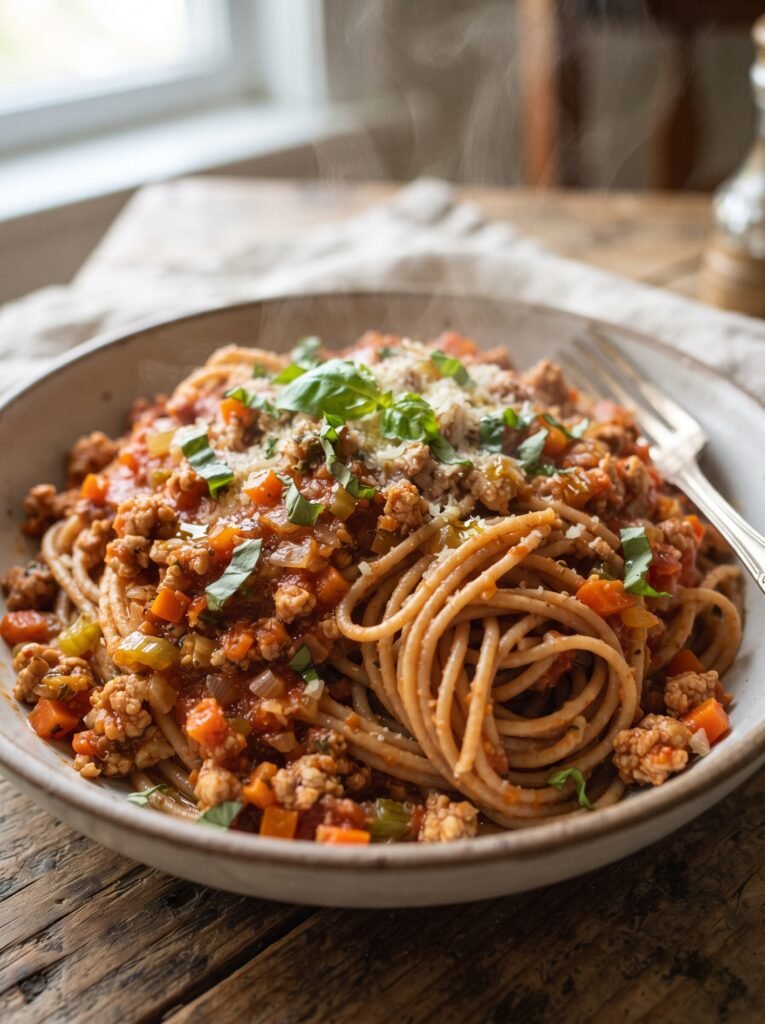
Turkey Bolognese with Whole Wheat Spaghetti simmers lean ground turkey in a tomato-based sauce with diced carrots and celery, served over whole wheat spaghetti for added fiber. This dish remains filling due to its combination of protein and fiber, and preparation difficulty is moderate, requiring about 30 minutes, with ground chicken serving as a suitable substitution.
Shrimp and Garlic Butter Pasta tosses sautéed shrimp with whole wheat linguine in a light garlic butter sauce, finished with fresh parsley and lemon zest, ready in about 20 minutes. This quick-cooking option provides lean protein alongside the comforting appeal of buttery pasta, and chicken breast can substitute for shrimp for those with shellfish allergies.
Baked Chicken Alfredo Pasta Bake combines diced chicken breast, broccoli, and whole wheat pasta in a lightened alfredo sauce made with reduced cream and additional milk, baked until bubbly. This casserole-style dish offers substantial protein and vegetables in a format many children readily accept.
Vegetarian Pasta Options Rich in Fiber
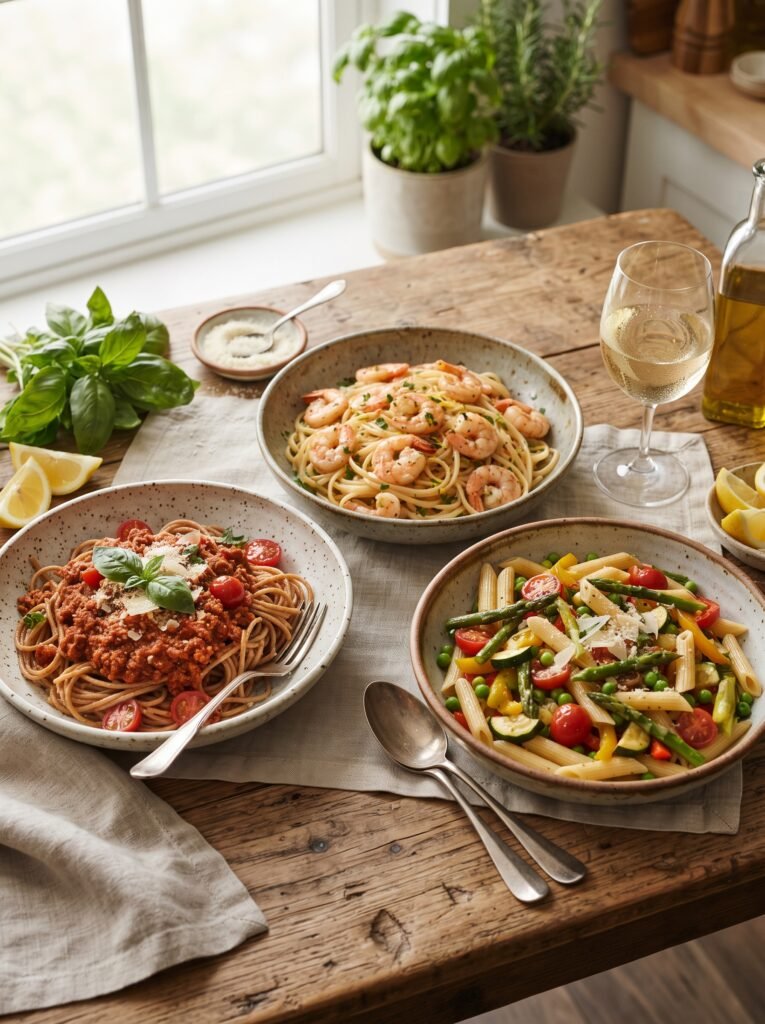
Vegetable Primavera Pasta tosses whole wheat pasta with zucchini, bell peppers, cherry tomatoes, and peas in a light olive oil and garlic sauce, providing fiber and vitamins within a colorful, familiar format. Spinach and Ricotta Stuffed Shells fill jumbo pasta shells with a spinach-ricotta mixture, baked in marinara sauce, offering protein from ricotta alongside iron and fiber from spinach, appealing to families seeking [Easy Healthy Recipes] for meatless nights. Lentil Bolognese replaces ground meat entirely with cooked lentils in a rich tomato sauce, served over pasta for a plant-based option providing substantial fiber and protein that surprises many families with its heartiness.
Quick and Simple Pasta Dinners for Busy Nights
One-Pot Chicken and Vegetable Pasta cooks chicken, pasta, and mixed vegetables together in a single pot with broth, minimizing cleanup while delivering a complete meal in about 25 minutes. Caprese Pasta Salad combines cooked pasta with cherry tomatoes, fresh mozzarella, and basil in a light olive oil dressing, served warm or cold for a versatile, minimal-cooking option. Pesto Chicken Pasta tosses shredded rotisserie chicken with whole wheat pasta and store-bought or homemade pesto, ready in about 15 minutes for an especially quick weeknight option.
Batch-cooking proteins like ground turkey or shredded chicken, along with preparing sauces in advance, makes these [Quick Dinner Recipes] considerably more manageable on particularly busy evenings.
How to Build a Balanced Pasta Dinner
Choosing Proteins That Complement Pasta Dishes
Ground turkey, chicken breast, shrimp, and plant-based options like lentils or white beans all pair well with pasta while contributing meaningful protein content to the overall meal. Since protein needs vary based on age, activity level, and individual family members, incorporating a visible protein source within each pasta dish helps ensure the meal remains balanced rather than relying on pasta alone for satiety.
Incorporating Vegetables Into Pasta Dishes
Adding diced vegetables directly into sauces, such as carrots and celery in bolognese, or tossing colorful vegetables like zucchini and bell peppers into primavera-style dishes, increases fiber and micronutrient content without significantly altering the familiar pasta format children often prefer. Using vegetable-forward dishes like spinach and ricotta shells, similar to options found in [Healthy Dinner Recipes], helps normalize vegetable incorporation within beloved family meals.
Healthier Pasta and Sauce Substitutions
Whole wheat or legume-based pasta increases fiber and protein content compared to traditional refined pasta while maintaining a similar texture and cooking process. Lightening cream-based sauces with additional milk or broth reduces overall calorie density without eliminating the rich, comforting quality that makes dishes like alfredo appealing. For those monitoring carbohydrate intake, zucchini noodles can replace a portion of traditional pasta in select dishes, offering a practical option among [Low Carb Recipes] for family members with specific dietary preferences.
Meal Prep, Serving Suggestions & Nutrition
Meal-Prep Tips for Busy Pasta Nights
Cooking ground turkey or shredding chicken in bulk over the weekend allows for quicker assembly of pasta dinners throughout the week. Preparing sauces like bolognese or pesto in advance and storing them separately from cooked pasta helps maintain optimal texture upon reheating. Washing and chopping vegetables ahead of time, along with preparing three to five pasta dinner components at once, supports consistent [Meal Prep Recipes] habits that ease weeknight cooking demands.
Serving Suggestions and Flavor Combinations
Consider pairing turkey bolognese with a simple side salad and garlic bread made with whole grain bread, shrimp garlic butter pasta with steamed asparagus, or vegetable primavera with a sprinkle of parmesan cheese. Fresh herbs such as basil, parsley, and oregano, along with a drizzle of good olive oil or a squeeze of lemon, add brightness and depth to these dishes, supporting flavorful [Easy Salad Recipes] pairings alongside the main pasta course.
Nutritional Information and Considerations

Nutritional values vary depending on specific ingredients, portion sizes, and preparation methods, so the following figures are approximate. A serving of turkey bolognese with whole wheat spaghetti contains roughly 420 calories, 28 grams protein, 48 grams carbohydrates, 7 grams fiber, and 14 grams fat. A serving of spinach and ricotta stuffed shells contains approximately 340 calories, 18 grams protein, 38 grams carbohydrates, 5 grams fiber, and 13 grams fat. Overall family nutrition depends on the complete pattern of meals across the week, appropriate portion sizes, and consistency, rather than any single pasta dinner.
More Recipe Inspiration
Looking for more delicious ideas to try? Visit Jowel Recipes to discover more recipe inspiration and creative dishes for your next meal.
Frequently Asked Questions
Can pasta dinners be part of a healthy family eating pattern recipe?
Yes, pasta dinners can fit well into a balanced approach to eating when built around lean protein, vegetables, and reasonable portion sizes, particularly when whole wheat or legume-based pasta options are incorporated.
Are these pasta recipes suitable for meal prep?
Many of these recipes, particularly sauces like bolognese and pesto, can be prepared in advance and stored separately from cooked pasta, allowing for quick assembly on busy weeknights.
How can I add more vegetables to pasta dinners without resistance from picky eaters?
Finely dicing vegetables directly into sauces, incorporating them into familiar dishes like stuffed shells, and offering colorful vegetable-forward options consistently over time tends to improve acceptance gradually.
What are good protein options to add to pasta dishes?
Ground turkey, chicken breast, shrimp, lentils, and white beans all work well in pasta dishes, providing substantial protein while complementing a variety of sauce styles and flavor profiles.
Do pasta dinners need to be avoided for those managing their weight?
Pasta dinners do not need to be eliminated for weight management purposes; rather, appropriate portion sizes, protein and vegetable inclusion, and overall dietary balance across the week matter more than avoiding pasta entirely.
Conclusion
Building a rotation of easy, balanced pasta dinner recipes allows families to enjoy a beloved comfort food while still supporting genuine nutritional goals. Incorporating lean proteins, colorful vegetables, and thoughtful ingredient substitutions helps these familiar dishes remain both satisfying and nutritionally sound. Try one of these ten recipes this week and share which pasta dish becomes a new favorite at your family table.