Table of Contents
Among the most celebrated global breakfast dishes to gain widespread popularity in health-conscious kitchens, shakshuka stands as one of the best recipes for combining bold, aromatic flavor with substantial nutritional value. This North African and Middle Eastern classic exemplifies how simple, wholesome ingredients—eggs gently poached in a spiced tomato sauce—can create a deeply satisfying morning meal that feels both indulgent and genuinely nourishing. The significance of this particular recipe lies in its remarkable ability to deliver rich, layered flavor alongside significant protein and antioxidant content, all within a single skillet preparation that requires minimal technical skill.
This easy-to-make recipe has earned enduring popularity among nutritionists, home cooks, and brunch enthusiasts due to its exceptional versatility and consistently impressive results. The combination of perfectly set eggs, a rich tomato and bell pepper base, and warming spices such as cumin and paprika creates a well-rounded meal that supports sustained energy, muscle maintenance, and overall nutritional wellness. As one of the most celebrated healthy recipes within the growing category of savory, globally-inspired breakfasts, shakshuka proves that morning meals can be both deeply comforting and nutritionally sound.
The growing appeal of this dish stems from its exceptional adaptability to various dietary preferences and its naturally vegetarian, gluten-free composition that accommodates diverse breakfast tables with ease. Whether preparing an intimate weekday breakfast or an elegant weekend brunch centerpiece meant for sharing, this recipe consistently delivers restaurant-quality results with straightforward technique. This comprehensive guide will explore every aspect of creating the perfect shakshuka, ensuring exceptional results with each preparation.
Ingredients List
Detailed Description of Ingredients and Exact Quantities
Creating an exceptional shakshuka requires careful ingredient selection for two generous servings. Gather 2 tablespoons olive oil, 1 medium yellow onion (diced), and 1 red bell pepper (diced), forming the aromatic vegetable base essential to authentic flavor development. Select 3 cloves fresh garlic, minced, along with 1 can (28 ounces) whole peeled tomatoes, crushed by hand, or 4 cups fresh, ripe tomatoes, diced.
The signature spice blend requires 1 teaspoon ground cumin, 1 teaspoon smoked paprika, ½ teaspoon ground coriander, ¼ teaspoon cayenne pepper (adjustable to preferred heat level), ½ teaspoon sea salt, and ¼ teaspoon freshly ground black pepper. Additionally, 1 tablespoon tomato paste enhances depth and richness within the sauce base.
The essential protein component requires 4-5 large eggs, preferably organic or free-range for superior flavor and richer yolk color. Optional but highly recommended additions include ¼ cup crumbled feta cheese, ¼ cup fresh parsley or cilantro (chopped), 1 tablespoon fresh lemon juice, and warm crusty bread or pita for serving alongside the finished dish.
Nutritional Benefits of Key Ingredients

Eggs provide complete, high-quality protein, with each large egg delivering approximately 6 grams of essential amino acids necessary for muscle maintenance and cellular repair. The yolk contains substantial choline content, a nutrient critical for brain health and cognitive function, along with lutein and zeaxanthin, antioxidants supporting long-term eye health. This nutritional density makes eggs an ideal foundation for a sustaining morning meal.
Tomatoes contribute significant lycopene content, a powerful antioxidant associated with cardiovascular health benefits, with bioavailability actually increasing through the cooking process used in shakshuka preparation. Bell peppers deliver exceptional vitamin C content, supporting immune function and collagen synthesis, while onions and garlic provide beneficial sulfur compounds associated with anti-inflammatory and immune-supporting properties.
The warming spice blend, particularly cumin and smoked paprika, contributes not only distinctive flavor but also modest digestive and metabolic benefits associated with these traditional culinary spices. Together, these ingredients create a nutrient-dense sauce base that transforms simple eggs into a comprehensive, well-balanced breakfast supporting sustained energy throughout the morning hours.
Healthy or Alternative Ingredient Options
For those monitoring sodium intake, select no-salt-added canned tomatoes and adjust seasoning gradually to taste throughout the cooking process. Individuals following low-carbohydrate lifestyles can enjoy this dish as naturally prepared, as shakshuka contains minimal carbohydrates outside of the tomato base, making it inherently suitable for various dietary approaches.
For those seeking additional vegetables, consider incorporating diced zucchini, baby spinach, or sliced mushrooms into the sauce base, enhancing both nutritional density and textural variety. Plant-based adaptations might replace eggs with baked, seasoned chickpeas or crumbled extra-firm tofu seasoned with turmeric for color, though this modification changes the dish’s traditional character while maintaining its aromatic, spiced flavor profile.
Dairy-free preparations simply omit feta cheese, or substitute with a dairy-free feta alternative for those seeking similar tangy, creamy contrast without lactose content. Additional heat can be introduced through diced fresh chili peppers added alongside the bell pepper, while those preferring milder flavor should reduce or omit cayenne pepper entirely.
Preparation Instructions
Pre-preparation Guidelines
Begin by preparing all vegetables through dicing the onion and bell pepper into uniform, small pieces, ensuring even cooking and proper flavor distribution throughout the sauce base. Mince garlic finely, as larger pieces can create uneven flavor pockets within the finished dish. If using whole canned tomatoes, crush them by hand directly into the can or a separate bowl, achieving a rustic, chunky consistency preferable to overly smooth results.
Measure all spices into a small bowl beforehand, allowing for quick, even addition once cooking begins, as the spice-blooming stage moves relatively quickly. Select a wide, deep skillet with a tight-fitting lid, approximately 10-12 inches in diameter, as this shape allows adequate space for eggs to poach individually within the sauce while maintaining sufficient depth for proper sauce consistency.
Step-by-Step Cooking Process

Heat olive oil in the skillet over medium heat until shimmering. Add diced onion and bell pepper, cooking for 5-6 minutes until softened and translucent, stirring occasionally to prevent burning. Add minced garlic, cooking for an additional 30 seconds until fragrant, taking care not to allow it to brown or burn.
Stir in tomato paste, cumin, smoked paprika, coriander, cayenne pepper, salt, and pepper, cooking for 1 minute to bloom the spices and intensify their aromatic qualities. Add crushed tomatoes, stirring to combine thoroughly with the spiced vegetable base. Reduce heat to medium-low and allow the sauce to simmer uncovered for 12-15 minutes, stirring occasionally, until it thickens slightly and develops rich, concentrated flavor.
Once the sauce reaches desired consistency, use a spoon to create small wells within the mixture, spacing them evenly across the skillet. Crack each egg gently into a small bowl first, then slide it carefully into a prepared well within the sauce. Repeat with remaining eggs, working efficiently to maintain even cooking timing across all eggs.
Cover the skillet and cook for 8-10 minutes, checking periodically, until egg whites are fully set while yolks remain soft and slightly runny, or continue cooking for additional 2-3 minutes for firmer yolks according to preference. Remove from heat immediately once desired doneness is achieved, as residual heat continues cooking the eggs even after the skillet leaves direct heat.
Tips for Avoiding Common Errors and Enhancing Flavor
Avoid rushing the initial sauce-building stage, as properly softening the onions and peppers before adding tomatoes creates significantly deeper, more complex flavor throughout the finished dish. Additionally, resist the temptation to stir once eggs have been added to the sauce, as this disrupts their shape and can result in unevenly cooked, scrambled results rather than the traditional poached presentation.
For enhanced flavor development, consider allowing the tomato sauce to simmer slightly longer than the minimum recommended time, as extended, gentle cooking allows flavors to concentrate and deepen considerably. Covering the skillet while eggs cook creates a gentle steaming effect that ensures whites set fully while yolks remain appropriately soft, without requiring excessive direct heat that can toughen the eggs unnecessarily.
Finishing the dish with fresh herbs and a light squeeze of lemon juice just before serving brightens the overall flavor profile, cutting through the rich, spiced sauce with welcome acidity. Serving immediately after cooking, directly from the skillet, ensures optimal temperature and prevents the eggs from continuing to overcook while waiting to be plated.
Serving Suggestions & Nutritional Info
Innovative Plating and Presentation Ideas
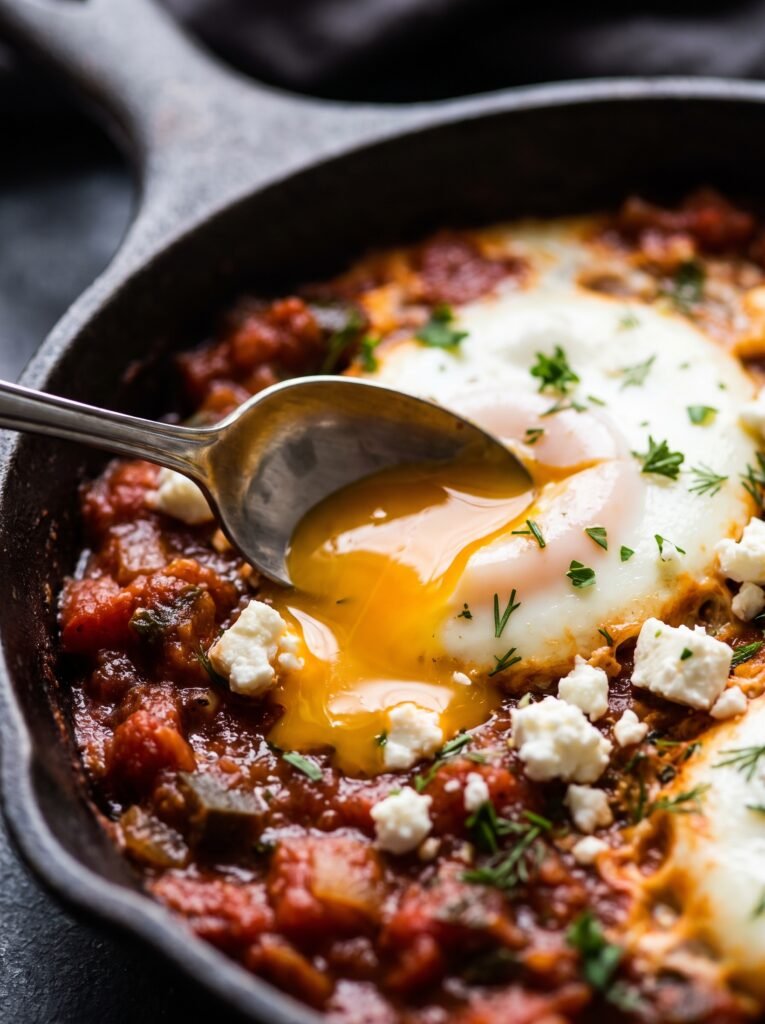
Serve shakshuka directly from the skillet in which it was prepared, positioned centrally on a trivet or wooden board for rustic, communal-style presentation that invites sharing. Sprinkle crumbled feta cheese and fresh herbs generously across the surface immediately before bringing the dish to the table, allowing the vibrant green and white garnishes to contrast beautifully against the deep red sauce.
For individual presentations, carefully transfer one or two eggs along with a generous portion of sauce onto a warmed plate, taking care to preserve the egg’s shape during transfer. Garnish with a light drizzle of olive oil, additional herbs, and a lemon wedge positioned attractively alongside the dish for an elegant, restaurant-style presentation suitable for brunch entertaining.
Suitable Side Dishes and Pairings
This flavorful dish pairs beautifully with warm, crusty bread or soft pita for scooping up both eggs and sauce, a simple side salad with light vinaigrette for those seeking additional freshness, or a small bowl of plain Greek yogurt for cooling contrast against the warming spices. Beverage pairings include fresh mint tea, black coffee, or freshly squeezed orange juice, complementing the dish’s bold, aromatic flavor profile exceptionally well.
Nutritional Facts and Health Benefits
Each serving provides approximately 280 calories, with 16 grams protein, 14 grams carbohydrates, and 19 grams healthy fats. This balanced nutritional profile supports sustained morning energy, muscle maintenance, and antioxidant intake, making it genuinely one of the best recipes for those seeking a savory, globally-inspired breakfast that moves beyond traditional sweet morning fare while delivering genuine nutritional substance.
More Recipe Inspiration
Looking for more delicious ideas to try? Visit Top Recipes Emily to discover more delicious recipes, easy meal ideas, and cooking inspiration for your next meal.
Frequently Asked Questions
Q: Can I prepare the tomato sauce base in advance for quicker morning assembly?
A: Yes, the sauce base can be prepared up to 3 days ahead and refrigerated. Simply reheat gently in a skillet, then add and poach fresh eggs just before serving for optimal results.
Q: How do I know when the eggs have reached my preferred doneness?
A: Gently press the egg white near the yolk with a spoon; if it feels set and opaque while the yolk area still has slight give, the eggs are ready for a classic runny-yolk shakshuka.
Q: Can I make this dish spicier or milder to suit different preferences?
A: Absolutely—adjust cayenne pepper quantity freely, or add fresh diced chili peppers for additional heat, while reducing or omitting cayenne entirely creates a milder, family-friendly version.
Q: What’s the best way to store and reheat leftover shakshuka?
A: Store in an airtight container for up to 2 days. Reheat gently on the stovetop over low heat, though eggs are best enjoyed fresh, as reheating can affect yolk texture significantly.
Q: Is shakshuka suitable for a vegetarian or gluten-free diet?
A: Yes, this dish is naturally vegetarian and gluten-free as prepared, though verify that any bread served alongside is appropriately sourced for those with gluten sensitivities.
Conclusion
Shakshuka demonstrates that bold, globally-inspired flavors can transform a simple breakfast of eggs into a truly memorable, nourishing meal. This healthy recipe delivers exceptional nutrition, warming spice, and genuine culinary satisfaction within a single skillet preparation. Try this recipe and share your feedback, spice adjustments, and personal variations with our community of home cooks who appreciate both bold flavor and balanced nutrition.