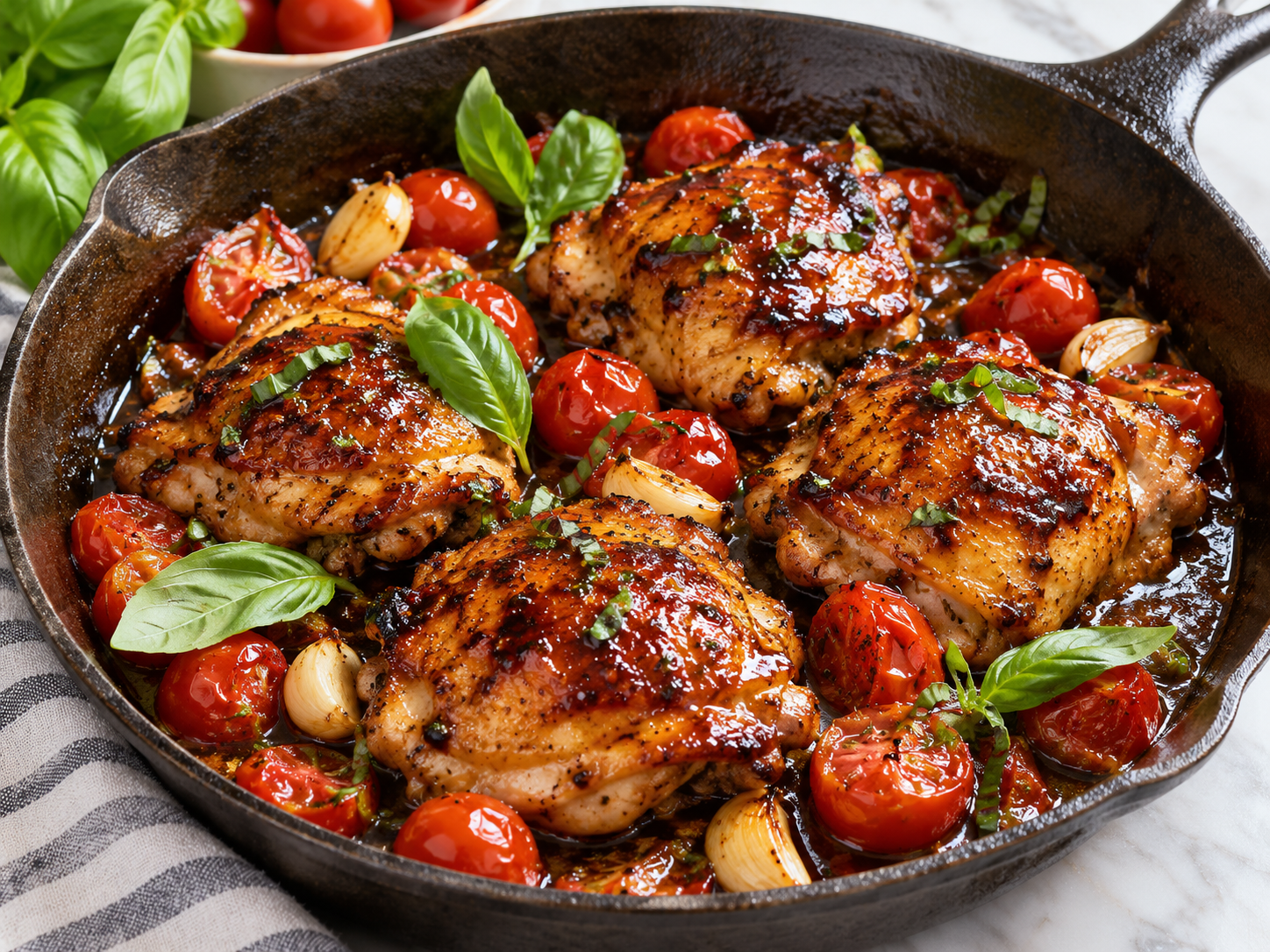
These balsamic chicken thighs roast with sweet cherry tomatoes, garlic, and herbs until the skin is golden and the pan fills with a tangy, savory sauce. The recipe uses simple ingredients and one baking dish, making it a reliable weeknight dinner that feels special without a complicated prep routine. Serve the chicken with bread, rice, or roasted vegetables to catch the juices.
What Makes This Chicken So Flavorful
Bone-in, skin-on thighs stay juicy during roasting and develop crisp, browned skin. A simple coating of olive oil, balsamic vinegar, garlic, Dijon, and dried herbs seasons the chicken while helping the tomatoes turn jammy. The vinegar softens as it cooks, balancing the tomatoes’ sweetness with a pleasant tang. A little broth in the pan keeps the drippings from scorching and gives you a spoonable sauce.
Use a thermometer rather than relying only on color: chicken thighs are safely cooked when the thickest part reaches 165°F (74°C), away from the bone. Thighs often become even more tender at a slightly higher temperature, but avoid drying the meat by over-roasting. This recipe also works with boneless thighs, which cook faster and need an earlier temperature check.
Ingredients
- 6 bone-in, skin-on chicken thighs, about 2½ pounds: Pat dry for better browning.
- 1 pint cherry tomatoes: Leave small tomatoes whole; halve very large ones.
- 3 tablespoons balsamic vinegar and 2 tablespoons olive oil.
- 1 tablespoon Dijon mustard: Helps the glaze cling and adds savory sharpness.
- 3 garlic cloves, finely minced.
- 1 teaspoon dried Italian seasoning, ½ teaspoon paprika, black pepper, and salt.
- ¼ cup low-sodium chicken broth: Keeps pan juices moist.
- Fresh basil or parsley and a teaspoon of lemon juice, optional, to finish.
How to Make Balsamic Chicken Thighs
- Heat the oven. Set it to 425°F (220°C). Use a 9-by-13-inch baking dish or oven-safe skillet large enough to leave a little space between the chicken pieces.
- Dry and season the chicken. Blot the thighs thoroughly with paper towels. Season both sides with salt, pepper, Italian seasoning, and paprika. Dry skin browns more readily than damp skin.
- Make the balsamic mixture. Whisk balsamic vinegar, olive oil, Dijon, and garlic in a bowl. Add the tomatoes and toss to coat. Spread the tomatoes in the baking dish and pour in the broth.
- Arrange the thighs. Set the chicken skin-side up among the tomatoes. Spoon a little of the balsamic mixture over the meat, but keep most of the skin exposed so it can roast instead of steam.
- Roast until golden. Bake uncovered for 35–45 minutes, depending on thigh size. Check the thickest part with an instant-read thermometer. If the skin needs more color after the chicken is cooked, broil for 1–2 minutes while watching closely.
- Rest and serve. Rest the chicken for 5 minutes. Stir the tomatoes and pan juices, taste, then add a little lemon juice or salt if needed. Finish with chopped basil or parsley and spoon the sauce over the chicken.

Tips for Reliable Results
Choose similar-sized thighs. Pieces of similar size finish at roughly the same time. If one is smaller, check it early and remove it from the pan if it reaches temperature first.
Keep the skin exposed. Tomatoes release liquid as they roast. Place them around the chicken rather than covering the skin. For extra crispness, brown the skin in an oven-safe skillet for 4–5 minutes before adding the glaze and moving the skillet to the oven.
Measure temperature correctly. Insert the thermometer into the thickest meat without touching bone. Color alone is not a dependable safety check. If it reads below 165°F (74°C), continue roasting and check again in a few minutes.
Mind the balsamic glaze. Balsamic can darken quickly under the broiler. Broil only briefly and stay near the oven.
Easy Swaps and Variations
Boneless, skinless thighs can be used; start checking them after about 22 minutes. Chicken breasts are leaner and may dry out if left too long, so use pieces of similar thickness and check temperature early. Add sliced red onion or bell pepper to the tomatoes, or tuck a few sprigs of rosemary into the pan. For a sweeter glaze, stir 1 teaspoon honey into the balsamic mixture; keep the amount small so it does not burn.
If you prefer a milder vinegar taste, use 2 tablespoons balsamic and add a splash of broth. For a richer finish, stir a small knob of butter into the hot pan juices after roasting. Use low-sodium broth so you can control the salt level.
Storage and Reheating
Refrigerate leftovers in a sealed container within 2 hours and use within 3–4 days. Store chicken with some tomato juices to help it stay moist. Reheat covered in a 325°F oven until steaming hot, or microwave in short intervals. To crisp the skin again, uncover for the final few minutes in the oven. Freeze cooked chicken and sauce for up to 2 months; thaw overnight in the refrigerator before reheating.
Serving Ideas
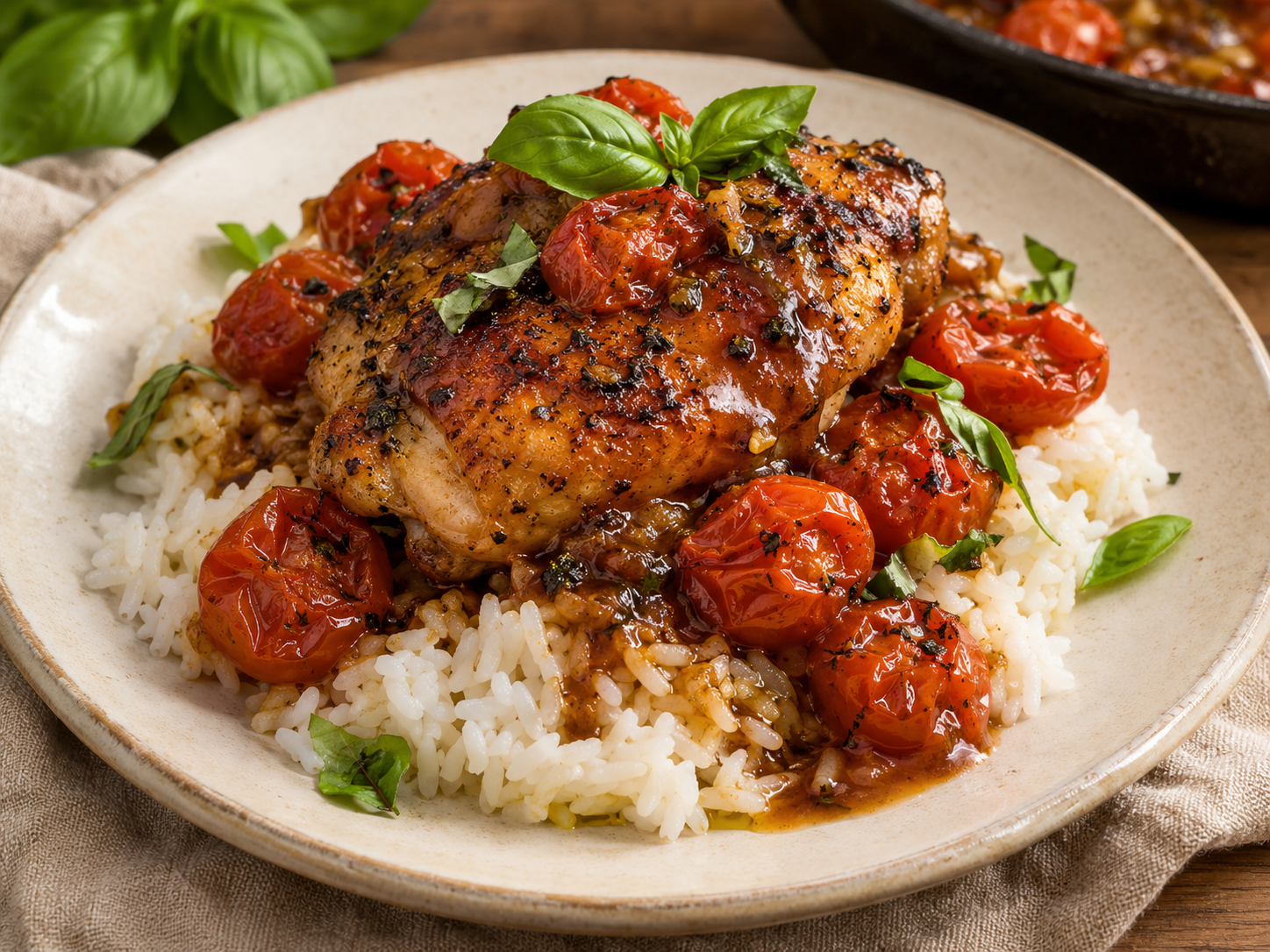
Serve with mashed potatoes, rice, couscous, crusty bread, or polenta to soak up the sauce. A green salad, steamed green beans, or roasted zucchini balances the rich chicken. See other ideas in the Chicken recipes collection and browse the home page for more family dinners.
Balsamic Chicken Thighs Recipe
Prep: 15 minutes | Cook: 35–45 minutes | Total: about 1 hour | Serves: 6
Ingredients
- 6 bone-in, skin-on chicken thighs, patted dry
- 1 pint cherry tomatoes
- 3 tablespoons balsamic vinegar
- 2 tablespoons olive oil
- 1 tablespoon Dijon mustard
- 3 garlic cloves, minced
- 1 teaspoon Italian seasoning
- ½ teaspoon paprika
- ¼ cup low-sodium chicken broth
- Salt and black pepper
- Chopped basil or parsley, optional
Directions
- Heat oven to 425°F (220°C). Season chicken with salt, pepper, Italian seasoning, and paprika.
- Whisk balsamic, oil, Dijon, and garlic. Toss with tomatoes and arrange them with broth in a baking dish.
- Place chicken skin-side up among tomatoes. Roast 35–45 minutes, until the thickest part reaches 165°F (74°C).
- Rest 5 minutes, stir the pan juices, garnish with herbs, and serve.
Approximate nutrition per serving: 360 calories, 29 g protein, 8 g carbohydrates, and 23 g fat. Estimates depend on the size and skin-on or skinless choice of chicken.
Frequently Asked Questions
Can I use boneless chicken thighs?
Yes. They cook faster, so begin checking around 22 minutes and remove them when the thickest part reaches 165°F (74°C).
Should I cover the baking dish?
No. Roast uncovered so the skin can brown. If the tomatoes begin to scorch, add a splash of broth and loosely cover only the tomatoes.
Can I prepare it ahead?
You can mix the balsamic sauce and season the chicken several hours ahead. Keep it covered in the refrigerator, then arrange the tomatoes just before roasting.
How do I know the chicken is safe to eat?
Check the thickest part with a food thermometer, avoiding the bone. It should reach 165°F (74°C).
What can replace cherry tomatoes?
Use chopped Roma tomatoes or drained canned diced tomatoes. Pat fresh tomatoes dry and avoid excess liquid so the chicken roasts properly.
More Recipes to Make Next
For another easy chicken dinner, see our Garlic Butter Chicken Thighs for a golden skillet version. If you are planning meals for the week, pair this recipe with the creamy mushroom spinach orzo or the hands-off slow cooker lentil sweet potato curry. The crispy chickpea salad sandwich makes an easy lunch, and the spinach feta breakfast casserole is handy for brunch. Browse the full Chicken recipes collection for more chicken ideas.
For safe preparation, use a food thermometer in the thickest part of the thigh and follow the official USDA safe minimum internal temperature chart. This is especially helpful when thighs vary in size or are cooked with the bone in.
How to Get the Best Balsamic Pan Sauce
As the balsamic chicken thighs roast, the tomatoes soften and release juice that mixes with broth, garlic, and the vinegar glaze. When the pan comes out of the oven, stir the tomatoes gently and taste the sauce before adding anything. If it is too sharp, a small knob of butter or a teaspoon of honey can round it out. If it tastes flat, add lemon juice or black pepper. A little chopped basil at the end keeps the sauce fresh and fragrant.
If the pan juices are thinner than you like, transfer them and the tomatoes to a small saucepan while the chicken rests. Simmer for a few minutes until they reduce slightly, then spoon them over the chicken. Avoid reducing the sauce for too long because balsamic can become overly concentrated and sweet. Keep the chicken skin above the liquid so it stays crisp rather than absorbing the sauce.
Choosing Chicken and Adjusting the Timing
Bone-in thighs are forgiving because they stay moist through the longer roasting time. Choose pieces close in size so they finish together, and leave a little room between them in the pan. If using boneless thighs, start checking much earlier; their exact timing depends on thickness and whether they are skinless. Chicken breasts can be substituted, but they are leaner and should be removed as soon as they reach a safe internal temperature to avoid drying out.
Ovens vary, and tomatoes can release different amounts of liquid, so treat the time as a guide. The most dependable check is an instant-read thermometer inserted into the thickest part of the meat without touching bone. The chicken should reach 165°F (74°C). If the skin is not browned enough when the meat is cooked, use the broiler briefly while watching carefully. Resting for five minutes lets the juices settle before serving.
Meal Prep and Leftovers
You can whisk the balsamic, oil, mustard, and garlic together earlier in the day and refrigerate the mixture in a covered jar. Pat the chicken dry and season it just before roasting. For more flavor, let the chicken sit with the seasoning in the refrigerator for up to several hours, then add the tomatoes and sauce to the baking dish before cooking. Keep raw chicken separate from ready-to-eat foods and wash hands, boards, and utensils after handling it.
Refrigerate leftover chicken and tomatoes promptly in a covered container and use them within three to four days. Reheat gently in a covered baking dish with a spoonful of broth so the meat does not dry out. The leftovers also make a useful grain bowl: remove the meat from the bone, warm it with the tomatoes, and serve over rice or couscous. See the official FoodSafety.gov safe minimum internal temperature chart for additional food-safety guidance.
More Recipes to Cook This Week
For another chicken option, try our Garlic Butter Chicken Thighs. Add the creamy mushroom spinach orzo as a hearty side, or make the slow cooker lentil sweet potato curry for a meatless dinner on another night. The crispy chickpea salad sandwich is a practical lunch, and the spinach feta breakfast casserole can be prepared ahead for brunch. Browse the full Chicken recipe collection for more easy meals.
Serving Balsamic Chicken for a Family Meal
For a casual dinner, set the baking dish on a heat-safe trivet and serve the chicken with a spoon so everyone can add tomatoes and sauce to their plate. Rice, mashed potatoes, couscous, or crusty bread all work well because they absorb the pan juices. Add a green vegetable such as green beans or broccoli, then finish with chopped herbs for color. If children prefer milder flavors, serve extra balsamic sauce on the side and let each person add the amount they like.
To scale the recipe, use two baking dishes rather than crowding a single pan. Leaving space around the thighs helps hot air circulate and promotes browning. Rotate the dishes if your oven has hot spots, and use a thermometer to check several pieces. Keep the chicken covered loosely while it rests, but avoid sealing it tightly or the skin can soften from trapped steam.