Table of Contents
Introduction
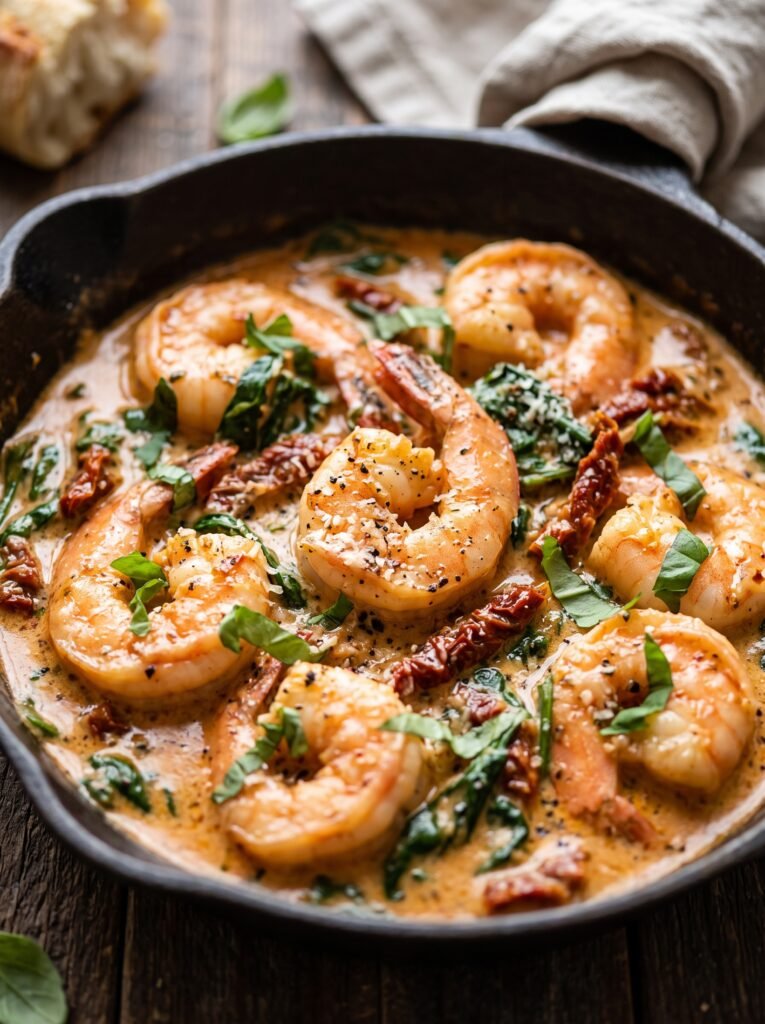
Creamy Tuscan shrimp brings together tender shrimp with a rich sauce of cream, garlic, sun-dried tomatoes, and spinach, creating a restaurant-quality dinner that comes together in well under 20 minutes, since shrimp cooks so quickly. Because the dish relies on a cream-based sauce rather than flour or breading, it’s naturally well-suited to a low-carb, weight-conscious approach, and it’s traditionally light on refined carbohydrates when served on its own or over vegetables rather than pasta.
It’s worth being clear from the outset: no single dish, including creamy Tuscan shrimp, causes weight loss on its own. Weight management depends on a combination of factors — total daily calorie intake, overall dietary quality, physical activity, consistency over time, sleep, and individual needs. What this dish can offer is a genuinely satisfying, high-protein, high-fat dinner that feels indulgent while remaining relatively low in carbohydrates, particularly compared to cream sauces thickened with flour or served over a large portion of pasta.
This is why choosing protein, vegetables, healthy fats, and fiber matters even in a rich, cream-based dish like this one. The dish already incorporates spinach and sun-dried tomatoes, which contribute some fiber and nutrients, but pairing it with an additional vegetable side helps round out the meal further and offsets the richness of the sauce.
In this article, you’ll find a classic creamy Tuscan shrimp recipe alongside lighter variations, low-carb serving suggestions that avoid pasta, quick recipes for busy weeknights, tips for building a balanced meal around this dish, and meal-prep strategies for the week — along with estimated nutritional information for representative recipes.
Best Creamy Tuscan Shrimp Recipes for a Balanced Diet
Classic High-Protein Creamy Tuscan Shrimp
These recipes preserve the traditional richness of the dish while emphasizing substantial protein, aligning with high protein lunch ideas.
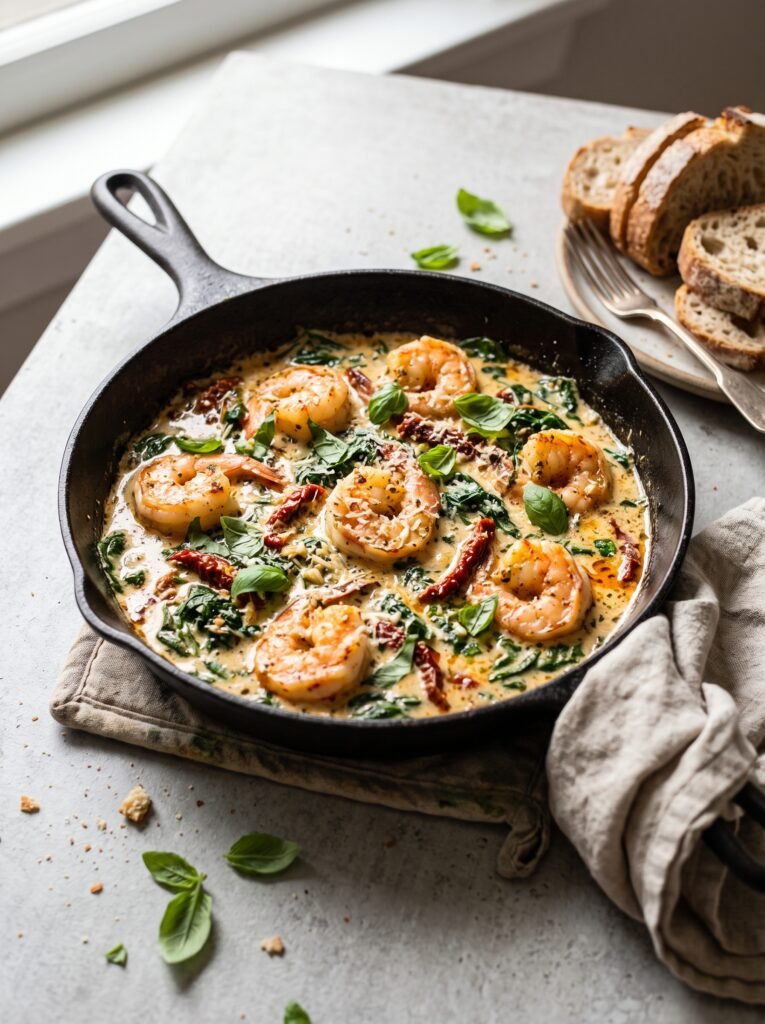
Classic Creamy Tuscan Shrimp Shrimp sautéed briefly, then simmered in a sauce of heavy cream, garlic, sun-dried tomatoes, spinach, and parmesan, deliver the traditional version of this dish, naturally low in carbohydrates thanks to the cream-based sauce.
Creamy Tuscan Shrimp and Chicken Combining shrimp with diced chicken increases the protein content of the dish further, creating a more substantial, surf-and-turf-style variation.
One-Pan Creamy Tuscan Shrimp with Vegetables Adding a generous amount of extra spinach, along with a handful of chopped zucchini or mushrooms directly into the sauce, increases the vegetable content of the dish without diluting its signature creamy flavor.
Blackened Creamy Tuscan Shrimp Seasoning the shrimp with a bold blackening spice blend before searing adds a smoky, spicy contrast to the rich, creamy garlic sauce.
Slow-Simmered Creamy Tuscan Shrimp Preparing the sauce first and adding the shrimp only during the final few minutes of cooking prevents overcooking, since shrimp becomes tough quickly if cooked too long.
Lighter Variations of Creamy Tuscan Shrimp
For readers who want to moderate the richness of the dish while keeping its signature flavor, these variations fit within low carb lunch recipes principles.
Half-and-Half Tuscan Shrimp Substituting half-and-half for a portion of the heavy cream reduces the overall fat and calorie content of the sauce while still delivering a creamy texture.
Greek Yogurt Tuscan Shrimp Stirring in plain Greek yogurt at the end of cooking, instead of a full portion of heavy cream, lightens the sauce considerably while adding extra protein.
Coconut Milk Tuscan Shrimp (Dairy-Free) Using full-fat coconut milk in place of cream offers a dairy-free alternative that still achieves a rich, satisfying sauce, with a subtly different but complementary flavor profile.
Extra-Vegetable Tuscan Shrimp Increasing the proportion of spinach, sun-dried tomatoes, and adding mushrooms or artichoke hearts dilutes the sauce across more volume, naturally moderating the richness per serving.
Reduced-Cream Tuscan Shrimp with Seafood Broth Using a combination of a smaller amount of cream with seafood or vegetable broth as the sauce base reduces overall fat content while maintaining a flavorful, slightly lighter sauce.
Quick and Easy Creamy Tuscan Shrimp for Busy Weeknights
These options focus on easy-to-make recipes for readers with limited time.
Ten-Minute Skillet Version — Since shrimp cooks so quickly, this entire dish can come together in about 10 minutes using pre-peeled, deveined shrimp.
Frozen Shrimp Shortcut — Using frozen, pre-peeled shrimp, quickly thawed under cold running water, eliminates the need for fresh shrimp prep.
Pre-Minced Garlic and Jarred Sun-Dried Tomatoes — These convenience ingredients can meaningfully cut down on prep time without compromising flavor.
Frozen Spinach Shortcut — Using frozen, thawed spinach instead of fresh saves prep time without sacrificing the dish’s signature green color and nutrition.
One-Pan Method — Cooking the entire dish in a single skillet minimizes cleanup, which is especially useful on a busy weeknight.
For efficiency, prepare a larger batch of the sauce base than one dinner requires, then cook fresh shrimp in individual portions of sauce throughout the week, since shrimp is best cooked fresh rather than reheated repeatedly.
How to Build a Balanced Meal Around Creamy Tuscan Shrimp
Choosing the Right Protein
Shrimp is naturally lean and cooks quickly, making it a convenient protein choice for a fast weeknight dinner. Choosing larger shrimp (often labeled by count per pound, with lower numbers indicating larger shrimp) can make the dish feel more substantial. Protein needs vary from person to person depending on factors such as body composition, activity level, and overall health goals, so readers should consider their individual dietary needs, ideally with guidance from a registered dietitian or healthcare provider.
Since the dish already includes a substantial amount of fat from the cream sauce, choosing shrimp — which is naturally very lean — helps keep the overall protein source lighter even as the sauce itself remains rich.
Adding Vegetables, Fiber, and Healthy Fats
Creamy Tuscan shrimp already incorporates spinach and sun-dried tomatoes, which contribute some fiber and nutrients, but the dish benefits from an additional vegetable side to further round out the meal. Useful options include roasted broccoli, a simple side salad, steamed green beans, or roasted asparagus.
Because the sauce itself is already rich in fat from the cream and parmesan, additional added fats are generally unnecessary — a simple vegetable side prepared with a light amount of olive oil or butter is usually sufficient to complement the dish without adding excessive richness.
Fiber from a vegetable side helps offset the dish’s higher fat content, making the overall meal feel more balanced and complete.
Healthy Alternatives to High-Carb Ingredients
Since creamy Tuscan shrimp is naturally low in carbohydrates on its own, the primary consideration is what it’s served alongside, since this dish is traditionally paired with pasta in many restaurant versions:
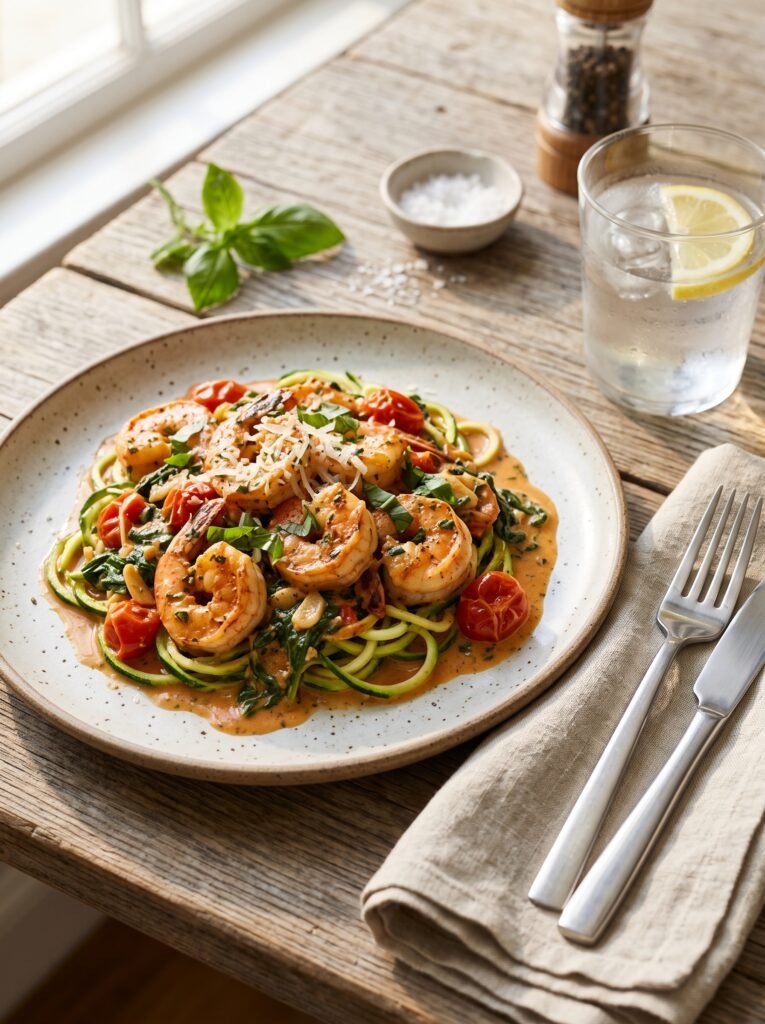
- Zucchini noodles instead of pasta as a base
- Cauliflower rice instead of white rice, if a grain-style side is desired
- A side salad instead of bread
- Roasted vegetables instead of a starchy side dish
- A small portion of whole-wheat pasta, if desired, rather than a large portion of regular pasta
These swaps allow readers to enjoy the rich, comforting flavor of creamy Tuscan shrimp while keeping the overall meal low in refined carbohydrates. The shrimp and sauce itself require no substitution, since they’re already naturally low-carb; the adjustments are primarily about what accompanies the dish.
For more inspiration, see our [Low Carb Recipes] and [Easy Salad Recipes] collections.
Meal Prep, Serving Suggestions & Nutrition
Meal-Prep Tips for Busy Weeks
Creamy Tuscan shrimp can be prepared with a few strategies in mind, supporting meal prep lunch ideas principles, though shrimp itself is best enjoyed fresh:
- Prepare the sauce base ahead of time — The cream, garlic, sun-dried tomato, and spinach sauce (without the shrimp) can be made in advance and stored separately.
- Cook shrimp fresh when possible — Since shrimp can become rubbery when reheated, it’s often best to cook a fresh portion of shrimp in the pre-made sauce for each meal, rather than storing already-cooked shrimp for several days.
- Reheat sauce gently over low heat — Cream-based sauces can separate if reheated too quickly over high heat; a gentle reheat helps maintain a smooth texture.
- Prep vegetables in advance — Washing and chopping spinach, mushrooms, or a side vegetable ahead of time speeds up weeknight cooking.
- Use pre-peeled, deveined shrimp — This convenience option saves significant prep time compared to peeling shrimp yourself.
- Freeze with some caution — Cream-based sauces can change texture after freezing and thawing, and shrimp can become tough, so this dish is generally best enjoyed within a few days from the refrigerator rather than frozen for long-term storage.
- Portion sauce for quick weeknight cooking — Storing the sauce base in individual portions allows for a quick, fresh shrimp dinner on multiple nights without repeating the full prep each time.
Serving Suggestions and Flavor Combinations
Rotating sides and light variations helps keep creamy Tuscan shrimp feeling fresh across multiple meals:
- Classic creamy Tuscan shrimp + zucchini noodles + fresh basil
- Blackened Tuscan shrimp + a side salad + a squeeze of lemon
- Greek yogurt Tuscan shrimp + roasted broccoli
- Coconut milk Tuscan shrimp (dairy-free) + steamed green beans
- Extra-vegetable Tuscan shrimp + a small portion of whole-wheat pasta
Fresh basil, parsley, and a finishing squeeze of lemon can brighten the richness of the sauce without adding meaningful carbohydrates. A light sprinkle of red pepper flakes adds a pleasant contrast to the creamy, savory base.
Explore our [High Protein Recipes] and [Easy Salad Recipes] for additional pairing ideas.
Nutritional Information and Weight-Loss Considerations
Nutritional values depend heavily on the specific cream used, portion size, and any accompanying sides, so the figures below should be treated as general estimates, per serving.
| Creamy Tuscan Shrimp Recipe | Estimated Calories | Protein | Carbohydrates | Fiber | Fat |
|---|---|---|---|---|---|
| Classic Creamy Tuscan Shrimp | 380–440 kcal | 28–32g | 9–12g | 2–4g | 26–30g |
| Half-and-Half Tuscan Shrimp | 320–380 kcal | 28–32g | 9–12g | 2–4g | 18–22g |
| Greek Yogurt Tuscan Shrimp | 280–340 kcal | 30–34g | 10–13g | 2–4g | 14–18g |
| Coconut Milk Tuscan Shrimp (dairy-free) | 360–420 kcal | 26–30g | 10–13g | 3–5g | 24–28g |
| Creamy Tuscan Shrimp with Zucchini Noodles | 400–460 kcal | 30–34g | 14–18g | 4–6g | 26–30g |
These estimates illustrate how the choice of dairy or cream substitute meaningfully affects the fat and calorie content of the dish, while carbohydrate content stays relatively low across all versions. As with any meal, no single dish determines weight-loss outcomes. Sustainable results generally come from consistent dietary patterns over time, adequate physical activity, sufficient sleep, and overall calorie balance — not from any one recipe, and total calorie intake remains a relevant factor even for naturally low-carb, higher-fat dishes.
Conclusion
Creamy Tuscan shrimp offers a genuinely comforting, restaurant-quality dinner that’s naturally well-suited to a low-carb, weight-conscious approach to eating, thanks to its cream-based sauce and absence of flour or refined carbohydrates. By choosing a lighter cream substitute like Greek yogurt or half-and-half when desired, pairing the dish with a vegetable side, and serving it over zucchini noodles rather than pasta, you can create creamy Tuscan shrimp that feels indulgent while remaining reasonably balanced. Since shrimp cooks so quickly, this dish is also one of the fastest options for a genuinely satisfying weeknight dinner.
Preparing the sauce base in advance and cooking fresh shrimp in it for each meal is the most practical strategy for making this dish work across a busy week, since shrimp itself doesn’t reheat as well as many other proteins. Portion awareness and overall dietary balance remain central to any long-term goal, particularly given the dish’s richness, and it’s worth remembering that no single meal determines your results — consistency, activity, and a well-rounded approach to eating matter far more than any individual dinner.
Try one of the creamy Tuscan shrimp variations above this week — whether it’s the classic version or a lightened Greek yogurt take — and share your favorite version in the comments below.
For more inspiration, browse our [Healthy Dinner Recipes], [Meal Prep Recipes], and [Easy Healthy Recipes] collections.
More Recipe Inspiration
Looking for more delicious ideas to try? Visit Jowel Recipes to discover more recipe inspiration and creative dishes for your next meal.
Frequently Asked Questions
1. Is creamy Tuscan shrimp a good option for weight loss recipe? Creamy Tuscan shrimp is naturally low in carbohydrates, since its sauce relies on cream and parmesan rather than flour, making it a reasonable fit for a low-carb, weight-conscious approach when portions are kept reasonable. Pairing it with a vegetable side and serving it over zucchini noodles rather than pasta helps keep the overall meal balanced. Individual needs vary, so portions should be adjusted based on your own goals and appetite.
2. Can I make a lighter version of creamy Tuscan shrimp? Yes. Substituting Greek yogurt or half-and-half for some or all of the heavy cream reduces the fat and calorie content of the sauce while still delivering a creamy texture and rich flavor.
3. What should I serve with creamy Tuscan shrimp for a balanced meal? Pairing creamy Tuscan shrimp with a fiber-rich vegetable side, such as roasted broccoli or a side salad, helps round out the meal, since the sauce itself is fairly rich. Serving it over zucchini noodles instead of pasta keeps the overall carbohydrate content low.
4. Is creamy Tuscan shrimp suitable for meal prep? Partially. The sauce base can be made ahead of time and stored, but shrimp itself is best cooked fresh for each meal, since it can become tough and rubbery when reheated repeatedly.
5. Can eating creamy Tuscan shrimp help with weight management? Creamy Tuscan shrimp, prepared in a reasonable portion and paired with vegetables, can fit into a balanced approach to eating, since shrimp is naturally low in carbohydrates and fat while providing substantial protein. That said, weight management depends on multiple factors, including total daily calories, dietary quality, physical activity, sleep, and consistency over time — not on any single dish, and the sauce’s fat content is worth keeping in mind for readers tracking total calorie intake closely.