Table of Contents
Introduction
The Mediterranean approach to eating has long been associated with fresh vegetables, lean proteins, healthy fats like olive oil, and whole, minimally processed ingredients. For readers seeking practical Mediterranean Lunch Ideas, this style of eating offers a naturally balanced framework — one that emphasizes fiber-rich vegetables, quality protein, and moderate healthy fats rather than heavily processed, refined-carbohydrate foods.
It’s important to be upfront: adopting a Mediterranean-inspired lunch does not automatically lead to weight loss. Weight management depends on a combination of factors, including total daily calorie intake, overall dietary quality, physical activity, consistency over time, sleep, and individual needs. What Mediterranean-style lunches can offer is a satisfying, flavorful way to build meals around protein, vegetables, fiber, and healthy fats — ingredients that are widely recognized for supporting a longer-lasting feeling of fullness compared to meals built primarily around refined carbohydrates.
Choosing protein, vegetables, healthy fats, and fiber matters because these components work together: protein and fiber help sustain satiety after eating, while healthy fats such as olive oil and nuts add flavor and support the absorption of certain nutrients. Mediterranean cuisine naturally leans on these building blocks, making it a practical starting point for anyone building a balanced, weight-conscious lunch routine.
In this article, you’ll find a range of Mediterranean-inspired lunch ideas featuring lean proteins and fresh vegetables, tips for building a balanced Mediterranean-style plate, smart substitutions for refined-carbohydrate staples, meal-prep strategies for busy weekdays, and estimated nutritional information for representative meals.
Best Mediterranean Lunch Ideas for Weight Loss
High-Protein Mediterranean Lunch Ideas
These options highlight the lean proteins that are central to Mediterranean lunch recipes.
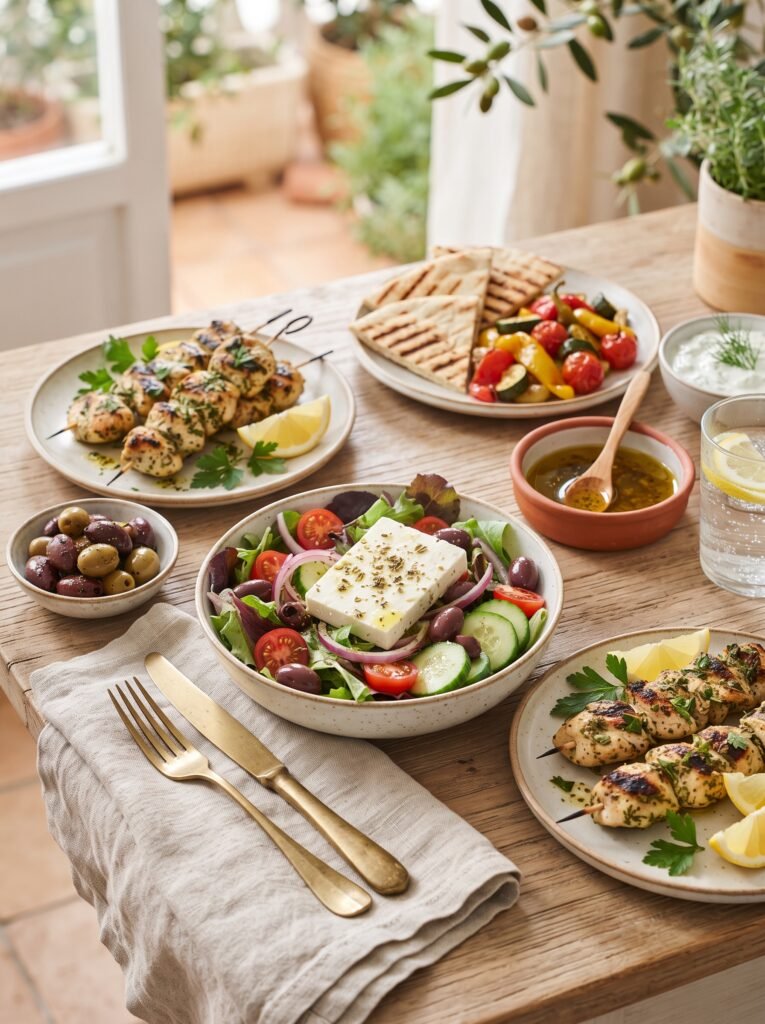
Grilled Chicken and Greek Salad Grilled chicken breast served alongside a Greek salad of cucumber, tomato, red onion, olives, and feta offers a satisfying combination of protein, fiber, and healthy fats from the olives and cheese. It’s straightforward to prepare — grill the chicken ahead of time and assemble the salad in minutes.
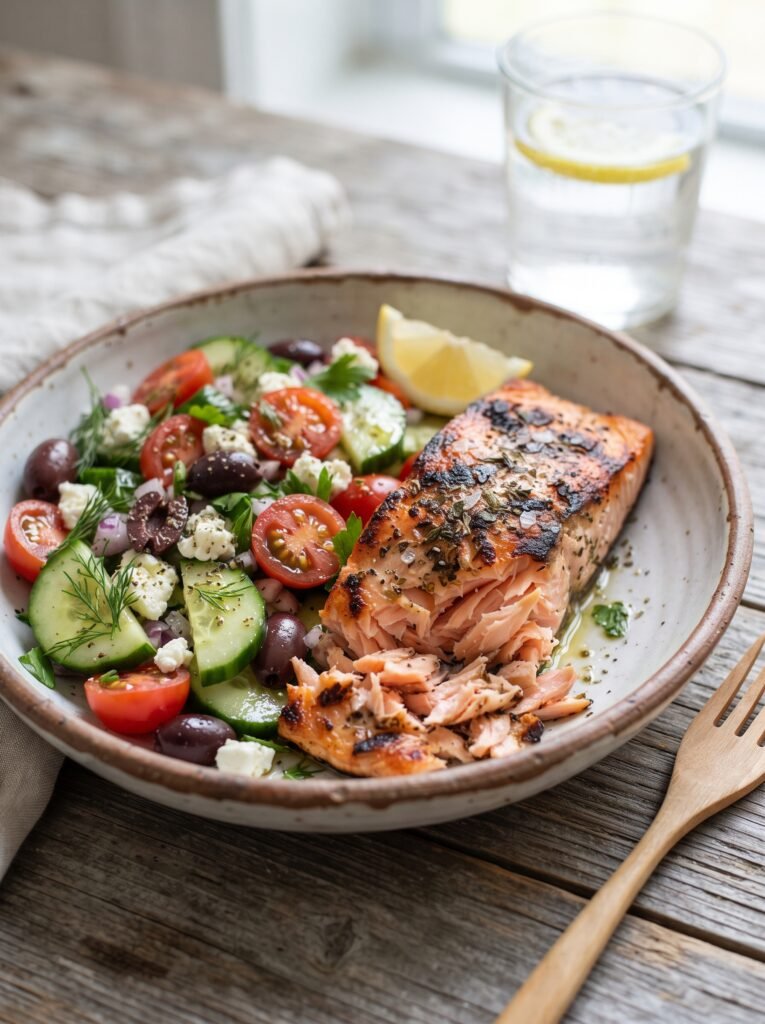
Grilled Salmon with Lemon and Herbs Salmon fillets seasoned with lemon, garlic, and oregano, served with a side of roasted vegetables, provide protein along with beneficial omega-3 fats commonly associated with Mediterranean eating patterns. Salmon can be baked in batches and stored for several days.
Tuna and White Bean Salad (Lower-Carb Version) Traditional Mediterranean tuna salads often include white beans; for a lower-carb variation, reduce the bean portion and add extra cucumber, tomato, and parsley. This keeps the dish filling through protein and fiber while moderating carbohydrate content.
Shrimp and Vegetable Skewers Shrimp marinated in olive oil, lemon, and garlic, then grilled with bell peppers and zucchini, makes a light, protein-rich lunch that’s quick to prepare and easy to portion for meal prep.
Egg and Feta Mediterranean Bowl Hard-boiled or scrambled eggs paired with feta, cherry tomatoes, cucumber, and a drizzle of olive oil create a simple, protein-dense bowl inspired by classic Mediterranean flavors.
Mediterranean Vegetarian Lunch Ideas
Vegetarian options within Mediterranean cuisine can supply meaningful protein, fiber, and healthy fats, making them a valuable category of healthy lunch ideas.
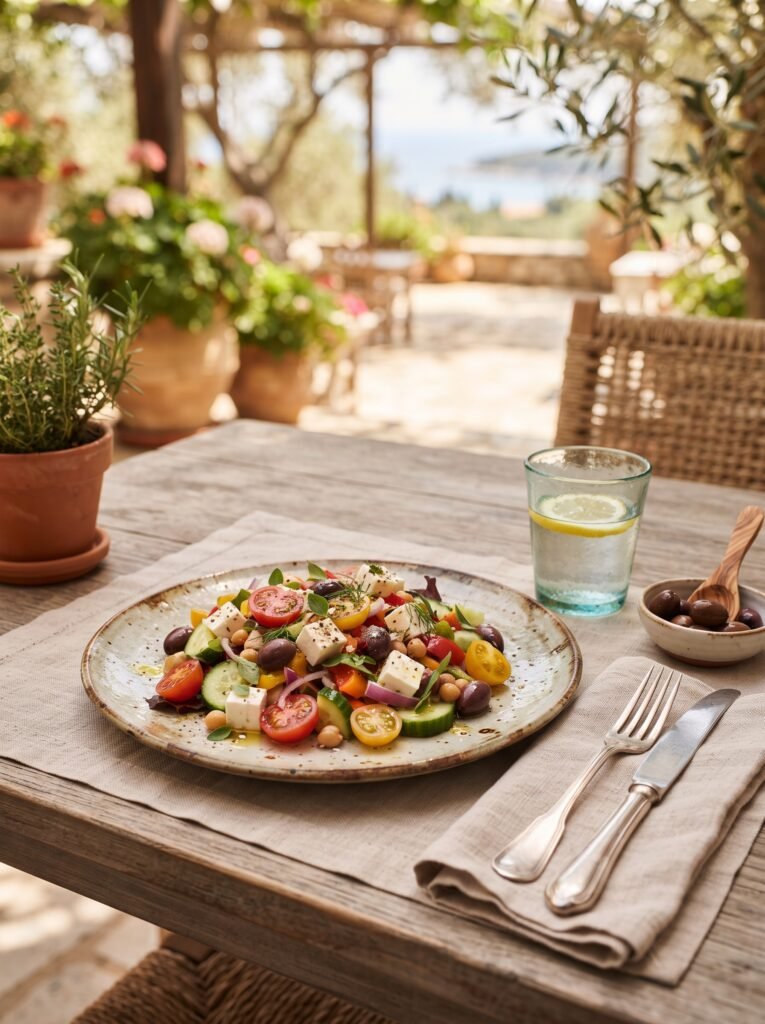
Greek Salad with Chickpeas and Feta Cucumber, tomato, red onion, olives, and feta combined with chickpeas offer a plant-forward source of protein and fiber, along with healthy fats from the olives and cheese.
Cauliflower Tabbouleh A lower-carb take on traditional tabbouleh, using finely chopped cauliflower in place of bulgur wheat, combined with parsley, mint, tomato, lemon, and olive oil.
Zucchini and Halloumi Salad Grilled zucchini paired with pan-seared halloumi cheese, cherry tomatoes, and a lemon-olive oil dressing provides protein from the cheese along with fiber from the vegetables.
Hummus and Vegetable Plate A moderate portion of hummus served with cucumber, bell pepper, and cherry tomatoes offers plant-based protein and fiber; portion awareness is useful here since hummus contains carbohydrates from chickpeas.
Spinach and Feta Egg Skillet Eggs scrambled with spinach, feta, and diced tomato create a quick, protein-rich vegetarian lunch with classic Mediterranean flavor.
Quick and Easy Mediterranean Lunches
For readers seeking an easy low carb lunch inspired by Mediterranean flavors, these options are designed for minimal preparation time.
Chicken Souvlaki Lettuce Wraps — Grilled chicken pieces wrapped in lettuce with tzatziki sauce instead of pita bread.
Tuna and Cucumber Boats — Cucumber halves filled with a Mediterranean-style tuna salad made with olive oil, lemon, and herbs.
Turkey, Feta, and Olive Roll-Ups — Turkey slices rolled around feta and olives for a quick, portable lunch.
Greek Yogurt and Vegetable Bowl — Plain Greek yogurt topped with cucumber, tomato, olive oil, and dried oregano.
Caprese-Style Chicken Plate — Sliced grilled chicken with fresh mozzarella, tomato, basil, and a drizzle of olive oil.
To streamline preparation, grill a batch of chicken or fish at the start of the week and keep chopped vegetables, olives, and feta on hand for quick assembly.
How to Build a Healthy Mediterranean Lunch
Choosing the Right Protein
Protein remains central to a satisfying lunch, even within a Mediterranean framework. Common Mediterranean protein sources include chicken breast, turkey, eggs, tuna, salmon, shrimp, lean beef, Greek yogurt, cottage cheese, and tofu, along with legumes such as chickpeas and lentils in moderate portions.
Fish and seafood are particularly emphasized in Mediterranean eating patterns, often recommended a few times per week due to their beneficial fat profile. Protein needs vary from person to person based on factors such as body composition, activity level, and overall health goals, so readers should consider their individual dietary needs, ideally with guidance from a registered dietitian or healthcare provider.
Adding Vegetables, Fiber, and Healthy Fats
Mediterranean cuisine is built around abundant vegetables and healthy fats, making it naturally aligned with a balanced, weight-conscious lunch. Useful vegetables include leafy greens, broccoli, cauliflower, cucumber, zucchini, bell peppers, and tomatoes, all offering fiber alongside vitamins and minerals.
Olive oil is the signature healthy fat of Mediterranean cooking, along with avocado, nuts, and seeds. These fats add flavor and may support satiety, but because they are calorie-dense, portion awareness still applies — a tablespoon of olive oil or a small handful of nuts is generally a reasonable serving rather than an unlimited amount.
Fiber from vegetables, legumes, and herbs plays a valuable role in digestive health and can contribute to a more satisfying, complete meal.
Healthy Alternatives to High-Carb Ingredients
Several practical substitutions can lower the refined-carbohydrate content of Mediterranean-inspired lunches without eliminating carbohydrates entirely:
- Lettuce wraps instead of pita bread
- Cauliflower rice or cauliflower tabbouleh instead of couscous or bulgur
- Zucchini noodles instead of regular pasta
- Mashed cauliflower instead of mashed potatoes
- Cucumber boats instead of bread-based sandwiches
These swaps allow readers to enjoy familiar Mediterranean flavors — herbs, lemon, olive oil, feta, olives — while adjusting the carbohydrate content of the meal to fit personal preferences. Most readers do not need to eliminate grains completely; the goal is a balanced meal suited to individual goals.
For more inspiration, see our [Low Carb Recipes] and [Easy Salad Recipes] collections.
Meal Prep, Serving Suggestions & Nutrition
Meal-Prep Tips for Busy Weekdays
Meal preparation makes it realistic to maintain a low carb meals routine inspired by Mediterranean flavors throughout a busy week:
- Cook proteins in batches — Grill several chicken breasts, bake a tray of salmon, or marinate shrimp skewers ahead of time.
- Wash and chop vegetables in advance — Prepping cucumber, tomato, and bell pepper removes a major barrier to quick assembly.
- Prepare homemade dressings — A lemon-olive oil vinaigrette or tzatziki sauce can be made in bulk and stored for the week.
- Store ingredients separately — Keep feta, olives, and dressings apart from vegetables until serving.
- Use airtight containers — Proper storage helps preserve the freshness and texture of prepared ingredients.
- Prepare 3–5 lunches at once — Dedicating one session to batch preparation reduces daily effort.
- Keep sauces separate until serving — This prevents salads from becoming soggy before mealtime.
Serving Suggestions and Flavor Combinations
Mediterranean flavors offer plenty of variety for rotating lunches throughout the week:
- Grilled chicken + Greek salad + olive oil dressing
- Salmon + roasted vegetables + lemon
- Turkey + feta + olives + cucumber
- Tuna + white beans (small portion) + parsley + lemon
- Eggs + spinach + feta
- Cauliflower tabbouleh + grilled chicken + roasted vegetables
Fresh herbs such as oregano, parsley, mint, and dill, along with lemon juice, garlic, and a drizzle of olive oil, can add substantial flavor to Mediterranean lunches without relying on refined carbohydrates or heavy sauces. Tzatziki, a yogurt-based sauce with cucumber and dill, is a flavorful, protein-containing alternative to higher-carbohydrate condiments.
Explore our [Healthy Chicken Recipes] and [High Protein Recipes] for additional Mediterranean-friendly pairings.
Nutritional Information and Weight-Loss Considerations
Nutritional values depend heavily on specific ingredients, portion sizes, and preparation methods, so the figures below should be treated as general estimates.
| Mediterranean Lunch Idea | Estimated Calories | Protein | Carbohydrates | Fiber | Fat |
|---|---|---|---|---|---|
| Grilled Chicken and Greek Salad | 360–430 kcal | 32–36g | 9–13g | 3–5g | 18–22g |
| Grilled Salmon with Vegetables | 400–470 kcal | 30–34g | 10–14g | 4–6g | 22–26g |
| Cauliflower Tabbouleh with Chicken | 320–390 kcal | 24–28g | 14–18g | 6–8g | 16–20g |
| Shrimp and Vegetable Skewers | 280–340 kcal | 24–28g | 8–12g | 3–5g | 14–18g |
| Egg and Feta Mediterranean Bowl | 300–360 kcal | 20–24g | 6–9g | 2–4g | 20–24g |
These estimates suggest that Mediterranean-style lunches can provide a meaningful amount of protein and fiber relative to their carbohydrate content, which may support a longer-lasting feeling of fullness. Even so, no single meal determines weight-loss outcomes. Sustainable results generally come from consistent dietary patterns over time, adequate physical activity, sufficient sleep, and overall calorie balance — not from any one recipe or ingredient.
Conclusion
Mediterranean-inspired lunches offer a naturally balanced framework for building meals around lean protein, fresh vegetables, fiber, and healthy fats like olive oil. By focusing on ingredients such as grilled chicken, fish, feta, olives, and abundant fresh vegetables, you can create Mediterranean lunch ideas that feel satisfying and flavorful rather than restrictive. Simple substitutions — like cauliflower tabbouleh instead of bulgur or lettuce wraps instead of pita — make it easy to adjust carbohydrate content while keeping familiar, enjoyable flavors.
Meal preparation remains one of the most practical tools for making this approach sustainable during busy weeks, while portion awareness and overall dietary balance are central to any long-term goal. Remember that no single lunch determines your results — consistency, activity, and a well-rounded approach to eating matter far more than any individual meal.
Try one of the Mediterranean lunch ideas above this week — whether it’s a quick Greek salad with grilled chicken or a flavorful shrimp and vegetable skewer — and share your favorite Mediterranean combination in the comments below.
For more inspiration, browse our [Healthy Dinner Recipes], [Healthy Breakfast Ideas], and [Easy Healthy Recipes] collections.
More Recipe Inspiration
Looking for more delicious ideas to try? Visit Jowel Recipes to discover more recipe inspiration and creative dishes for your next meal.
Frequently Asked Questions
1. What is a good Mediterranean lunch for weight loss recipe? A good Mediterranean lunch typically combines a lean protein source (such as chicken, fish, or eggs) with fresh vegetables, olives or feta for flavor, and a moderate amount of olive oil. Options like a grilled chicken and Greek salad or a shrimp and vegetable skewer offer a filling balance of protein and fiber. Individual needs vary, so portions should be adjusted based on your own goals.
2. Can I eat lunch while following a low-carb Mediterranean approach? Yes. A low-carb Mediterranean approach doesn’t mean skipping meals — it involves choosing lunch options that emphasize protein, vegetables, and healthy fats over pita bread, couscous, and other refined-grain staples. Dishes like cauliflower tabbouleh or lettuce-wrapped chicken souvlaki fit comfortably within this pattern.
3. What foods should I include in a Mediterranean-style lunch? A balanced Mediterranean lunch generally includes a protein source (chicken, fish, eggs, or legumes), a generous portion of fresh vegetables (cucumber, tomato, leafy greens, bell peppers), and a modest amount of healthy fat such as olive oil, feta, or olives. Fresh herbs and lemon add flavor without relying on refined carbohydrates.
4. Are Mediterranean lunches suitable for meal prep? Yes, many Mediterranean lunches are well-suited to meal prep. Proteins like grilled chicken, baked salmon, or marinated shrimp can be cooked in batches and stored for several days. Vegetables can be chopped in advance, and dressings like lemon-olive oil vinaigrette or tzatziki can be made ahead and kept separate until serving.
5. Can Mediterranean lunches help with weight management? Mediterranean-style lunches that are high in protein, fiber, and healthy fats may help you feel fuller for longer, which can support efforts to manage overall calorie intake. However, weight management depends on multiple factors, including total daily calories, dietary quality, physical activity, sleep, and consistency over time — not on any single meal or cuisine. It’s best to view Mediterranean lunches as one helpful component of a broader, balanced approach.